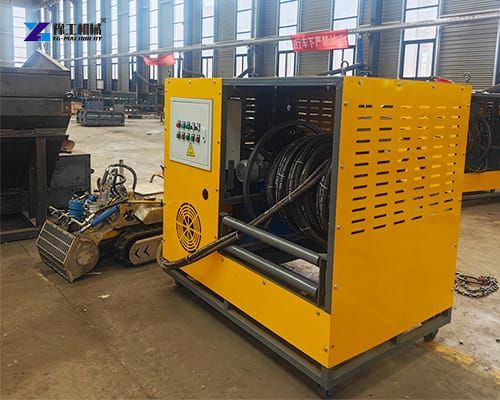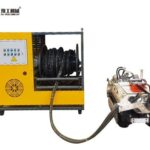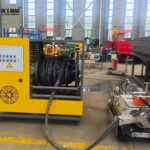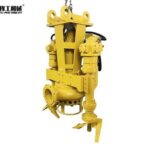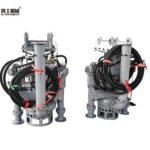
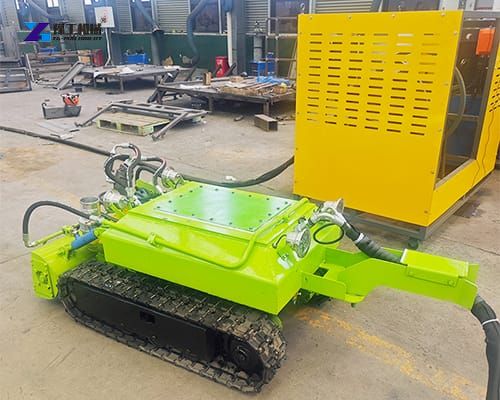
Sludge removal robot is an automated hydraulic machine specifically engineered to remove accumulated sludge, sediment, mud, sand, and other deposits from the bottoms of tanks, ponds, lakes, reservoirs, rivers, and industrial water systems. Instead of relying on manual excavation or large floating dredgers, the robot travels directly across the working surface while continuously collecting and pumping sludge through a hydraulic pumping system. The entire process is controlled remotely, allowing operators to maintain safety while achieving precise dredging results. The sludge cleaning robot combines hydraulic engineering, intelligent control systems, durable mechanical structures, and efficient pumping technology into a compact machine capable of working in confined or difficult environments.
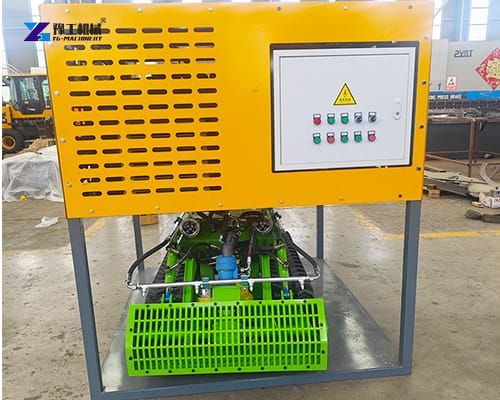
Sludge Removal Robot Specifications
| Model | YG-500 | YG-600 | YG-700 | YG-800 | YG-900 | YG-1200 |
| Robot dimensions | 1500*500*650mm | 1500*600*650mm | 1600*700*650mm | 1600*850*700mm | 1650*960*750mm | 1900*1200*750mm |
| Dredging width | 500mm | 600mm | 700mm | 800mm | 900mm | 1200mm |
| Track travel speed | 3-15m/s | 3-15m/s | 3-15m/s | 3-15m/s | 3-15m/s | 3-15m/s |
| Robot weight | 320kg | 350kg | 380kg | 400kg | 420kg | 500kg |
| Pump output diameter | 3inch | 3inch | 4inch | 4inch | 4inch | 4inch |
| Pump flow rate(cubic meters/ hour) | 100 m³ | 100m³ | 200m³ | 200m³ | 200m³ | 200m³ |
| Hydraulic station dimensions(mm) | 2200*1200*1700 | 2200*1200*1700 | 2200*1200*1700 | 2200*1200*1700 | 2200*1200*1700 | 2120*1240*1200 |
| Main motor power | 22kw | 22kw | 30kw | 30kw | 30kw | 45kw |
| Hydraulic system pressure | 0-16Mpa | |||||
| Particle size | 15mm | 15mm | 38mm | 38mm | 38mm | 60mm |
| Reeling system speed | 0-10r/min | |||||
| Hydraulic hoses | 50m (Standard configuration) | |||||
| Control system | Wireless remote control | |||||
| Lighting system | Underwater LED lights *2 | |||||
Main Features of a Dredging Robot for Sludge Removal
High Efficiency Cleaning
One of the biggest strengths of a sludge removal robot is its ability to remove sludge without frequent interruptions continuously. Advanced hydraulic systems ensure stable operation throughout extended working periods.
Remote Operation
Most modern models use wireless remote control, allowing operators to monitor and control the equipment from a safe distance. This significantly reduces workplace risks and improves operational convenience.
Powerful Pumping Performance
Depending on project requirements, different models can deliver pumping capacities of approximately 100 cubic meters per hour or 200 cubic meters per hour. These flow rates allow the robot to efficiently transport sludge over long distances.
Excellent Mobility
The compact design allows the robot to travel smoothly across uneven underwater terrain while maintaining excellent stability.
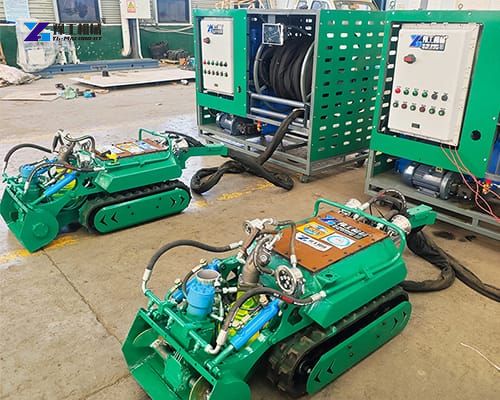

Applications Across Different Industries
Wastewater Treatment Plants
Municipal wastewater facilities continuously generate sludge during treatment processes. Regular removal helps maintain treatment efficiency and prevents excessive sediment accumulation.
Industrial Manufacturing
Factories in industries such as steel production, food processing, chemicals, paper manufacturing, and textiles often require sludge removal to keep wastewater systems functioning efficiently.
Mining Industry
Mining operations generate significant quantities of sediment and tailings. A sludge removal robot assists in maintaining settling ponds and improving water recycling.
Power Generation
Cooling ponds and ash storage facilities require periodic sediment removal to maintain operational performance.
Aquaculture
Fish farms and shrimp ponds accumulate organic waste over time. Efficient sludge removal improves water quality and creates healthier living conditions for aquatic species.
Municipal River Management
Cities increasingly deploy sludge removal robots to clean rivers, canals, drainage systems, and urban waterways while minimizing disruption to nearby communities.
Reservoir Maintenance
Sediment accumulation gradually reduces storage capacity in reservoirs. Robotic dredging provides a practical solution for restoring water storage without major construction work.
Agricultural Irrigation
Irrigation canals frequently suffer from sediment buildup that restricts water flow. Automated cleaning helps maintain efficient irrigation systems.

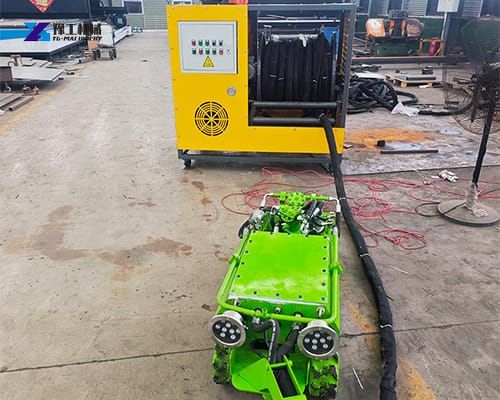
Major Structural Components
Robot Chassis
The chassis serves as the primary load-bearing structure. High-strength steel construction ensures excellent durability even under continuous underwater operation.
Hydraulic Power System
The hydraulic system provides power for movement, dredging, steering, and pumping. Stable hydraulic performance directly influences operational efficiency. Depending on the selected model, hydraulic pressure can reach 16 MPa, providing sufficient force for demanding dredging tasks.
Sludge Pump
The pump is responsible for transporting collected sludge through the discharge pipeline. Smaller models commonly utilize a 3-inch outlet, while larger units employ a 4-inch outlet to accommodate higher flow requirements.
Crawler or Driving System
The travel mechanism enables stable movement over muddy or uneven surfaces while maintaining traction under challenging underwater conditions.
Cutting or Agitating Device
Some sludge removal robots incorporate rotating cutters or agitators that loosen compacted sediment before pumping, improving overall removal efficiency.
Control System
An intelligent electronic control system coordinates hydraulic functions, movement, and pumping operations. Wireless communication enables operators to safely control every movement without entering hazardous environments.
Lighting System
Integrated underwater LED lighting improves visibility during low-light operations, allowing operators to monitor cleaning performance more accurately.
Hydraulic Hoses
A standard hydraulic hose length of approximately 50 meters provides ample working distance for many industrial applications while maintaining efficient hydraulic transmission.


How Does A Sludge Removal Robot Work?
First, the robot is positioned in the target cleaning area.
The operator activates the hydraulic system using the remote controller.
The crawler mechanism moves the robot across the bottom surface.
As the robot advances, rotating agitators loosen compacted sludge.
The sludge pump immediately draws the mixture into the suction inlet.
The material then travels through the discharge pipeline to the designated disposal or treatment location.
Throughout the operation, the hydraulic control system continuously adjusts movement speed, steering, and pumping performance to optimize cleaning efficiency.
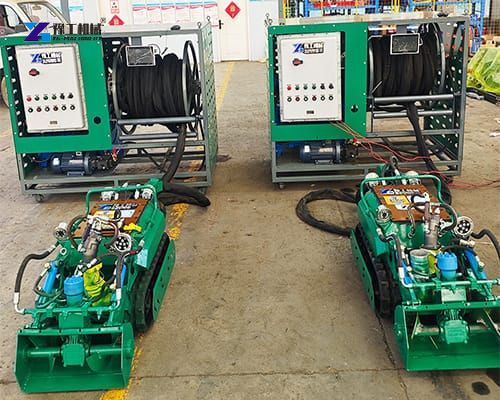

How To Choose the Right Underwater Dredging Robot?
Selecting the right sludge removal robot requires careful evaluation of project conditions, sludge characteristics, operating environment, and long-term maintenance expectations. A suitable machine should not only provide strong cleaning performance but also match the specific requirements of the application.
- Evaluate Working Environment
The first consideration is the environment where the robot will operate.
A small industrial tank may require a compact model with excellent maneuverability, while a large reservoir or sedimentation pond may require a stronger machine with higher pumping capacity.
Important factors include water depth, sludge thickness, sediment type, working area size, and transportation distance.
For example, applications involving heavy sediment or large particles require equipment with stronger pumping capability and greater material-handling capacity. Some advanced sludge removal robots can process particles reaching approximately 60 mm, making them suitable for more demanding dredging conditions.
- Analyze Sludge Characteristics
Not all sludge has the same composition. Some environments contain soft organic sludge, while others include dense clay, sand, industrial waste particles, or mineral deposits.
Before purchasing equipment, users should analyze:
Sludge density
Particle size
Moisture content
Chemical properties
Accumulation depth
A robot designed for light biological sludge may not perform effectively in heavy industrial sediment. Matching machine specifications with actual sludge conditions is essential for achieving maximum efficiency.
- Consider Cleaning Capacity
The cleaning capacity of a sludge removal robot depends on several elements, including pump performance, motor power, and structural design.
Models with stronger hydraulic systems are generally better suited for large-scale operations.
For example, different robot versions may include motor configurations ranging from approximately 22 kW to 45 kW, allowing users to select equipment based on workload requirements.
A larger motor does not always mean better performance. The ideal choice depends on balancing power consumption, cleaning requirements, and operating costs.
- Compare Robot Dimensions
Physical size is another important factor.
Compact robots provide better access to narrow spaces and small tanks. Larger machines offer wider cleaning coverage and higher productivity in open areas.
Available models may provide dredging widths from around 500 mm to 1200 mm, giving operators flexibility when selecting equipment for different project scales.
A wider cleaning range can reduce operation time, but smaller designs may provide better flexibility in complicated environments.
- Remote Control and Automation Advantages
Modern sludge removal robots have moved beyond traditional mechanical equipment by introducing intelligent control features.
Wireless remote operation allows technicians to control the machine without standing near dangerous water areas.
This provides several benefits:
Improved operator safety
Reduced labor requirements
Greater working accuracy
Better visibility of operating conditions
Easier management of complex projects