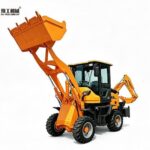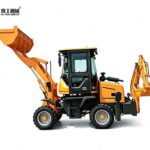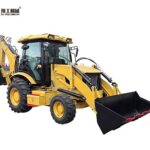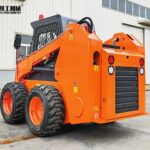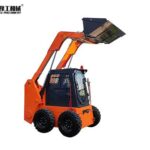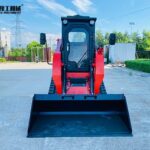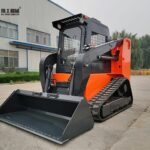
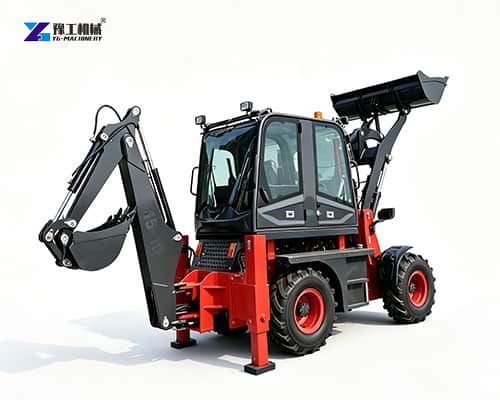
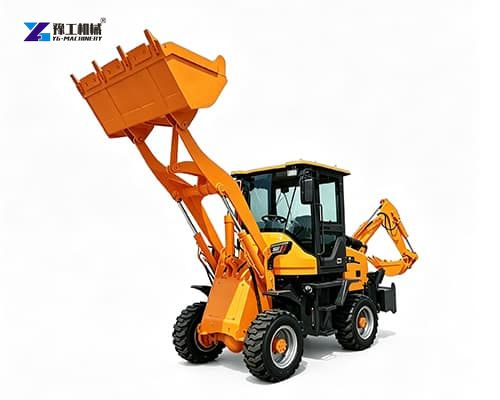
Small backhoe loader for sale is a multipurpose construction machine that combines a tractor-style chassis, a front loader bucket, and a rear-mounted backhoe. The front attachment handles loading, lifting, carrying, and leveling, while the rear digging arm performs excavation, trenching, and earthmoving tasks. Compared with larger earthmoving equipment, compact configurations can be easier to maneuver around residential properties, narrow access roads, landscaping projects, and smaller construction sites. Actual dimensions, operating weight, and working capacity depend on the selected model. When your project demands reliable digging, efficient material handling, and flexible operation in limited spaces, a small backhoe loader can be a practical investment. Combining a front-end loading bucket with a rear excavating arm, this versatile machine helps contractors complete multiple tasks with one piece of equipment.
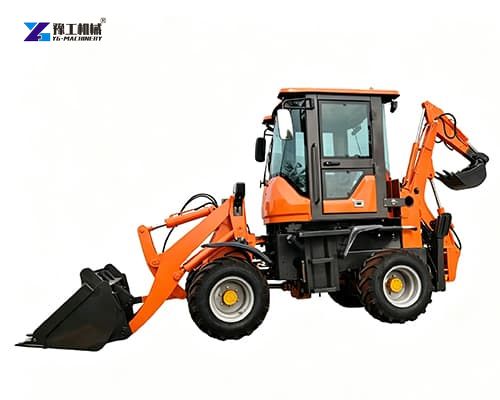
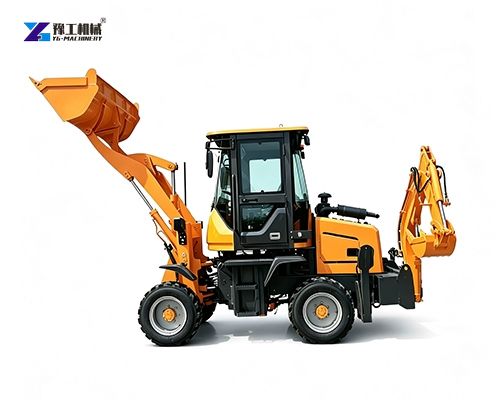
Specifications of Small Backhoe Loader for Sale
| Category | Model | YG08-12 | YG10-20 | YG15-26 | YG20-28 | YG25-30 |
| I.Overall Dimensions | Overall dimensions (mm) | 5100*1350*2580 | 5500*1750*2650 | 5800*1850*2750 | 6200*1960*2800 | 6500*2040*2800 |
| Wheelbase (mm) | 1910 | 2070 | 2315 | 2550 | 2675 | |
| Track width (mm) | 1100 | 1475 | 1500 | 1580 | 1630 | |
| Minimum ground clearance (mm) | 250 | 250 | 220 | 290 | 280 | |
| II. Performance Parameters | System pressure (MPa) | 16 | 16 | 16 | 18 | 18 |
| Machine weight (kg) | 2500 | 3400 | 4500 | 5400 | 6000 | |
| Maximum travel speed (km/h) | 20 | 25 | 26 | 28 | 28 | |
| Maximum gradeability (°) | 25 | 25 | 25 | 25 | 25 | |
| Minimum turning radius (mm) | 3000 | 3500 | 4000 | 4500 | 4500 | |
| III. Excavation Parameters | Maximum digging depth (mm) | 1500 | 2000 | 2700 | 2600 | 2600 |
| Digging/dumping height (mm) | 1500 | 1800 | 2200 | 2300 | 2300 | |
| Maximum digging radius (mm) | 2000 | 2700 | 4600 | 4600 | 4600 | |
| Bucket width (mm) | 350 | 400 | 500 | 500 | 600 | |
| Bucket capacity (m³) | 0.08 | 0.1 | 0.2 | 0.2 | 0.25 | |
| Maximum digging height (mm) | 2600 | 3300 | 4200 | 4300 | 4300 | |
| Maximum digging force (kN) | 25 | 25 | 28 | 28 | 28 | |
| Excavator swing angle (°) | 180 | 180 | 180 | 180 | 180 | |
| IV. Loading Parameters | Maximum dumping height (mm) | 2200 | 2800 | 3300 | 3500 | 3500 |
| Maximum dumping reach (mm) | 800 | 800 | 850 | 900 | 900 | |
| Bucket width (mm) | 1300 | 1800 | 1900 | 2100 | 2200 | |
| Bucket capacity (m³) | 0.4 | 0.5 | 0.7 | 1 | 1.2 | |
| Maximum lifting height (mm) | 3000 | 3300 | 4200 | 4300 | 4300 | |
| Maximum breakout force (kN) | 28 | 36 | 36 | 42 | 42 | |
| Total cycle time (s) | 12 | 12 | 12 | 12 | 12 | |
| V. Engine | Model | Changzi 390 (Optional: Yunnai 490) | Yunnai YN25GB | Yunnai YN27GBZ | Yunnai YN38GBZ | Yunnai YN48GBZ |
| Type | Three-stroke (four-stroke) | Direct injection, four-stroke | Turbocharged, four-stroke | Turbocharged, four-stroke | Turbocharged, four-stroke | |
| Rated power (kW) | 25(37) | 37 | 58 | 76 | 92 | |
| Rated speed (r/min) | 2400 | 2400 | 2400 | 2400 | 2400 | |
| Number of cylinders – Bore | 3-90(4-90) | 4-90 | 4-90 | 4-102 | 4-108 |
How Does a Compact Backhoe Loader Work?
The small backhoe loader for sale operates through coordinated engine power, hydraulic movement, and machine mobility. Understanding these systems helps buyers evaluate whether a machine suits their daily workload.
1. Engine and Power Transmission
The engine supplies power for machine movement and hydraulic operation. The transmission transfers driving power to the wheels, while the hydraulic system provides the force needed to operate the loader arms and rear excavator assembly.
Depending on the model, transmission options, drive configuration, and hydraulic specifications may vary.
2. Front-End Loading Operation
The operator lowers the front bucket toward the material, drives forward to fill it, and raises the loader arms to transport the load. The bucket can then discharge material into a truck, stockpile, or designated work area.
This process is useful for moving sand, gravel, soil, crushed stone, and other suitable bulk materials within the machine’s rated capacity.
3. Rear Excavation Operation
For digging, the operator positions the machine, stabilizes it according to the manufacturer’s instructions, and controls the rear boom, dipper arm, and bucket. Hydraulic cylinders coordinate the movement to penetrate the ground, collect soil, and lift excavated material.
The operator can repeat the digging cycle to create trenches, excavate foundations, or prepare drainage channels.
4. Switching Between Tasks
One of the defining advantages of a backhoe loader is its ability to alternate between digging and loading. The machine can excavate material at the rear and subsequently use its front bucket to move spoil or backfill a work area.
This integrated workflow makes a small backhoe loader for sale particularly attractive to businesses that need one machine to perform several related jobs.
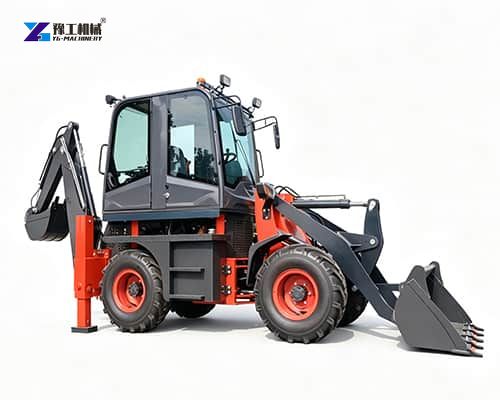
What Materials Can a Backhoe Loader Handle?
The small backhoe loader for sale can handle a range of materials when equipped with suitable buckets or attachments and operated within its rated limits.
Common materials and tasks include:
- Soil and topsoil: Excavating foundations, preparing planting areas, and backfilling trenches.
- Sand and gravel: Loading aggregates and transferring materials around construction sites.
- Crushed stone: Moving suitable quantities of construction aggregate.
- Clay and compacted earth: Digging where ground conditions and machine breakout force permit.
- Construction spoil: Loading and relocating excavated soil and loose debris.
- Compost and agricultural materials: Handling appropriate bulk materials on farms and rural properties.
- Demolition debris: Moving compatible debris with the correct attachment and safe operating procedures.
Rock, heavily compacted ground, oversized debris, and other demanding materials may require specialized attachments or different equipment. Always check bucket capacity, material density, ground conditions, lifting limits, and manufacturer guidance before operation.
Advantages of a Small Backhoe Loader for Sale
1. Two Essential Functions in One Machine
The front loader and rear excavator provide complementary capabilities for loading, digging, trenching, and backfilling. This reduces the need to bring separate machines to every small or medium-sized job.
2. Better Maneuverability in Restricted Areas
A compact design can help operators work in residential developments, narrow work zones, landscaping areas, and other locations where larger equipment may be difficult to position.
Actual suitability depends on machine width, turning radius, overall height, and access conditions.
3. Flexible Material Handling
The front bucket supports everyday earthmoving and loading tasks, while the rear backhoe handles excavation. With compatible attachments, the machine can also support additional specialized work.
4. More Efficient Job-Site Coordination
Using one machine for related tasks can simplify equipment scheduling and reduce the need to coordinate multiple operators and machines on smaller projects.
5. Potentially Lower Equipment Investment
For businesses with varied but moderate workloads, one multipurpose machine may reduce the initial equipment investment compared with purchasing separate machines for each function. The actual financial benefit depends on utilization, purchase price, and the jobs performed.
6. Flexible Movement Between Work Areas
Wheeled backhoe loaders can move around suitable sites and between nearby work areas.
7. Adaptability Through Attachments
Depending on hydraulic compatibility and manufacturer approval, available attachments may include different digging buckets, hydraulic breakers, augers, forks, and specialized loader buckets.
This flexibility can expand the range of jobs a contractor accepts without replacing the entire machine.
8. Practical Operation for Everyday Construction
Well-designed controls, appropriate visibility, and an ergonomic operator station can support accurate work and reduce unnecessary operator effort.
Applications Across Construction, Agriculture, and Infrastructure
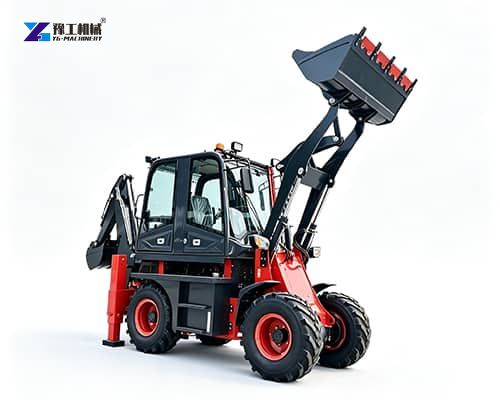
The versatility of the small backhoe loader for sale makes it useful for businesses that need excavation and loading capabilities without maintaining a large fleet of specialized machines.
1. Residential and Commercial Construction
Contractors can use the rear excavator for foundation preparation, trenching, and drainage work, then use the front bucket to move excavated soil and distribute aggregates.
2. Road and Municipal Maintenance
Public works teams may use the machine for ditch cleaning, roadside drainage, pothole repair preparation, and moving maintenance materials. Suitable attachments and local operating requirements should be checked for each task.
3. Agricultural Operations
Farm operators can use compatible configurations for drainage improvements, soil movement, farm-road maintenance, and handling suitable bulk materials around agricultural properties.
4. Landscaping and Property Development
Landscaping teams can prepare planting areas, remove soil, level surfaces, and move aggregates. Compact dimensions can be beneficial when working around established gardens or developed properties.
5. Utility Installation and Repair
The rear digging arm can assist with trenches for water lines, electrical conduits, irrigation systems, and other underground services. Before excavation, identify underground utilities and follow local safety requirements.
How to Choose the Right Model?
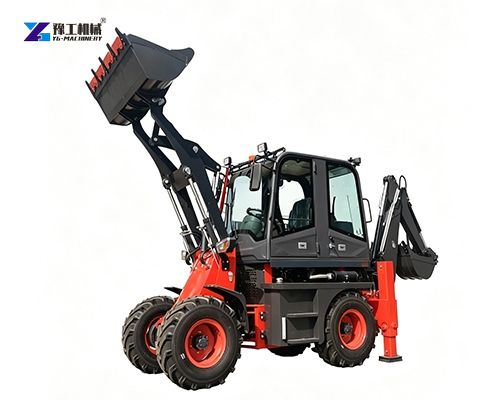
Not every compact backhoe loader is suitable for every project. Before comparing a small backhoe loader for sale with alternative equipment, consider your site conditions, required digging depth, loading volume, and expected working hours.
1. Compact Models for Restricted Work Areas
Compact configurations are worth considering for residential construction, landscaping, small utility projects, and sites with limited access.
Prioritize overall width, operating weight, turning radius, transport requirements, and the ability to work safely around existing structures.
2. Standard Compact Models for General Construction
A standard compact backhoe loader may be more suitable for contractors who regularly alternate between excavation, material loading, trenching, and site preparation.
Compare engine power, hydraulic performance, loader bucket capacity, digging depth, reach, and operating weight to ensure the machine can meet your workload.
3. Higher-Capacity Configurations for Demanding Work
If your projects involve frequent loading, deeper excavation, or heavier materials, evaluate models with suitable power, hydraulic capacity, structural specifications, and attachment compatibility.
Do not select equipment by engine power alone. The combined performance of the digging system, loader bucket, hydraulic circuit, chassis, and transmission determines whether a machine matches your requirements.