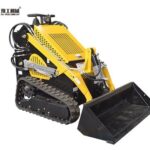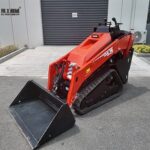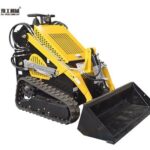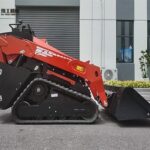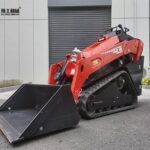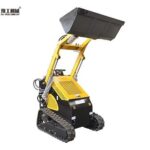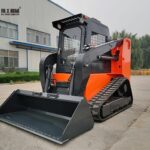

skid steer front loader sold to Australia
Skid Steer Front Loader Sold to Australia
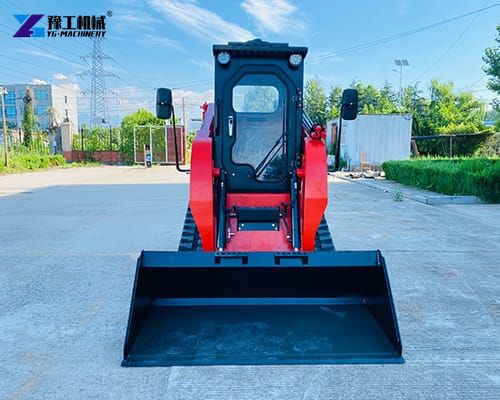
Agriculture in Australia often requires equipment that can handle a wide range of daily tasks efficiently. From moving feed and cleaning livestock areas to transporting materials around large properties, farm owners depend on compact machines that save time while remaining reliable in demanding conditions. The small skid steer loader is a good choice. Last week, we exported a skid steer front loader to Australia. The customer is a farm owner managing a mixed livestock property in Australia. The farm includes cattle, sheep, feed storage areas, fencing projects, and general property maintenance. The owner wanted a compact loader that could move easily between barns, feed storage areas, gates, and fenced paddocks for the normal work.

Understanding The Farm’s Requirements
During our first conversation, the customer explained that the loader would be used for several important farm tasks. These included moving feed, loading hay and straw, cleaning livestock areas, transporting fencing materials, carrying tools around the property, and assisting with small earthmoving jobs. Because the machine would operate near animals and farm workers, the customer emphasized the importance of easy control, good visibility, and dependable starting performance. Based on these requirements, we recommended our compact skid steer loader. Its operating load of approximately 700 kilograms and bucket capacity of 0.4 cubic meters made it suitable for many daily agricultural applications without being too large for confined farm spaces.

Parameters of Skid Steer Front Loader Sold to Australia
| Model | YGT50 |
| Operating load (kg) | 700 |
| Max Speed(km/h) | 10 |
| Rated flux (L/min) | 80 |
| Rated power (kw) | 45 |
| Fuel tank capacity (L) | 50 |
| Self-weight bucket (kg) | 4074 |
| Bucket capacity (m³) | 0.4 |
| Overall operating height (mm) | 3660 |
| Height to bucket hinge pin (mm) | 2730 |
| Height to top of cab (mm) | 2349 |
| Height to bottom of level bucket(mm) | 2500 |
| Without bucket length(mm) | 2170 |
| Overall length with bucket(mm) | 3150 |
| Dumping angle at maximum height(° ) | 40 |
| Dumping height(mm) | 1990 |
| Dumping reach(mm) | 1040 |
| Rollback of bucket on ground(° ) | 30 |
| Rollback of bucket at full height(° ) | 100 |
| Wheelbase(mm) | 1230 |
| Ground clearance(mm) | 230 |
| Angle of departure(° ) | 18.5 |
| Front turning radius without bucket(mm) | 1064 |
| Front tuning radius(mm) | 1825 |
| Rear tuning radius(mm) | 1264 |
| Rear axle to bumper (mm) | 590 |
| Tread width (mm) | 1022 |
| Width (mm) | 1422 |
| Bucket width (mm) | 1727 |
Why It Shines in Limited Spaces?
- Turning radius: The compact footprint and tight turning radius let the skid steer front loader work in confined spaces where larger machines can’t turn around.
- Agility: With precise hydraulic controls, operators can perform delicate tasks—placing pallets, loading materials, or grading a slope—without overdoing it.
- Attachments: The real magic happens with attachments. A single machine becomes a snow blower in winter, a landscape rake in spring, and a hydraulic hammer in demolition scenarios.

Choosing the Right Skid Steer Front Loader for Your Needs
- Size and power: If you’re working in tight urban environments, a smaller model with good breakout force might be ideal. For larger yards or sites with heavy dirt, a mid-size machine with robust hydraulics is often better.
- Attachment ecosystem: Consider what attachments you’ll use most. If you rely heavily on brooms or grapples, verify that those attachments are readily available and compatible.
- Terrain considerations: Tracks offer better stability and flotation on soft ground, while wheels can be faster and more maneuverable on firm surfaces.