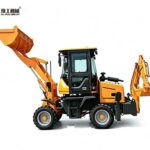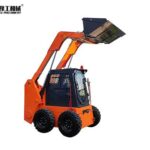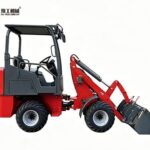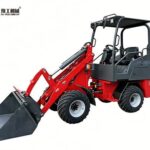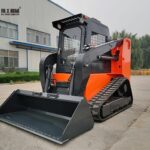
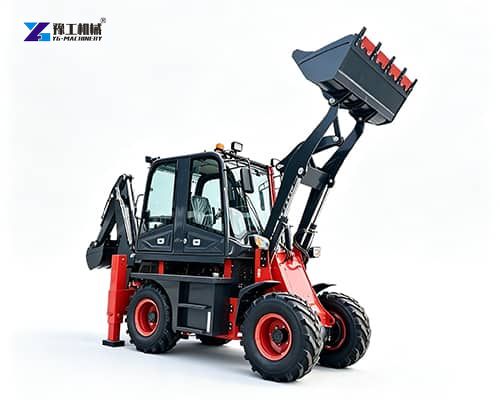
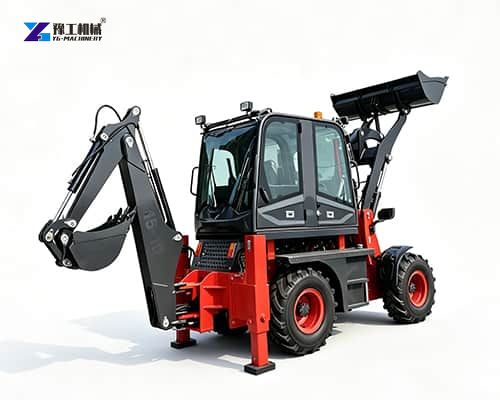
Wheel backhoe loader is a multi-purpose construction machine that combines a front loader bucket with a rear-mounted backhoe attachment. The front loader is primarily used for scooping, lifting, loading, grading, and moving materials, while the rear boom and bucket are designed for excavation, trenching, digging, and related ground work. Different from a dedicated excavator or front-end wheel loader, a wheel front end backhoe loader is designed around two complementary working functions. Operators can use the rear attachment when excavation is required and then use the front bucket for loading or material handling. This dual-function design makes the machine particularly useful for small and medium-sized projects. With suitable attachments, the machine can also expand beyond standard bucket work into breaking, material handling, grading, and other specialized tasks.
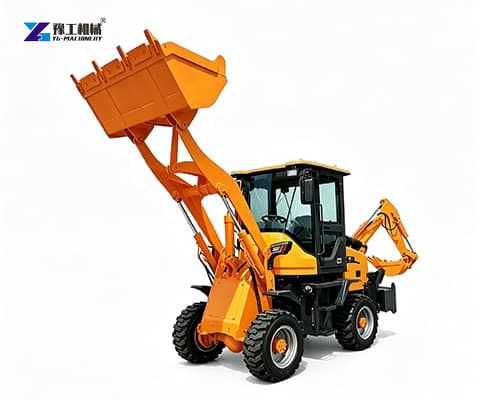
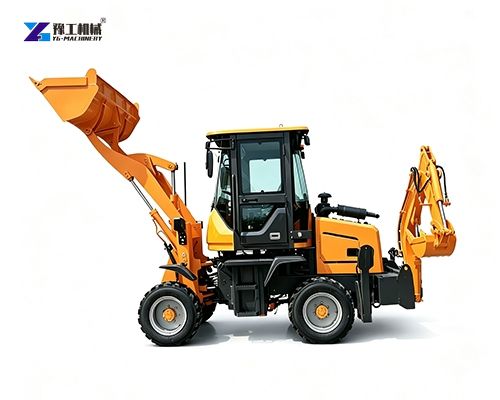
Technical Parameters of the Wheel Backhoe Loader
| Category | Model | YG08-12 | YG10-20 | YG15-26 | YG20-28 | YG25-30 |
| I.Overall Dimensions | Overall dimensions (mm) | 5100*1350*2580 | 5500*1750*2650 | 5800*1850*2750 | 6200*1960*2800 | 6500*2040*2800 |
| Wheelbase (mm) | 1910 | 2070 | 2315 | 2550 | 2675 | |
| Track width (mm) | 1100 | 1475 | 1500 | 1580 | 1630 | |
| Minimum ground clearance (mm) | 250 | 250 | 220 | 290 | 280 | |
| II. Performance Parameters | System pressure (MPa) | 16 | 16 | 16 | 18 | 18 |
| Machine weight (kg) | 2500 | 3400 | 4500 | 5400 | 6000 | |
| Maximum travel speed (km/h) | 20 | 25 | 26 | 28 | 28 | |
| Maximum gradeability (°) | 25 | 25 | 25 | 25 | 25 | |
| Minimum turning radius (mm) | 3000 | 3500 | 4000 | 4500 | 4500 | |
| III. Excavation Parameters | Maximum digging depth (mm) | 1500 | 2000 | 2700 | 2600 | 2600 |
| Digging/dumping height (mm) | 1500 | 1800 | 2200 | 2300 | 2300 | |
| Maximum digging radius (mm) | 2000 | 2700 | 4600 | 4600 | 4600 | |
| Bucket width (mm) | 350 | 400 | 500 | 500 | 600 | |
| Bucket capacity (m³) | 0.08 | 0.1 | 0.2 | 0.2 | 0.25 | |
| Maximum digging height (mm) | 2600 | 3300 | 4200 | 4300 | 4300 | |
| Maximum digging force (kN) | 25 | 25 | 28 | 28 | 28 | |
| Excavator swing angle (°) | 180 | 180 | 180 | 180 | 180 | |
| IV. Loading Parameters | Maximum dumping height (mm) | 2200 | 2800 | 3300 | 3500 | 3500 |
| Maximum dumping reach (mm) | 800 | 800 | 850 | 900 | 900 | |
| Bucket width (mm) | 1300 | 1800 | 1900 | 2100 | 2200 | |
| Bucket capacity (m³) | 0.4 | 0.5 | 0.7 | 1 | 1.2 | |
| Maximum lifting height (mm) | 3000 | 3300 | 4200 | 4300 | 4300 | |
| Maximum breakout force (kN) | 28 | 36 | 36 | 42 | 42 | |
| Total cycle time (s) | 12 | 12 | 12 | 12 | 12 | |
| V. Engine | Model | Changzi 390 (Optional: Yunnai 490) | Yunnai YN25GB | Yunnai YN27GBZ | Yunnai YN38GBZ | Yunnai YN48GBZ |
| Type | Three-stroke (four-stroke) | Direct injection, four-stroke | Turbocharged, four-stroke | Turbocharged, four-stroke | Turbocharged, four-stroke | |
| Rated power (kW) | 25(37) | 37 | 58 | 76 | 92 | |
| Rated speed (r/min) | 2400 | 2400 | 2400 | 2400 | 2400 | |
| Number of cylinders – Bore | 3-90(4-90) | 4-90 | 4-90 | 4-102 | 4-108 |
How Does a Wheel Backhoe Loader Work?
The operating principle is based on a hydraulic power system that transfers engine power to the machine’s working functions.
During excavation, hydraulic cylinders control the rear boom, dipper, and bucket. The operator can position the digging attachment, penetrate the ground, lift the material, and swing the load toward the desired discharge point.
For loading operations, the front hydraulic system raises and tilts the loader bucket. Material can be scooped from a stockpile, lifted, transported over short distances, and discharged into a truck or designated area.
The wheeled chassis provides mobility between working locations, while four-wheel drive configurations can improve traction when operating on uneven or challenging terrain.
This combination is the core value of a wheel backhoe loader: excavation and loading functions are integrated into one mobile platform instead of requiring separate machines for every stage of the job.
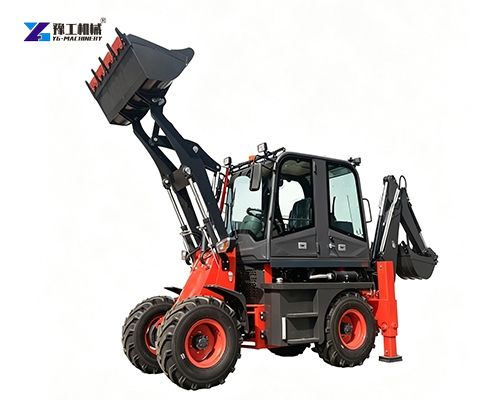
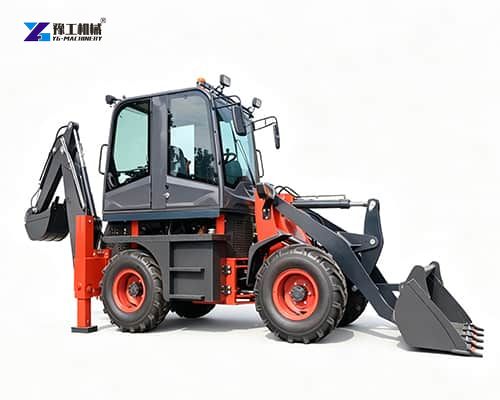
Materials and Tasks It Can Handle
The front loader is ideal for loose materials such as soil, sand, gravel, mulch, snow, and agricultural feed. The backhoe handles compacted soil, clay, roots, asphalt, and light rock. Common tasks include trenching for pipes and cables, digging foundations, backfilling, grading, loading trucks, lifting pallets, clearing debris, and maintaining roads. With the right attachment, a wheel backhoe loader can also break concrete, drill post holes, sweep streets, and move hay bales.
10 Advantages of a Front End Loader and Backhoe
1. Two Working Functions in One Machine
The biggest advantage is the combination of a front loader and rear excavator. One operator can switch between material handling and excavation work according to the job requirement.
This makes the wheel backhoe loader especially useful for contractors handling varied projects rather than repetitive bulk-loading operations.
2. Efficient Jobsite Mobility
Wheeled construction equipment can move efficiently between work areas, reducing the need to reposition the machine with separate transportation equipment for every short-distance task.
For projects involving multiple work points, this mobility can make daily operations more convenient.
3. Strong Digging Capability
The rear backhoe system is designed for excavation tasks such as trenching, foundation preparation, drainage work, and utility installation.
Depending on the selected configuration, digging depth, reach, bucket width, and breakout force can be matched to the intended application.
4. Practical Front-End Loading
The front bucket provides a second working function for loading and moving loose materials.
Typical applications include loading soil, gravel, sand, construction debris, agricultural materials, and landscaping products.
A loader bucket capacity in the compact-to-mid-size range can provide a useful balance between lifting performance and machine maneuverability, while larger configurations can be selected when higher material throughput is required.
Common Problems This Machine Helps Solve
Many small and mid-sized projects face the same equipment challenges: too many separate machines, limited working space, high transport requirements, and frequent changes between loading and excavation tasks. A wheel backhoe loader addresses these issues by combining several essential functions into one machine.
1. Too Many Machines on One Job
Using a separate excavator, wheel loader, and utility machine can increase transportation requirements, operating costs, and fleet complexity. A combination machine can handle many routine tasks with fewer equipment changes.
2. Frequent Switching Between Digging and Loading
Utility installation, landscaping, road maintenance, and general construction often require excavation followed by loading or backfilling. A front end loader with backhoe configuration allows operators to move between these tasks more efficiently.
3. Limited Jobsite Space
Urban construction sites, farms, residential developments, and municipal projects may not have enough room for multiple large machines. A relatively compact backhoe loader can provide useful digging and loading capabilities while maintaining good maneuverability.
4. Transportation Constraints
Moving several pieces of heavy equipment between locations can take additional time and resources. The mobile wheel backhoe loader can travel between nearby work areas and can also be transported according to applicable road and equipment regulations.
5. Need for One Machine With Multiple Functions
Small contractors and maintenance teams may not need specialized equipment for every individual operation. A versatile loader-backhoe platform provides a balance between digging performance, loading capability, mobility, and attachment flexibility.
How to Choose the Right Model
Choosing the right model is more important than simply selecting the largest available machine. The best configuration should match your working conditions, required digging performance, material type, transportation requirements, and expected workload.
1. Choose by Working Environment
For urban projects and confined jobsites, prioritize maneuverability, overall dimensions, visibility, and ease of repositioning.
For open construction sites, road projects, farms, and larger earthmoving areas, greater hydraulic performance, operating capacity, and attachment compatibility may become more important.
2. Choose by Primary Task
The wheel backhoe loader loading and material handling account for most of the operating time, pay close attention to loader bucket capacity, lifting performance, breakout capability, and front attachment options.
If excavation is the primary task, focus on digging depth, hydraulic performance, backhoe geometry, bucket options, and machine stability.
For mixed applications, choose a balanced configuration rather than optimizing exclusively for either loading or digging.
3. Choose by Material
Light materials such as topsoil, mulch, and snow may require different bucket configurations from dense gravel, clay, or compacted soil.
Consider the material density and operating conditions before selecting bucket size and attachment type. A larger bucket is not automatically better if the material or machine operating conditions limit practical productivity.
4. Choose by Project Frequency
For occasional maintenance and general-purpose work, a versatile standard configuration may offer the best balance.
For daily professional use, contractors should evaluate durability, hydraulic efficiency, operator comfort, serviceability, attachment compatibility, and long-term operating costs.
Wide Applications of Front Loader and Backhoe
- Construction: Foundations, trenching, backfilling, and material handling.
- Utilities: Water, sewer, electric, telecom, and gas line work.
- Agriculture: Manure handling, feed loading, drainage, and land clearing.
- Landscaping: Grading, soil moving, tree work, and hardscape preparation.
- Municipalities: Road repair, snow removal, park maintenance, and emergency response.
- Rental: A front end loader with backhoe is a popular rental category because it serves many customers and tasks.
Why Choose Our Front End Loader and Backhoe?
Our wheel backhoe loader is built for real jobsite demands. We use proven engines, robust hydraulic systems, reinforced structures, and quality-controlled assembly. Each machine is tested for function, safety, and performance before delivery. A front-end loader with backhoe from our lineup can be configured for your specific work, whether you need a basic utility machine or a fully equipped contractor model. If you are replacing an older tractor loader backhoe or adding a versatile machine to your fleet, our team can help you match the right configuration to your work.