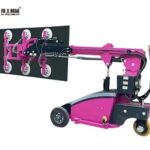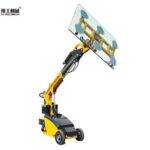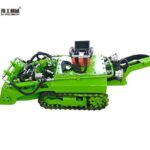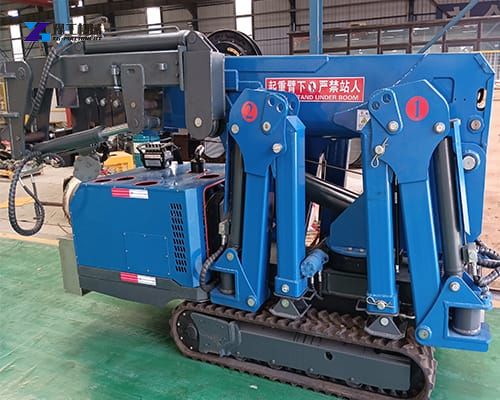
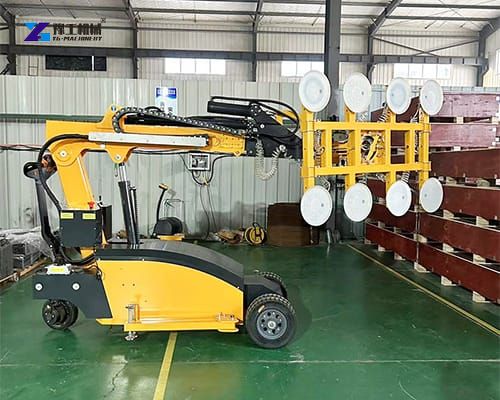
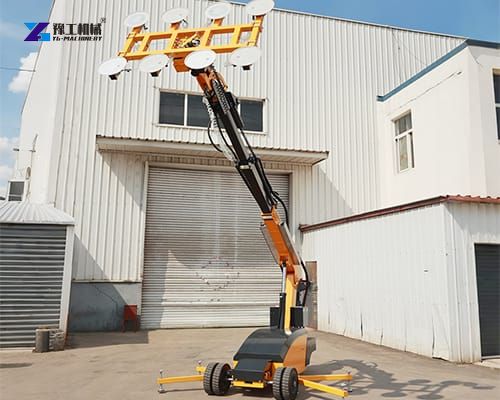
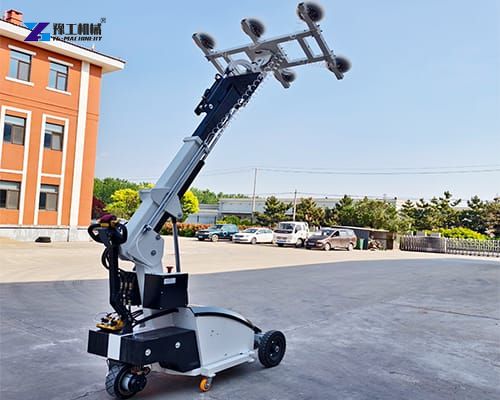
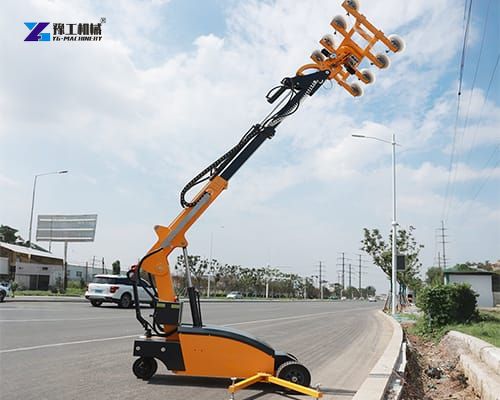
Glass installation robot is a modern solution for lifting, transporting, and precisely installing glass panels in construction projects. Designed to handle heavy and oversized glass sheets, these robots minimize labor intensity while improving workplace safety and efficiency. Whether used in high-rise glazing, façade work, or interior installations, glass lifting robots have become essential in the construction and glazing industry.
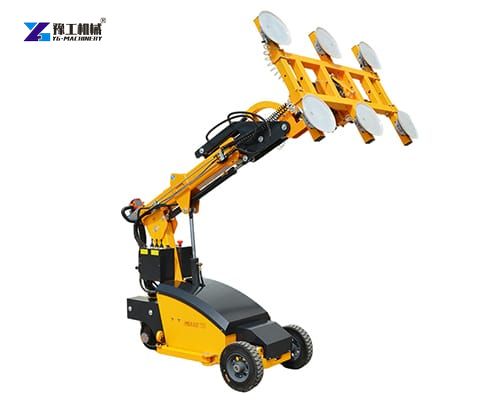
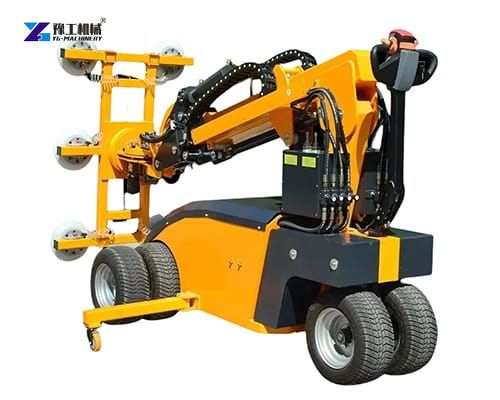
Glass Installation Robot Technical Specifications
| Model Type | YG-LD-300 | YG-LD-400 | YG-LD-500 | YG-LD-600 | YG-LD-800 |
| Load Capacity | 300kg(retract)150kg(extend) | 400kg(retract)200kg(extend) | 500kg(retract)250kg(extend) | 600kg(retract)300kg(extend) | 800kg(retract)400kg(extend) |
| Lifting Height | 3500mm | 3500mm | 3700mm | 3700mm | 4500mm |
| QTY of Suction Cap | 4pcs | 4pcs | 6pcs | 6pcs | 8pcs |
| Rubber Suction Cap | 300mm | Ø300mm | Ø300mm | Ø300mm | Ø300mm |
| Maintenance-free Battery | 2x12V/80AH | 2x12V/100AH | 2x12V/120AH | 2x12V/120AH | 2x12V/120AH |
| Battery Charger | Smart Charger | Smart Charger | Smart Charger | Smart Charger | Smart Charger |
| Drive motor | 24V/1200W | 24V/1200W | 24V/1200W | 24V/1200W | 24V/1200W |
| Lifting Motor | 24V/2000W/6L | 24V/2000W/6L | 24V/2000W/6L | 24V/2000W/6L | 24V/2000W/12L |
| Chassis L*W | 2660*810mm | 2660*810mm | 2800*810mm | 2800*810mm | 2800*810mm |
| Driving Wheel | Ø250x80mm | Ø250x80mm | Ø300x100mm | Ø300x100mm | Ø300x125mm |
| Packing Size(mm) | 2560*1030*1700 | 2560*1030*1700 | 2580*1050*1700 | 2580*1050*1700 | 3000*1250*2300 |
| N.W/G.W | 1100/1150kg | 1280/1330kg | 1300/1350kg | 1400/1450kg | 1600/1650kg |
| Loading Qty | 1x20GP/40GP: 6SETS/12SETS | ||||
| Movement | Automatic(4 kinds) | 1. The suction cup frame flips 180° electrically. 2. The support plate automatically retracts. 3. Hydraulic arm lifts electrically. 4. The base of the whole machine moves 100-150mm horizontally. | |||
| Manual (2kinds) | 1. The suction cup holder can be manually rotated 90 degrees (electrically powered, optional). 2. The suction cup holder can be manually rotated 360 degrees (electrically powered optional). | ||||
| Usages | Mainly used for the handling, movement, and installation of materials such as glass, marble, wood, iron plate, etc. | ||||
Features of Glass Installation Robot
- High Load Capacity: Designed to handle large glass panels with ease.
- Vacuum Suction System: Provides strong and secure grip during lifting and placement.
- Precision Control: Robotic arms allow accurate alignment for seamless installation.
- Mobility and Flexibility: Equipped with wheels or tracks for easy site movement.
Applications of Glass Installation Machine
- High-Rise Building Glazing: Safe installation of large glass panels at height.
- Curtain Wall Installation: Accurate positioning of heavy façade elements.
- Interior Glass Handling: Smooth placement of partitions, doors, and panels.
- Renovation Projects: Quick replacement of damaged or outdated glazing.
Benefits of the Glass Glazing Robot
- Enhanced Safety: Glass installation machine reduces the risk of injury and property damage by automating the heavy lifting and precise placement of large, heavy glass panels.
- Increased Efficiency: Complete projects faster with millimeter-precise placement, reducing installation time and labor costs.
- Unmatched Precision: Advanced controls and vacuum lifting technology allow for flawless, accurate installation of complex architectural glass, curved glass, and oversized windows.
- Versatility: Our robots are engineered to operate in a variety of environments, from tight indoor spaces to challenging outdoor terrains on construction sites.
How Does the Glass Installation Robot Work?
- Robotic Arm Technology
Most glass installation robots are equipped with a multi-axis robotic arm. These arms are designed to have a wide range of motion, allowing them to reach different positions and angles during installation. The robotic arm is controlled by a sophisticated computer system that can be programmed to follow specific installation patterns and adjust to different glass sizes and shapes. - Sensor Systems
To ensure accurate installation, glass installation robots are fitted with a variety of sensors. Laser sensors are used to measure distances and detect obstacles in the installation area. Force sensors monitor the amount of pressure applied during installation, preventing damage to the glass and the surrounding structure. Vision sensors provide real-time feedback on the position and orientation of the glass panel, enabling the robot to make precise adjustments. - End-Effectors
The end-effector is the part of the robot that comes into direct contact with the glass panel. It is designed to grip the glass securely without causing any damage. Some end-effectors use vacuum suction to hold the glass, while others use mechanical clamps. The choice of end-effector depends on the size, shape, and weight of the glass panel being installed.