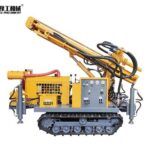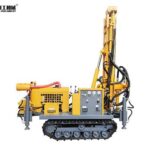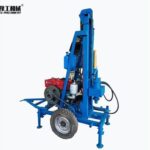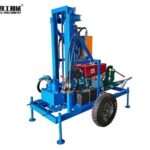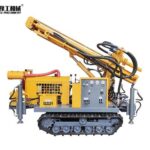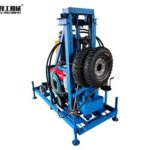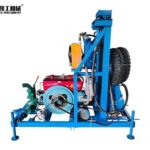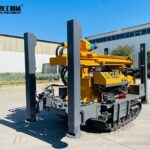
Water well drilling rig machine is a specialized piece of equipment designed to drill holes into the ground to access groundwater. These rigs come in a wide range of sizes and configurations, each tailored to specific drilling requirements and geological conditions. They are equipped with powerful motors or diesel engines, drilling mechanisms, and other components that enable them to penetrate the earth’s surface and reach the water-bearing strata. YG stands at the forefront of providing robust, technologically advanced water well drilling rig machines engineered for exceptional performance across diverse drilling challenges.
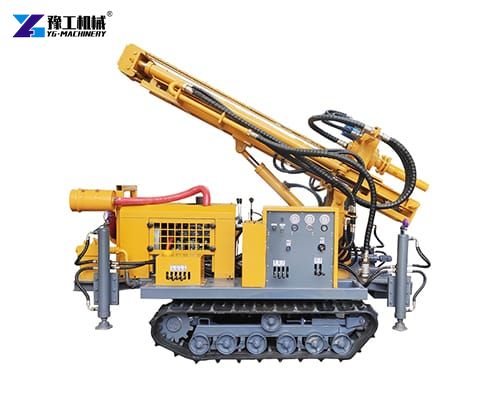
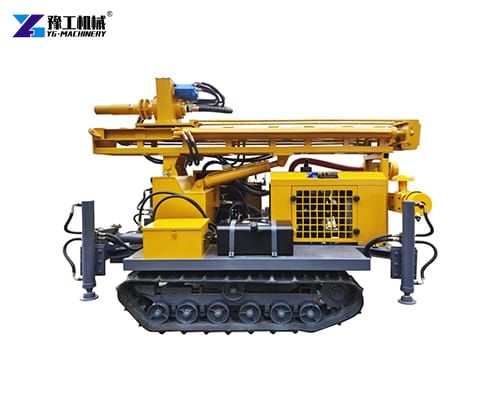
Parameters of the Water Well Drilling Rig Machine
| Model | YG-150 | YG-200 |
| Max Drilling Depth | 150m | 200m |
| Hole Diameter | Φ130-254mm | Φ130-254mm |
| Drilling Pipe Diameter | Φ76/89mm | Φ76/89mm |
| Drilling Pipe Length | 3m | 3m |
| Rig Lifting force | 12Ton | 15Ton |
| Rotating torque | 3500-3800Nm | 4000-4600Nm |
| Rotating speed | 40-65r/min | 45-65r/min |
| Engine power Diesel | 42KW | 58KW |
| Working air pressure | 1.7-2.5MPa | 1.7-2.5MPa |
| Air consumption | 17-31m³/min | 17-31m³/min |
| Dimensions | 3500*1700*2250mm | 3800*1700*2250mm |
| Weight | 4500kg | 4500kg |
Features of Modern Water Well Drilling Rig Machines
- High drilling depth capability is one of the most important features. Many modern rigs can drill between 100 and 600 meters, depending on their design and power capacity.
- Powerful hydraulic systems allow operators to control drilling pressure, rotation speed, and lifting power with precision. This greatly improves drilling efficiency and reduces mechanical strain.
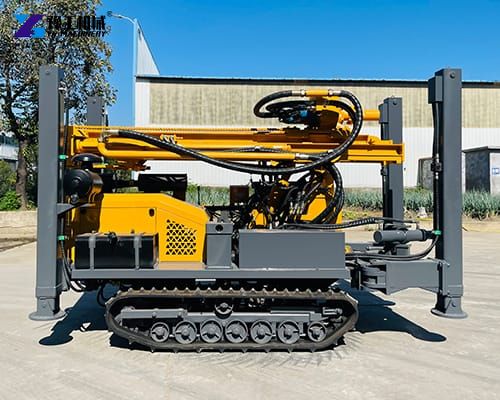
- Mobility is another important feature. Many rigs are mounted on trucks or crawler tracks, allowing them to move across rough terrain, rural fields, or construction sites.
- User-friendly control systems simplify operation. Some rigs include digital displays, automated control modules, and safety protection systems.
- Durability is also a defining feature. High-quality rigs are manufactured using reinforced steel structures designed to withstand continuous heavy-duty operations.
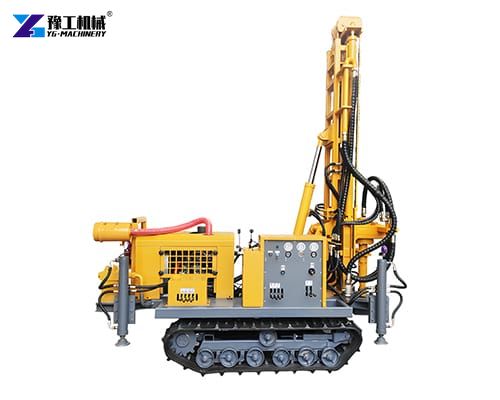
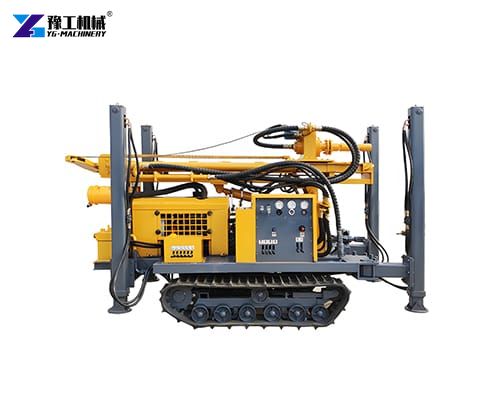
Diverse Applications and Uses
- Agricultural Irrigation: In arid regions, these rigs are the lifeline for farms, providing the consistent water supply needed for crop survival and livestock.
- Domestic Water Supply: For rural homes and communities disconnected from municipal grids, a private well is the only source of clean drinking water.
- Industrial Cooling and Processing: Large-scale factories often require their own water sources for cooling machinery or processing raw materials.
- Geothermal Energy: While primarily for water, these rigs are frequently adapted to install geothermal heat pump loops, which utilize the Earth’s stable underground temperature for HVAC systems.
- Mining and Construction: Rigs are used to dewater construction sites or to create monitoring wells to check for groundwater contamination near industrial zones.


Why Choose a YG Water Well Drilling Rig Machine?
- Robust Construction: Built with high-tensile steel and premium components to withstand harsh job site conditions and ensure longevity.
- Enhanced Drilling Power & Speed: Powerful engines and optimized hydraulic systems deliver superior penetration rates in various geological formations, saving you valuable time and fuel.
- Operator-Centric Design: Intuitive controls, ergonomic cabins, and clear visibility minimize fatigue and maximize productivity during long shifts.
- Versatility Across Terrains: YG offers a comprehensive range of configurations – truck-mounted, trailer-mounted, crawler-mounted – ensuring the perfect water well drilling equipment for sale is available for your specific terrain and access requirements.
Technical Structural Composition
- The Power System
Heavy-duty diesel engines power most rigs. The engine drives the hydraulic pumps, which in turn power the rotation, hoisting, and leveling systems. - The Mast or Derrick
This is the tall, vertical structure that supports the drill string. It must be engineered to withstand significant tension and compression during drilling. - The Drill String
This consists of the drill bit, the drill collars (which provide weight), and the drill pipes. These are the components that actually enter the ground. - The Hoisting System
Comprising winches and pulleys, this system raises and lowers the drill string. It is crucial to add new pipe sections as the hole gets deeper. - The Mud Pump or Air Compressor
Depending on the drilling method, either fluid (mud) or compressed air is circulated down the drill pipe. This serves to cool the bit and carry “cuttings” (bits of rock and soil) back to the surface.

Advantages of Using A Water Well Drilling Rig Machine
- Efficiency is one of the biggest benefits. Mechanical drilling rigs can complete in hours or days what manual drilling would require weeks to accomplish.
- Depth capability is greatly increased. Advanced rigs can reach deeper aquifers that provide cleaner and more reliable water sources.
- Precision drilling improves well quality. Stable drilling structures reduce the risk of borehole collapse or deviation.
- Labor cost reduction is another advantage. A single rig operated by a trained team can perform work that would otherwise require many manual laborers.
- Versatility makes these machines highly valuable. One rig can operate across different soil types, geological formations, and project scales.
Comparison Between Different Types of Water Well Drilling Rigs
- Portable drilling rigs are lightweight and compact. They are suitable for shallow wells and small rural projects, but have limited depth capability.
- Truck-mounted drilling rigs are widely used for medium to deep wells. They offer strong power systems and excellent mobility across roads and construction sites.
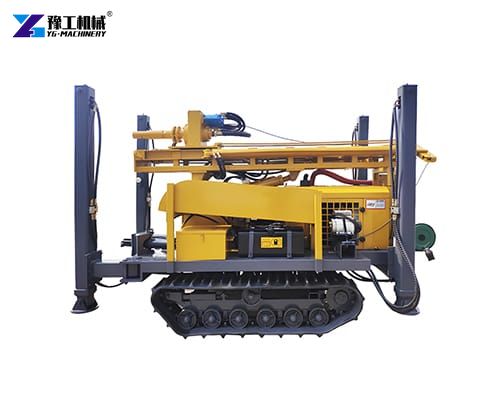
- Crawler-mounted drilling rigs are designed for rough terrain and mountainous regions. Their track system allows them to move across uneven ground where trucks cannot operate easily.
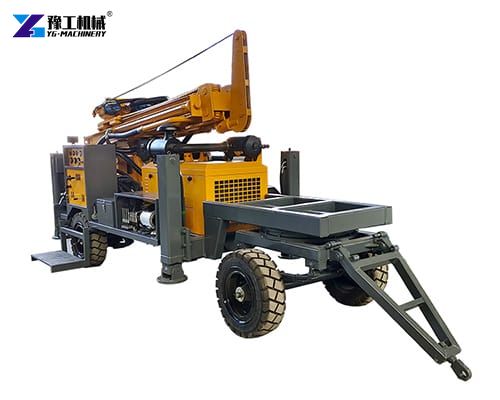
- Trailer-mounted rigs provide a balance between portability and power. They can be transported between job sites while still maintaining good drilling depth capacity.
- Hydraulic drilling rigs are currently the most advanced systems. They use hydraulic power to control drilling functions with high precision and efficiency.
How to Choose the Water Well Drilling Rig Machine?
- Drilling depth requirement is the first consideration. Buyers must ensure that the rig can reach the desired groundwater depth in their region.
- Geological conditions also play an important role. Hard rock environments require stronger rigs with higher torque and hammer drilling capabilities.
- Mobility requirements should also be evaluated. For remote areas or mountainous terrain, crawler-mounted rigs may be more suitable.
- Power source availability can affect equipment choice. Diesel-powered rigs are common for remote locations without electricity access.
- Budget planning is another factor. High-end rigs offer advanced features but require a higher investment. Buyers should balance cost with performance requirements.