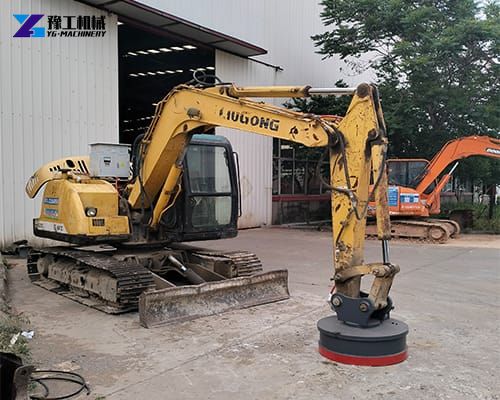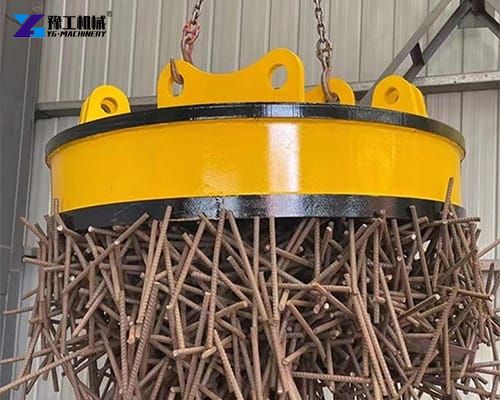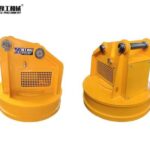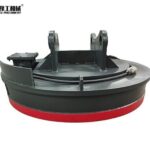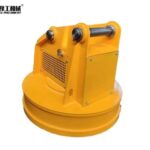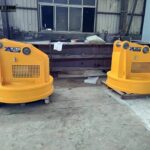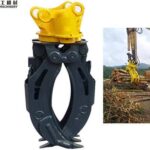
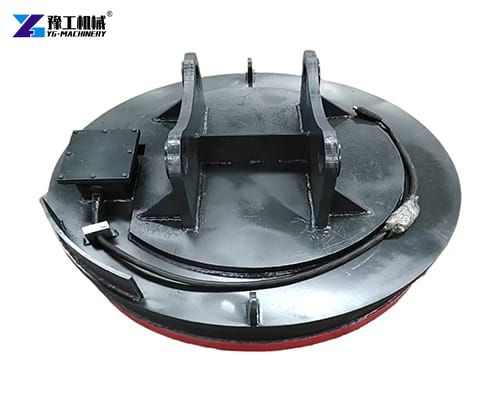
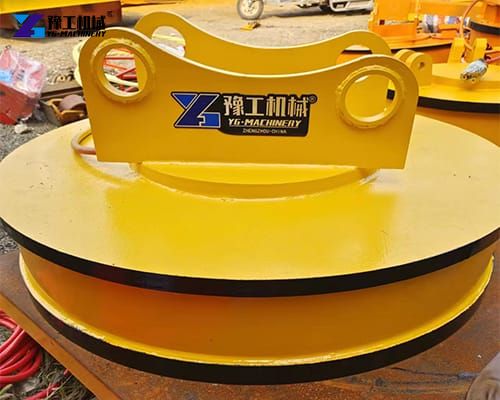
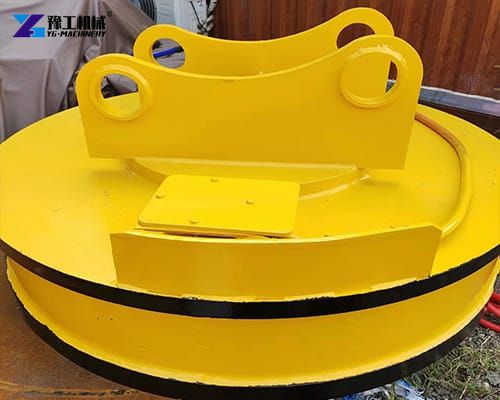
Scrap metal magnet for excavator is a specialised attachment designed to lift, transport, and sort ferrous scrap materials using magnetic force. It is typically mounted on the arm or boom of an excavator and powered either electrically or hydraulically. Compared to conventional grapples or mechanical claws, this attachment relies on magnetic attraction rather than mechanical gripping. The term non-metallic suction refers to the external housing and structure of the magnet, which are built using high-strength non-magnetic materials. This design prevents interference with magnetic performance while enhancing durability and operational stability. The result is a highly efficient lifting solution capable of handling irregular scrap pieces such as steel beams, pipes, rebar, sheet metal, and fragmented demolition debris.
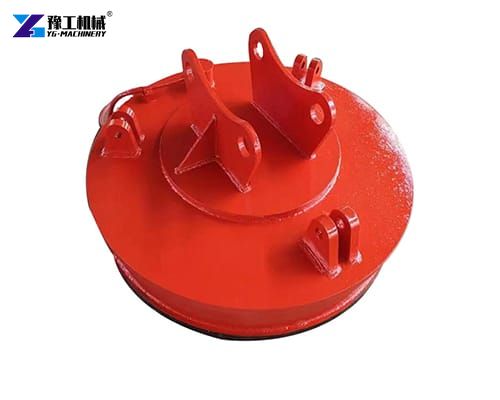
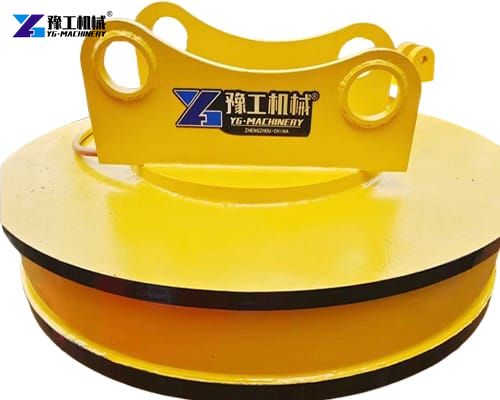
Parameters of the Scrap Metal Magnet for Excavator
| Model | Current/Voltage | Power/KW Current (A) | Dimensions | Duty Cycle | Weight | Feeding Parameters/Reinforcement Bar Ends |
| MW5-70L | 30/220 | 3KW 15A | 70/260/300 | 75% | 0.5T | 300 kg |
| MW5-80L | 30/220 | 4KW 18A | 80/260/300 | 75% | 0.7T | 400 kg |
| MW5-90L | 40/220 | 6KW 26.6A | 90/260/300 | 75% | 0.9T | 500 kg |
| MW5-100L | 40/220 | 7KW 30.6A | 100/260/300 | 75% | 1T | 600 kg |
| MW5-110L | 40/220 | 8KW 35A | 110/260/300 | 75% | 1.2T | 800 kg |
| MW5-120L | 50/220 | 10KW 41A | 120/260/300 | 75% | 1.3T | 1 T |
| MW5-130L | 50/220 | 12kw 45A | 130/260/300 | 75% | 1.6T | 1.2 T |
| MW5-150L | 60/220 | 15kw 72A | 150/300/340 | 75% | 2.2T | 1.7 T |
| MW5-165L | 60/220 | 16kw 75A | 165/300/340 | 75% | 2.8T | 2.3 T |
| MW5-180L | 90/220 | 22kw 102A | 180/320/370 | 75% | 3.3T | 3 T |
| MW5-210L | 130/220 | 28kw 162A | 210/320/370 | 75% | 4T | 4 T |
Advantages of Using Excavator Scrap Metal Magnet
- Improved Efficiency
One of the primary benefits of using a scrap metal magnet for excavator is the significant increase in productivity. Operators can lift multiple pieces of scrap in a single motion without manually positioning the attachment. This reduces loading times and increases throughput in recycling operations. - Enhanced Safety
Manual handling of scrap metal is dangerous due to sharp edges, unstable piles, and unpredictable weight distribution. A magnetic attachment minimises direct human contact with materials, reducing workplace injuries and liability risks. - Versatility Across Applications
A scrap metal magnet for an excavator can be used in a wide range of environments, including scrapyards, construction sites, demolition projects, foundries, and shipping docks. Its adaptability makes it a cost-effective long-term investment. - Reduced Wear and Maintenance
Because there are fewer moving mechanical parts compared to grapples, magnetic systems typically experience less mechanical wear. The non-metallic protective shell adds durability, extending service life even in harsh conditions.
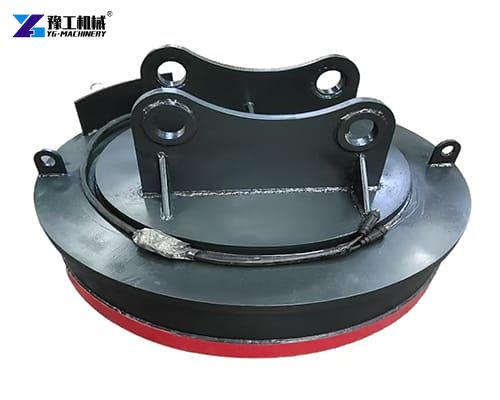
Main Applications of Excavator Metal Magnet
- Scrap Yard Operations
In scrap processing facilities, speed and accuracy are critical. The scrap metal magnet for excavator enables rapid collection of steel scrap, car bodies, structural beams, and production waste. It also simplifies loading scrap into trucks, shredders, or storage areas. - Demolition Projects
During building demolition, large volumes of reinforced concrete and steel debris are generated. A magnetic attachment helps separate steel reinforcement bars and structural steel components from rubble, facilitating recycling and reducing landfill waste. - Recycling Plants
Metal recycling centers rely heavily on magnetic separation. Installing a scrap metal magnet for excavator allows operators to extract ferrous metals from mixed construction and industrial waste streams efficiently. - Port and Dock Operations
Shipping terminals handling bulk scrap exports use excavator magnets to load and unload vessels quickly. The strong magnetic force ensures stable lifting, even for irregularly shaped materials. - Industrial Manufacturing
Factories generating steel offcuts, stamping waste, or defective components can use magnetic attachments to manage scrap more effectively, improving workplace organization and material recovery rates.
Key Technical Features to Consider
When selecting a scrap metal magnet for excavator, several technical factors should be evaluated carefully.
- Magnetic Lifting Capacity
Lifting capacity is the most critical parameter. It should match the size and weight of materials you intend to handle. Oversized magnets may add unnecessary weight, while undersized units limit productivity. - Diameter and Contact Surface
The diameter of the magnet affects the area of contact with scrap materials. Larger diameters provide better coverage for sheet metal and flat surfaces. - Power Supply Compatibility
Ensure that your excavator can support the electrical or hydraulic requirements of the magnet system. Compatibility is essential for stable operation. - Durability and Protective Design
The non-metallic outer shell should be impact-resistant and wear-resistant. High-quality insulation and sealing protect internal components from dust, moisture, and debris. - Temperature Resistance
In high temperature environments such as steel mills or foundries, magnets must withstand elevated temperatures without performance degradation.