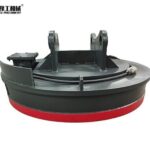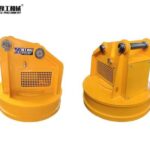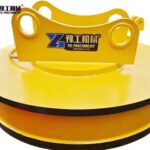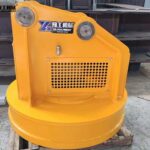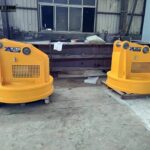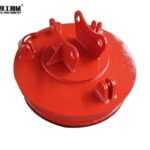
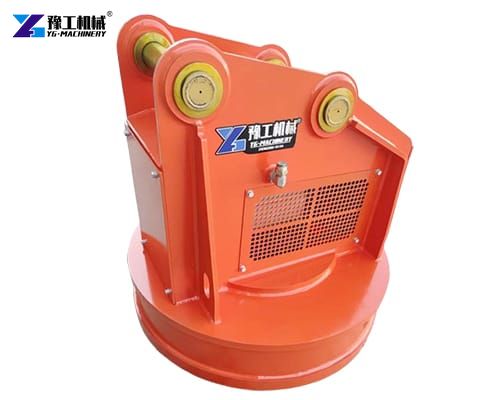
Hydraulic excavator magnet is an attachment mounted on an excavator arm that uses hydraulic energy from the host machine to generate electrical power, which then creates a magnetic field capable of lifting ferrous metals. It is usually to pick up, transport, and release ferrous metal materials. Different from traditional standalone magnets that require external generators or battery packs, hydraulic versions integrate directly with the excavator’s hydraulic system. This integration simplifies installation, improves mobility, and reduces operational complexity. The result is a self-contained, efficient lifting solution suitable for demanding industrial environments.
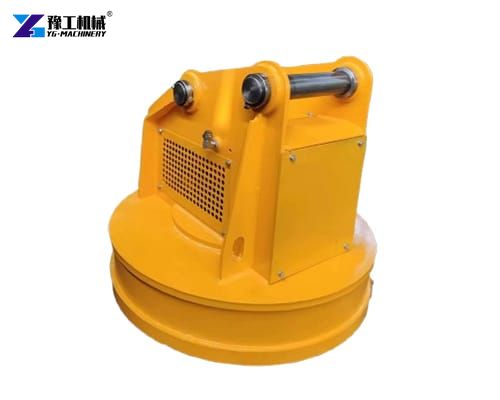

Hydraulic Excavator Magnet Parameters
| Model | YGML02 | YGML04 | YGML06 | YGML08 | YGML10 | YGML14 | YGML20 |
| Suitable excavator | 4-6T | 7-11T | 12-16T | 17-23T | 24-30T | 31-40T | 41-50T |
| Weight | 1400kg | 1500kg | 1890kg | 2000kg | 2200kg | 2500kg | 2800kg |
| Power | 5kw | 8kw | 8kw | 10kw | 10kw | 15kw | 15kw |
| Outer diameter | 700mm | 800mm | 900mm | 1100mm | 1200mm | 1300mm | 1400mm |
| Working flow | 30-55 lpm | 50-100 lpm | 90-110 lpm | 100-140 lpm | 130-170 lpm | 200-250 lpm | 250-320 lpm |
| Working pressure | 170 bar | 180 bar | 190 bar | 200 bar | 210 bar | 250 bar | 250 bar |
Features of A Hydraulic Magnet for Excavator
Modern hydraulic excavator magnet systems are engineered for durability, performance, and ease of operation. Some of their primary features include:
- Integrated hydraulic generator system that eliminates the need for external power sources.
- Heavy-duty circular magnet plate designed for maximum contact area.
- High-strength wear-resistant housing to protect internal components.
- Fast magnetization and demagnetization cycles for efficient workflow.
- Remote control or cab-integrated control system for safe operation.
Common Uses and Versatile Applications
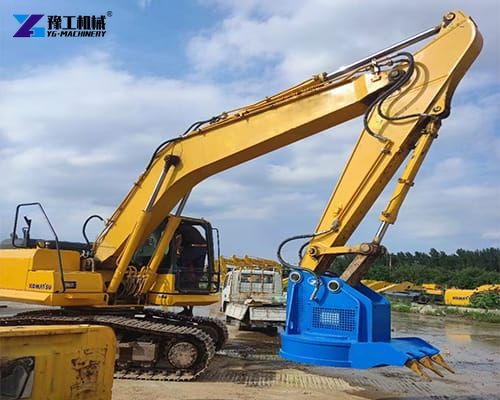
- Recycling Centers and Scrap Yards
This is the primary habitat for the hydraulic excavator magnet. It is used to sort ferrous metals from non ferrous materials, load trailers, and feed shredders. The ability to reach into deep piles of metal makes it indispensable. - Demolition Sites
After a building is brought down, the site is a chaotic mix of concrete, wood, and rebar. A hydraulic magnet can quickly extract the valuable steel rebar from the rubble, turning waste into revenue while cleaning the site for further processing. - Railway Maintenance
Old rail tracks and spikes are heavy and awkward to handle manually. Excavator magnets make quick work of clearing old tracks or organizing new components during rail line upgrades. - Port and Terminal Operations
In maritime logistics, these magnets assist in cleaning up spilled metal cargo or moving smaller steel components that aren’t suited for massive container cranes. - Road and Infrastructure Safety
Following large scale construction or accidents, magnets are used to clear roads of nails, bolts, and metal shards that could cause tire punctures for the public.
Advantages of Using Hydraulic Magnets
- Increased Job Site Safety
By automating the collection of metal, you reduce the need for ground personnel to manually handle sharp, heavy, or rusted scrap. This significantly lowers the risk of workplace injuries. - Reduced Labor Costs
A single operator equipped with a hydraulic excavator magnet can do the work of a five person ground crew in a fraction of the time. This allows companies to reallocate labor to more complex tasks. - Enhanced Material Value
Clean scrap fetches a higher price. By using a magnet to precisely sort ferrous metals from contaminants, you ensure that your recycled material meets the highest purity standards of steel mills.
Excavator Hydraulic Magnet Working Principle
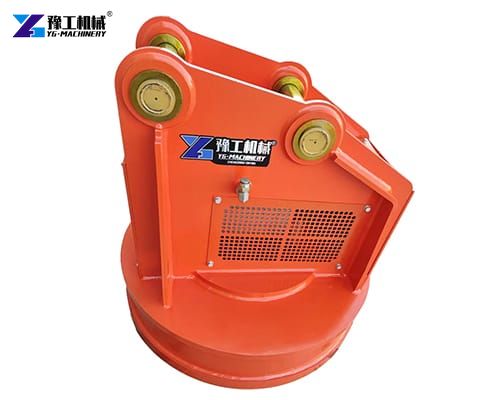
The operation of a hydraulic excavator magnet follows a specific sequence of energy conversion.
- Step 1: Hydraulic Activation
The operator engages the auxiliary hydraulic circuit from the cab. High-pressure fluid flows into the magnet’s onboard hydraulic motor. - Step 2: Electrical Generation
The motor spins the generator. As the generator reaches its rated RPM, it begins producing Direct Current (DC) electricity. - Step 3: Magnetization
The DC is sent through the internal coils. According to Faraday’s Law of Induction, this flow of electricity creates a powerful magnetic field that radiates downward from the face of the magnet. - Step 4: Material Attraction
The magnetic field penetrates the scrap pile, aligning the domains of the ferrous metal and pulling it toward the magnet face. - Step 5: Release and Demagnetization
When the operator toggles the switch to release, the control module reverses the polarity for a split second or uses a discharge resistor to kill the field. This ensures that even small “nuisance” pieces of metal fall off immediately rather than clinging to residual magnetism.
How to Choose the Right Hydraulic Magnet Attachment
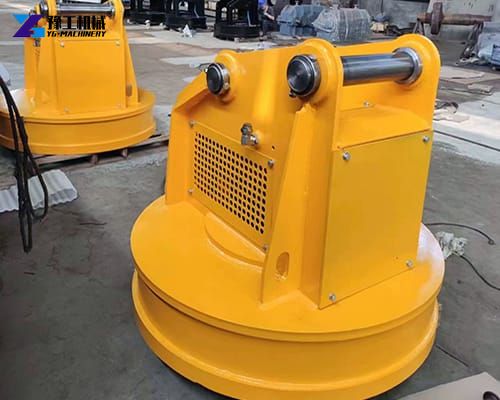
Selecting the appropriate hydraulic excavator magnet requires careful consideration of several factors.
- Excavator Size and Hydraulic Flow
Ensure compatibility between the magnet and the excavator’s hydraulic capacity. Flow rate and pressure must match the magnet’s requirements. - Lifting Capacity
Choose a magnet with sufficient lifting force for your typical materials. Overloading can damage equipment and reduce its lifespan. - Working Environment
For heavy demolition, select models with reinforced casings. For recycling facilities, focus on efficiency and quick cycle times.
Maintenance and Repair Guidelines
Routine maintenance extends the lifespan of a hydraulic excavator magnet and ensures consistent performance.
- Daily Inspection
Check for hydraulic leaks, loose bolts, and visible damage. Inspect the magnet surface for excessive wear. - Hydraulic System Maintenance
Maintain clean hydraulic oil and replace filters as recommended. Contaminated oil can damage internal components. - Electrical System Checks
Inspect wiring and connections regularly to prevent short circuits or power loss. - Coil Protection
Avoid overheating by not exceeding recommended duty cycles. Overheating can damage electromagnetic coils. - Surface Cleaning
Remove accumulated metal fragments to maintain maximum magnetic efficiency. - Professional Servicing
Schedule periodic professional inspections to identify hidden wear or potential failures.