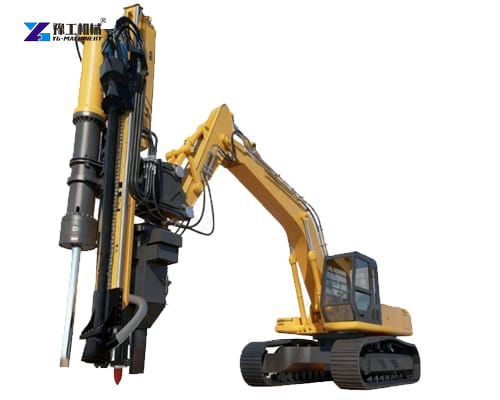
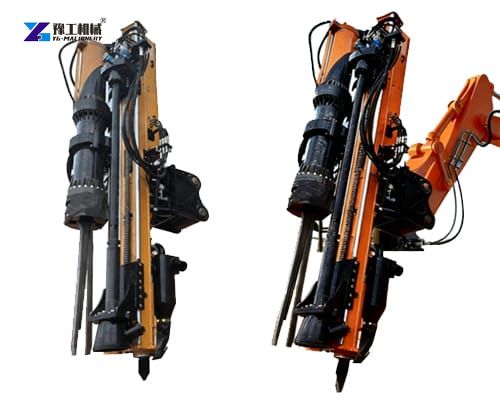
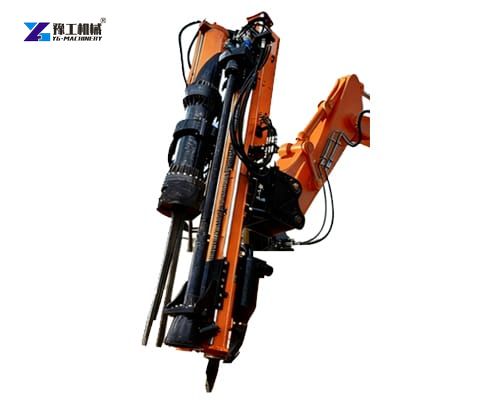
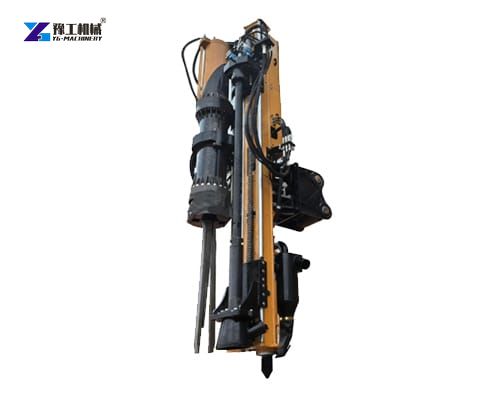
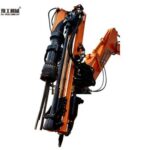
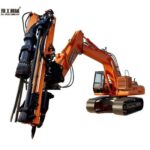
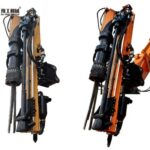
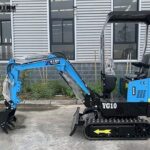
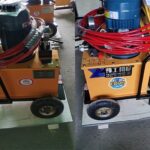
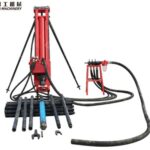
Excavator rock drill and splitter is a multifunctional attachment designed to transform a standard excavator into a high-performance rock processing station. Unlike standalone units, this integrated system uses the carrier’s hydraulic power to drive both a high-frequency percussion drill and a high-force wedge splitter. The workflow is elegant in its simplicity: the drill creates precise holes in the rock mass, and the splitter follows up by applying thousands of tons of lateral force from within those holes. The result is a clean, controlled fracture that bypasses the need for high explosives or the relentless vibration of a hammer.
excavator rock drill and splitter
Parameter of the Excavator Rock Drill and Splitter
Integrated Drilling And Splitting Function The machine combines rock drilling and splitting into one compact attachment. This integration reduces the need for multiple machines on site and enhances operational efficiency.
High Splitting Force Hydraulic splitters can generate thousands of tons of splitting force, allowing them to break even the hardest granite and basalt formations without blasting.
Low Vibration And Noise Compared to hydraulic breakers and blasting, the excavator rock drill and splitter produces significantly less vibration and noise. This makes it ideal for projects in populated areas.
Precise Control Operators can control the direction and depth of drilling and the timing of splitting, enabling highly accurate rock removal.
Compatibility With Various Excavators Manufacturers design these systems to be compatible with different excavator models, ranging from small to large tonnage machines.
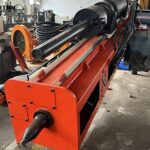
Rock Drill Unit This is responsible for drilling holes into the rock surface. It usually consists of a hydraulic motor, impact mechanism, drill rod, drill bit, and feed system. The drill unit ensures precise hole depth and diameter according to project requirements.
Hydraulic Rock Splitter The excavator rock drill and splitter includes a central wedge and two counter wedges. When hydraulic pressure is applied, the central wedge pushes the counter wedges outward, generating immense lateral force against the rock wall inside the drilled hole.
Hydraulic System The system connects to the excavator hydraulic circuit. It controls the flow and pressure required for drilling and splitting operations.
Mounting Bracket The bracket attaches the drill and splitter assembly to the excavator arm, ensuring stability and proper alignment during operation.
Control System The operator controls drilling speed, splitting pressure, and positioning from the excavator cabin, often through an integrated control panel.
Working Principle of the Integrated Rock Drill and Splitter
The operation process of an excavator rock drill and splitter can be divided into several steps.
First, the operator positions the excavator at the designated rock breaking area. The rock drill unit is aligned vertically or at a specific angle depending on the desired fracture line.
Second, the drilling unit creates holes in the rock. The hole diameter and depth are determined by the splitter specifications and the hardness of the rock.
Third, the hydraulic splitter is inserted into the drilled hole. When hydraulic pressure is applied, the central wedge moves forward, forcing the counter wedges outward. This action generates tremendous expansion force against the inner wall of the hole.
Finally, the rock fractures along natural lines of weakness or along the predetermined drilling pattern. The excavator can then remove the broken rock pieces easily.
Construction and Urban Development In foundation excavation, basement construction, and road expansion projects, especially in urban environments, blasting is often prohibited. The excavator rock drill and splitter provide a safe and compliant solution.
Mining and Quarrying In selective mining operations, where precise rock separation is required, this equipment helps reduce waste and improve resource recovery.
Slope Stabilization And Landscaping In mountainous regions, the machine is used to shape slopes and remove protruding rock sections with high precision.
We use cookies to ensure that we give you the best experience on our website. If you continue to use this site we will assume that you are happy with it.