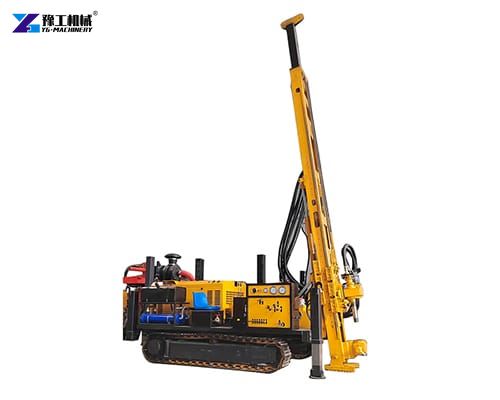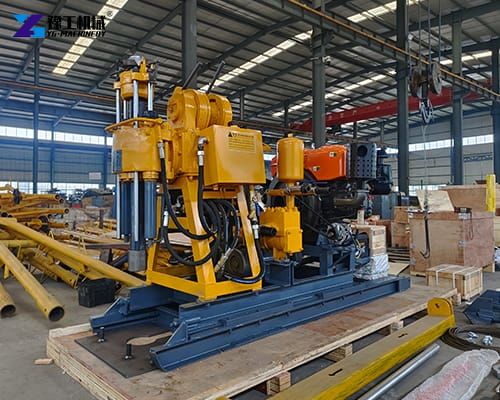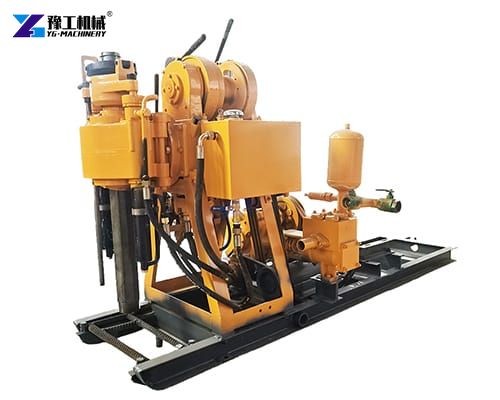
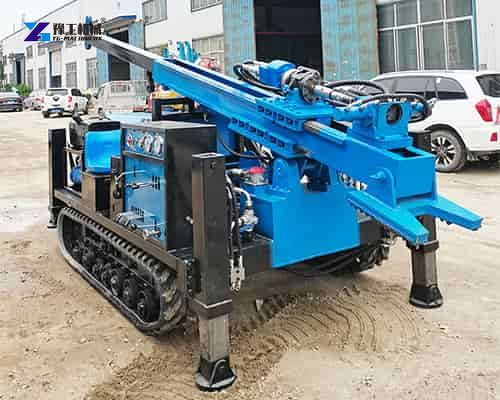
Choosing the right drilling equipment is essential for achieving efficient, accurate, and reliable results in hard rock coring projects. Whether you are conducting mineral exploration, geological investigation, or mining exploration, a suitable full hydraulic core drilling rig can significantly improve drilling performance, reduce operational costs, and extend equipment service life. However, with various drilling rigs available on the market, selecting the right model requires careful consideration of several technical and operational factors. In this guide, we will discuss how to choose a full hydraulic core drilling rig for hard rock coring, including key specifications, hydraulic systems, drilling capacity, core recovery performance, and other important considerations.
1. Understand Your Hard Rock Drilling Requirements
Before purchasing a full hydraulic core drilling rig, we should first understand the geological conditions and project requirements.
Hard rock formations, such as granite, basalt, quartzite, and other highly consolidated rock types, require drilling equipment with sufficient torque, stable rotation, and reliable feed pressure.
Consider the following factors:
- Rock hardness: Harder formations require higher drilling torque and more durable diamond drill bits.
- Drilling depth: Determine the maximum depth required for your exploration project.
- Borehole diameter: Select a rig compatible with your required core sizes, such as BQ, NQ, HQ, or PQ.
- Terrain conditions: Consider whether the drilling site is located in mountainous areas, remote locations, or confined spaces.
Understanding these requirements will help you narrow down the available options and avoid purchasing equipment that does not match your actual working conditions.
2. Check the Drilling Capacity and Maximum Drilling Depth
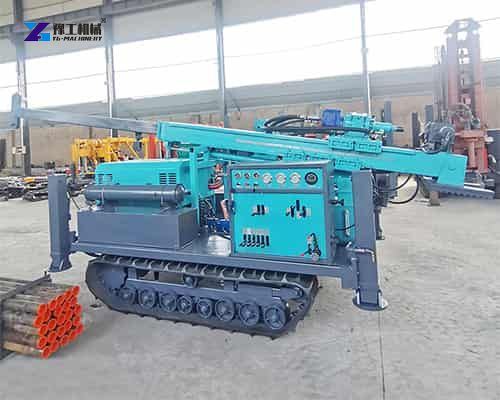
Drilling capacity is one of the most important specifications when selecting a full hydraulic core drilling rig for hard rock. Different rigs are designed for different drilling depths and borehole diameters. For hard rock coring, the equipment must provide sufficient power and structural stability to maintain consistent drilling performance at the required depth.
When comparing drilling rigs, pay attention to:
- Maximum drilling depth
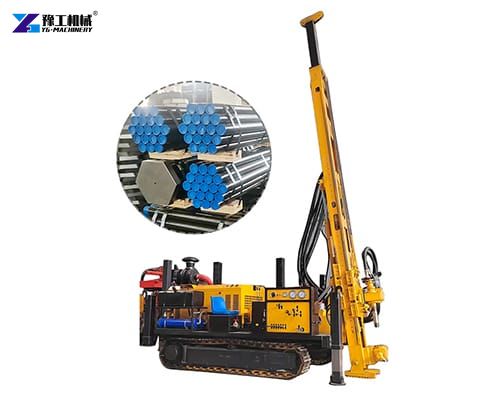
- Compatible drill rod specifications
- Drilling diameter range
- Hoisting capacity
- Feed stroke
- Mast or tower configuration
It is important to understand that the maximum drilling depth specified by manufacturers may vary depending on drill rod size, geological conditions, and drilling configuration.
For example, a rig rated for 1,000 meters of drilling capacity under certain conditions may achieve a different effective depth when using larger-diameter drill rods or working in challenging formations.
Practical tip: Choose a drilling rig with sufficient capacity beyond your expected project depth. This provides additional flexibility when geological conditions become more demanding.
3. Evaluate the Hydraulic System Performance
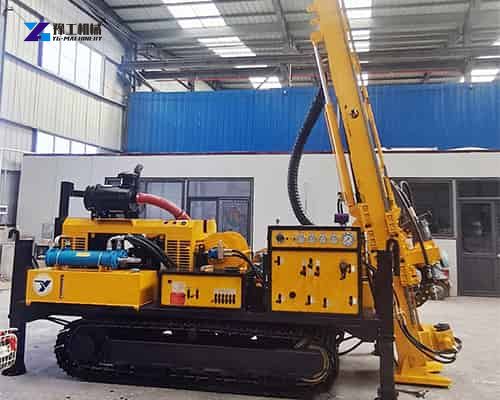
The hydraulic system is the core of a full hydraulic core drilling rig. The full hydraulic models use hydraulic power to control major drilling operations.
Key hydraulic components to evaluate include:
Hydraulic Pump
The hydraulic pump supplies power to the drilling system. Its performance directly affects drilling speed, torque output, and overall operating efficiency.
Hydraulic Motor
The hydraulic motor drives the rotary head and determines the available rotational torque and speed.
For hard rock coring, a rig should offer an appropriate combination of high torque at low rotational speeds and sufficient speed for different drilling conditions.
Hydraulic Feed System
A stable hydraulic feed system ensures consistent pressure during drilling. It helps maintain smooth bit penetration, reduces vibration, and minimizes unnecessary wear on drilling tools.
Hydraulic Control System
An intuitive control system allows operators to adjust rotation speed, feed pressure, and other drilling parameters according to changing geological conditions.
4. Choose the Right Rotary Torque and Rotation Speed
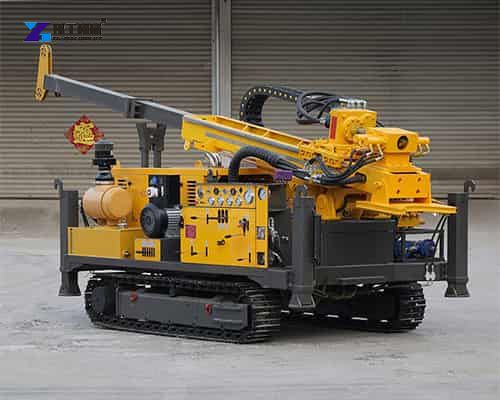
Hard rock coring requires an appropriate balance between rotary torque and rotational speed.
If the torque is insufficient, the drill bit may struggle to penetrate hard formations. On the other hand, excessive rotational speed can increase diamond bit wear, generate unnecessary heat, and reduce drilling stability.
Consider these factors:
- Maximum and continuous rotary torque
- Adjustable rotation speed
- Torque performance at different speeds
- Rotary head stability
- Compatibility with diamond core drill bits
For particularly hard or abrasive rock formations, sufficient low-speed torque is especially important.
The best drilling rig is not necessarily the one with the highest rated torque or rotation speed. It is the one that provides a suitable operating range for your specific drilling conditions.
5. Pay Attention to Core Recovery and Drilling Accuracy
Core recovery is a critical performance indicator in geological exploration.
The objective of core drilling is not simply to create a borehole but also to retrieve high-quality rock samples for geological analysis.
A reliable full hydraulic core drilling rig for hard rock should support stable drilling conditions and minimize unnecessary disturbance to the core.
Important features include:
- Smooth hydraulic feed control
- Stable rotary head operation
- Low vibration during drilling
- Accurate drilling parameter adjustment
- Compatibility with wireline core barrel systems
For deep-hole mineral exploration, a wireline coring system is particularly useful because it allows the inner core barrel to be retrieved without removing the entire drill string.
This can significantly reduce tripping time and improve overall drilling efficiency.
However, actual core recovery also depends on the drill bit, core barrel design, drilling fluid, operator experience, and geological conditions.