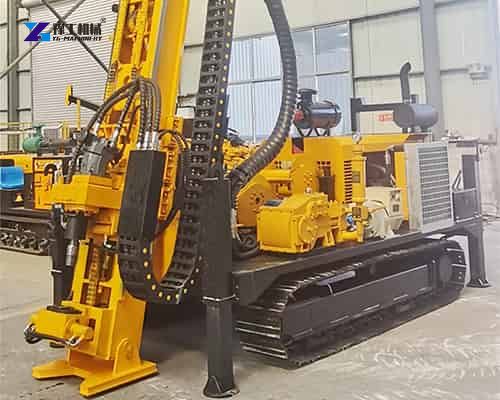
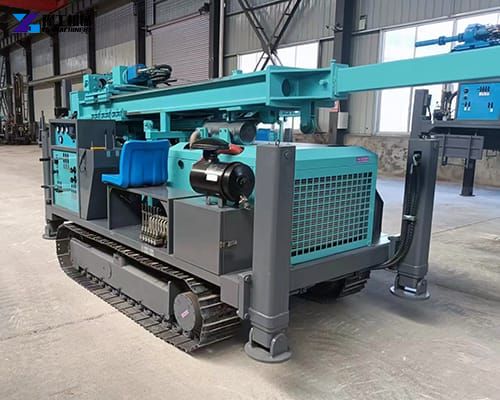
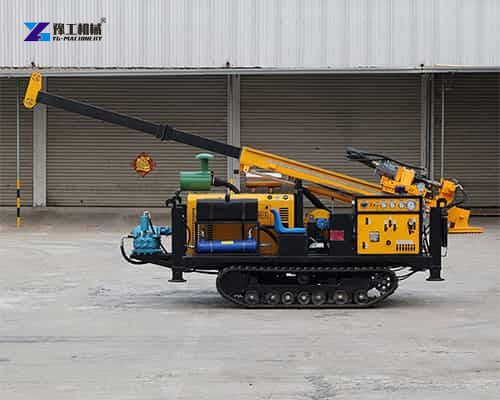
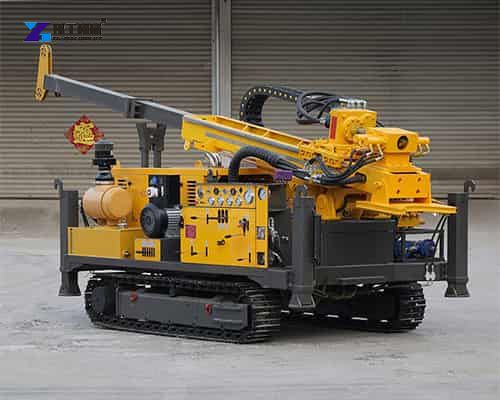
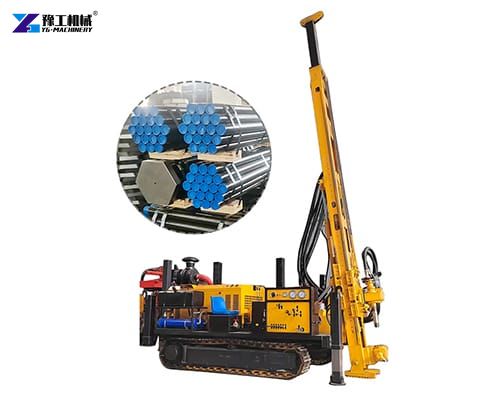
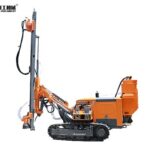
There is no single depth for a hydraulic core drilling rig for mineral exploration. In mineral exploration, full hydraulic rigs commonly drill from a few hundred meters to about 1,500 m, while larger high-capacity models can reach 2,000–3,000 m under favorable conditions and with smaller rod sizes. A few specialized deep-hole rigs can go beyond that, but they are not typical standard exploration units. For most mineral exploration programs, the practical range is 300–1,000 m, with holes deeper than 1,500 m being relatively uncommon and usually requiring a larger rig, careful planning, and favorable geology.
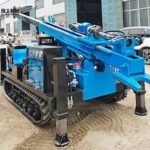
hydraulic core drilling rig for mineral exploration
The hydraulic core drilling rig for mineral exploration uses hydraulic power for rotation, feed, rod handling, and often for the top drive. “Full hydraulic” describes the drive and control system, not the depth capacity. Depth depends mainly on:
Rig size and structural capacity — mast, hoist, rotary head, feed system, and rod string strength.
Rod size — smaller rods can go deeper. A rig rated for 1,000 m with NQ rods may only reach 600–700 m with HQ rods, or may reach more than 1,200 m with BQ rods.
Drilling method — wireline coring is the standard for mineral exploration and is more efficient than conventional coring.
Geology — fractured, abrasive, swelling, or high-temperature formations reduce achievable depth and increase risk.
Hole angle — inclined holes increase friction and rod loads; depth ratings are usually quoted for vertical holes.
Drilling fluid and pump capacity — poor hole cleaning can stop a hole before the rig reaches its nominal rating.
Operator skill and site logistics — water supply, power, access, altitude, and climate all matter.
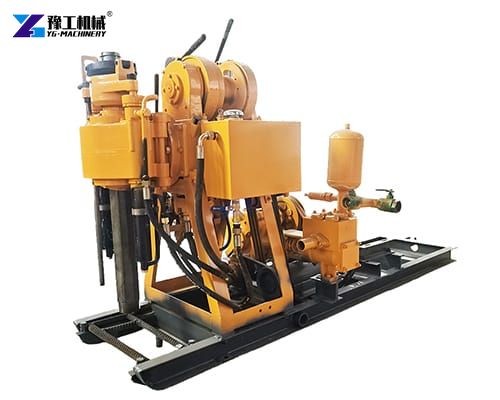
hydraulic core drill rig for ore sampling and mineral exploration
A depth rating is a design and safety limit, not a guarantee. In practice, a rig may finish a hole at 900 m when rated for 1,000 m, or it may struggle at 700 m if the hole is unstable. Important practical limits include:
Rod string weight — deeper holes mean heavier strings and higher hoist loads.
Torque and rotation — larger rods and difficult ground require more power.
Hole deviation — deep holes can drift, increasing friction and reducing reach.
Core recovery — at depth, recovery and hole stability become harder to control.
Tripping time — deeper holes take longer to trip, reducing productivity.
Stuck rods and loss circulation — these can end a hole early regardless of rig capacity.
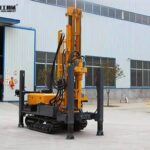
hydraulic core drilling rig machine for mining prospecting
Practical Tips To Maximize Your Rig’s Working Depth
Even with a properly selected full hydraulic core drilling rig for mineral exploration, many operators fail to reach the expected maximum depth due to improper operation and poor project planning. The first most important tip is never to judge depth capacity by a single advertised number, but always confirm the depth value corresponding to the exact core barrel specification you will use for your project. A rig that claims 1000 meter depth on BQ specification may only reach 400 meters when running HQ core barrels.
It’s better to leave a reasonable safety margin between the target project depth and the rig’s maximum rated depth under the corresponding core specification. For a 600 meter project, it is much more reasonable to choose a rig that can reach 800 meters on the same core specification, rather than pushing a 600 meter rated rig to its absolute limit. This extra 20 to 30 percent depth reserve will give you enough power and lifting force to handle unexpected complex formations, hole deviation correction and downhole accident treatment, which will greatly improve your overall drilling efficiency and reduce non productive time.
Proper maintenance of drill string and hydraulic system also helps you maintain consistent depth performance throughout the whole project period. Regular inspection of drill pipe thread wear, timely replacement of sealing components and scheduled hydraulic oil filtration can prevent unexpected power loss and downhole accidents that would otherwise force you to abandon a hole before reaching target depth. Matching your drilling parameters including rotary speed, feeding pressure and flushing fluid flow to the specific formation conditions you encounter will also reduce unnecessary equipment wear, helping you maintain stable penetration rate even when drilling past 500 meters or deeper.
Full hydraulic core drilling rigs have completely reshaped the modern mineral exploration industry, offering far more consistent depth performance, better core sample quality and higher operation safety than traditional mechanical drilling rigs. Their actual maximum drilling depth is not a simple number printed on the specification sheet, but a comprehensive result determined by core specification selection, power configuration, formation condition and on site operation quality. By understanding how these different factors interact with each other, exploration teams can select the most suitable rig for their specific project, achieve reliable core recovery, and complete mineral resource assessment work with much higher efficiency and lower overall operating cost.
full hydraulic core drill machine for engineering investigation
We use cookies to ensure that we give you the best experience on our website. If you continue to use this site we will assume that you are happy with it.