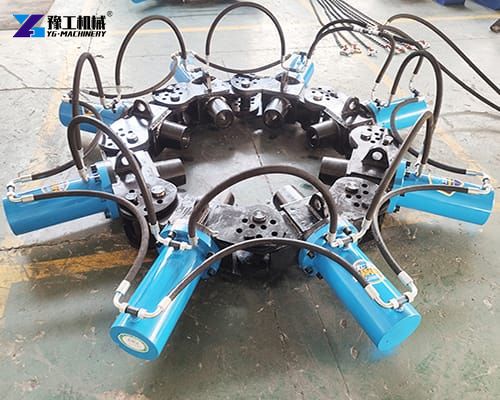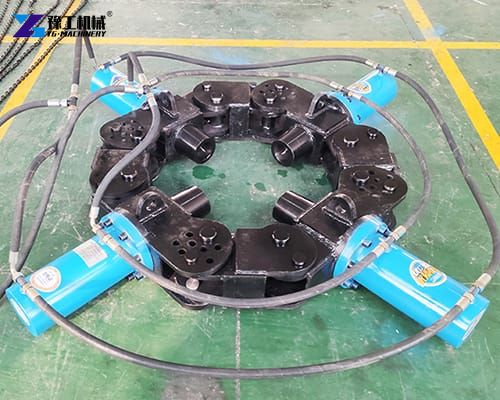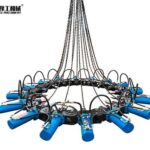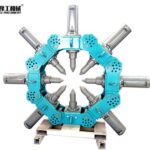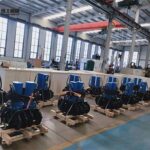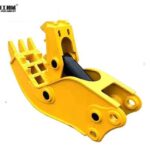
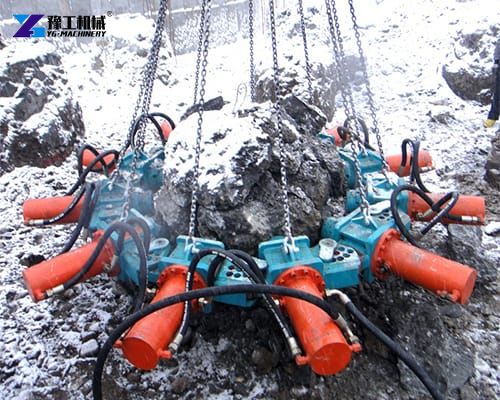
Hydraulic pile breaker is a specialized attachment, typically mounted on excavators or cranes, designed to crush the concrete at the head of a foundation pile without damaging the internal steel reinforcement (rebar). In the construction of skyscrapers, bridges, and industrial complexes, piles are cast deeper than necessary to ensure the structural integrity of the concrete at the finished grade. Once the concrete cures, the “excess” must be removed to expose the rebar, which is then tied into the building’s main slab or pile cap. The hydraulic concrete pile breaker utilizes a modular design, consisting of multiple interconnected hydraulic cylinders. These cylinders exert immense radial pressure on the pile, causing the concrete to fracture and crumble away cleanly.
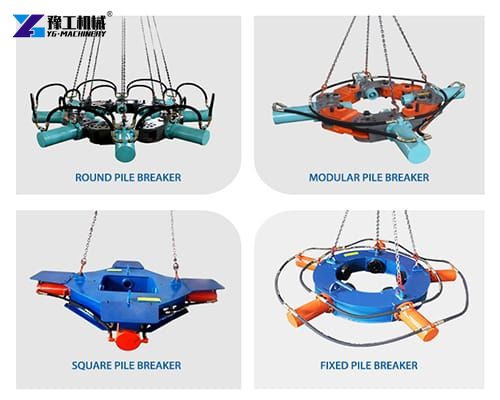
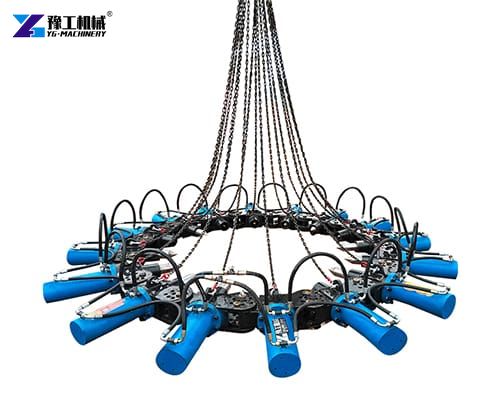
Parameters of the Hydraulic Pile Breaker
| Model | YG-800 | YG-980 | YG-1150 | YG-1300 | YG-1500 | YG-1650 | YG-1800 | YG-2000 | YG-2150 | YG-2300 | YG-2500 |
| Applicable pile diameter | 600-800mm | 800-900mm | 1100-1150mm | 1150-1300mm | 1300-1500mm | 1500-1650mm | 1650-1800mm | 1800-2000mm | 2000-2150mm | 2150-2300mm | 2300-2500mm |
| Number of modules | 8 | 9 | 10 | 11 | 12 | 13 | 14 | 15 | 16 | 17 | 18 |
| Machine weight | 2400kg | 2700kg | 3000kg | 3300kg | 3600kg | 3900kg | 4200kg | 4500kg | 4800kg | 5100kg | 5400kg |
| Applicable excavator model | 20-30T | 20-30T | 20-30T | 30-40T | 30-40T | 30-40T | Hydraulic pump station | Hydraulic pump station | Hydraulic pump station | Hydraulic pump station | Hydraulic pump station |
| Cylinder stroke | 250mm | 250mm | 250mm | 250mm | 250mm | 250mm | 250mm | 250mm | 250mm | 250mm | 250mm |
| Working pressure | 35Mpa | 35Mpa | 35Mpa | 35Mpa | 35Mpa | 35Mpa | 35Mpa | 35Mpa | 35Mpa | 35Mpa | 35Mpa |
| Oil storage capacity of a single module | 5L | 5L | 5L | 5L | 5L | 5L | 5L | 5L | 5L | 5L | 5L |
| Breaking force | 70T | 70T | 70T | 70T | 70T | 70T | 70T | 70T | 70T | 70T | 70T |
Structure and Components of Hydraulic Pile Breaker
- Modular Links
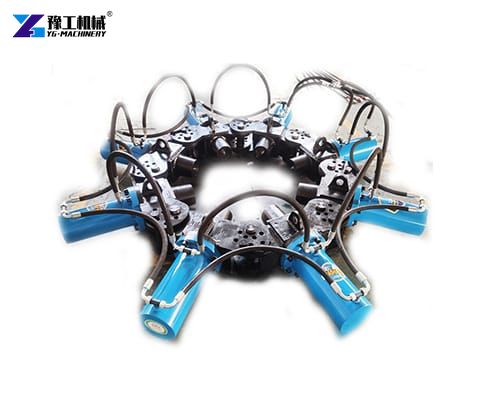
The frame is composed of several identical modules linked together by pins. This modularity is a game-changer; by adding or removing links, the operator can adjust the diameter of the hydraulic pile breaker to fit various pile sizes, ranging from small 300mm residential piles to massive 2500mm industrial supports. - Hydraulic Cylinders and Pistons
Each module houses a high-pressure hydraulic cylinder. These are the “muscles” of the machine. When pressurized, the pistons drive the cutting teeth into the concrete. - The Drill Rods (Cutting Teeth)
Made from high-strength alloy steel, the teeth are the contact points. They are designed to be durable enough to crush high-grade concrete while being shaped to avoid severing the internal rebar. - Hydraulic Hosing and Manifolds
A complex but robust network of hoses ensures that hydraulic fluid reaches every cylinder simultaneously, providing uniform pressure from all sides to ensure a clean, horizontal break.

How Does It Work? – Working Principle of the Concrete Pile Breaking
The physics behind a hydraulic pile breaker is centered on the concept of concentrated radial force.
When the breaker is positioned over a pile, the excavator’s hydraulic system pumps fluid into the modules. The pistons extend simultaneously, driving the teeth into the concrete from 360 degrees. Concrete is incredibly strong under compression but relatively weak under tension. As the teeth penetrate, they create internal tensile stresses that cause the concrete to fracture outward.
Because the pressure is applied horizontally and uniformly, the concrete breaks away in chunks. Most importantly, since the teeth are blunt enough and the pressure is controlled, the rebar inside remains untouched and straight, ready for the next stage of construction.

Features that Define Quality
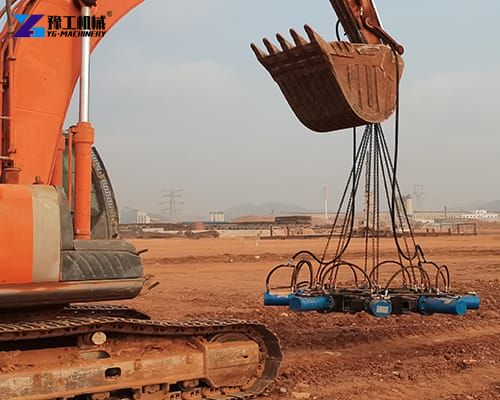
- Lightweight Design: Using high-tensile materials to ensure the hydraulic pile breaker can be carried by standard excavators without compromising stability.
- Low Noise and Vibration: These machines operate with a low hum, making them ideal for urban environments with strict noise ordinances.
- Durability: Self-lubricating components and dust-proof seals extend the service life significantly.
Diverse Applications in Construction
- Urban High-Rise Construction
In crowded cities, noise and dust must be minimized. The quiet operation of hydraulic breakers makes them the only viable choice for residential areas. - Bridge and Highway Infrastructure
Large-scale infrastructure projects involve hundreds of piles. The speed of the breaker ensures that these government-funded projects stay on schedule. - Marine and Offshore Foundations
While often used on land, these breakers can be adapted for use on barges to trim piles for piers and docks, where manual labor would be nearly impossible due to the environment.

Choosing the Right Hydraulic Pile Breaker: A Buyer’s Guide
- Pile Type and Shape
Are you dealing with round piles or square piles? While many breakers are designed for circular concrete, some specialized modules are better suited for square precast piles. Ensure the breaker you choose is compatible with the shapes common in your region. - Excavator Capacity
Your carrier machine must have the lifting capacity and the hydraulic flow required to power the breaker. Check the weight of the breaker when fully assembled (all modules included) against the excavator’s lifting chart. - Material Quality
Inquire about the alloy used in the teeth and the seal kits used in the cylinders. Brands or specialized hardened steel teeth will have a higher upfront cost but much lower maintenance costs over time.