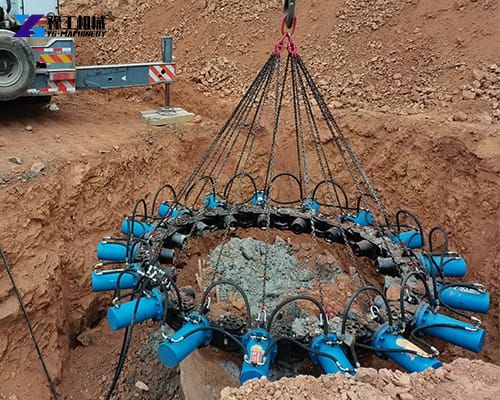
In construction, efficiency and precision are critical for keeping projects on schedule and within budget. One essential piece of equipment for foundation work is the hydraulic pile breaker. Designed to remove damaged or excess concrete from cast-in-place piles, hydraulic pile breakers provide a faster, safer, and more consistent. However, not all pile breakers are the same. Selecting the right hydraulic pile breaker can significantly impact productivity, operational costs, and project outcomes. This guide explains the key factors to consider when choosing the best hydraulic pile breaker for your project.
What Is the Hydraulic Pile Breaker?
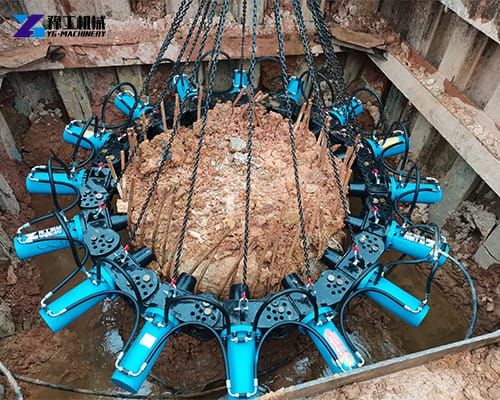
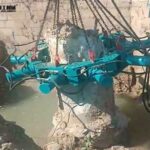
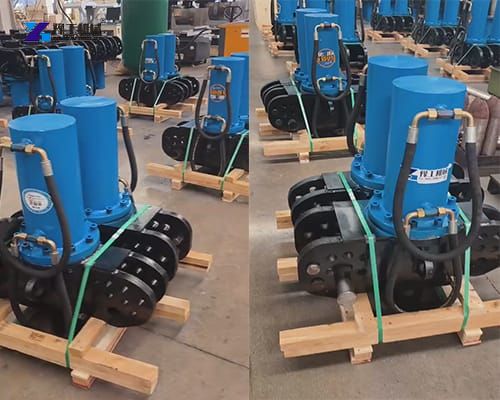
A hydraulic pile breaker is specialized construction equipment used to trim concrete piles to a specified height after pile installation. By applying controlled hydraulic force, the machine breaks concrete while preserving the reinforcement bars, ensuring structural integrity for subsequent construction stages. Hydraulic pile breakers are commonly used in Bridge construction, High-rise building foundations, Infrastructure projects, Industrial facilities, Marine and port developments.
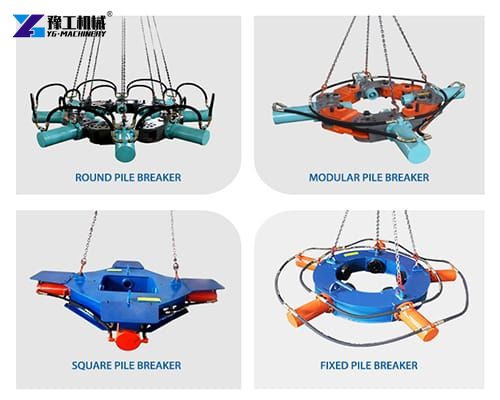
Tips to Choose the Pile Breakers
1. Understand Your Pile Specifications (The Core Deciding Factor)
Before looking at equipment, we need to analyze the exact specifications of the piles on your job site.
Pile Shape: Round vs. Square
Hydraulic pile breakers are engineered differently based on the geometry of the pile:
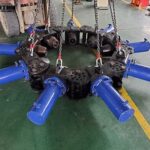
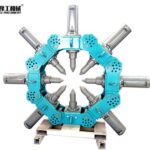
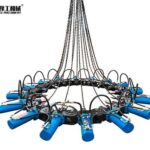
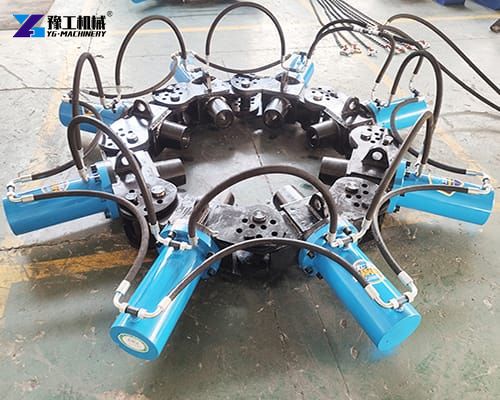
- Round Pile Breakers: These utilize a modular, interlocking design. Modules are linked in a circle, allowing the hydraulic cylinders to apply synchronized, evenly spaced inward pressure to cleanly crush cylindrical concrete piles.
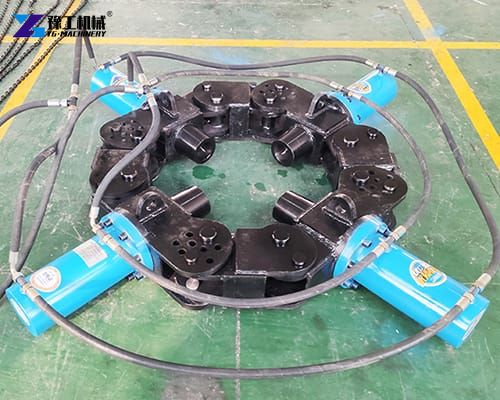
- Square Pile Breakers: These feature a fixed or semi-adjustable square frame. The cutting points are positioned to apply precise pressure to the flat surfaces and corners of square cast-in-place or precast piles.
Pile Diameter / Dimensions
For round piles, you must know the exact diameter range (e.g., 600mm to 1800mm). Because modular pile breakers are highly adaptable, you can add or remove modules to fit different diameters.
- Notice: Always check the manufacturer’s module-to-diameter chart. For example, a 10-module configuration might handle a 1100mm pile, while 12 modules are required for a 1400mm pile.
- For square piles, measure the cross-sectional dimensions (e.g., 400x400mm up to 500x500mm) to ensure the fixed frame can accommodate the size.
Parameters of the Round Pile Breaker
| Model | YG-800 | YG-980 | YG-1150 | YG-1300 | YG-1500 | YG-1650 | YG-1800 | YG-2000 | YG-2150 | YG-2300 | YG-2500 |
| Applicable pile diameter | 600-800mm | 800-900mm | 1100-1150mm | 1150-1300mm | 1300-1500mm | 1500-1650mm | 1650-1800mm | 1800-2000mm | 2000-2150mm | 2150-2300mm | 2300-2500mm |
| Number of modules | 8 | 9 | 10 | 11 | 12 | 13 | 14 | 15 | 16 | 17 | 18 |
| Machine weight | 2400kg | 2700kg | 3000kg | 3300kg | 3600kg | 3900kg | 4200kg | 4500kg | 4800kg | 5100kg | 5400kg |
| Applicable excavator model | 20-30T | 20-30T | 20-30T | 30-40T | 30-40T | 30-40T | Hydraulic pump station | Hydraulic pump station | Hydraulic pump station | Hydraulic pump station | Hydraulic pump station |
| Cylinder stroke | 250mm | 250mm | 250mm | 250mm | 250mm | 250mm | 250mm | 250mm | 250mm | 250mm | 250mm |
| Working pressure | 35Mpa | 35Mpa | 35Mpa | 35Mpa | 35Mpa | 35Mpa | 35Mpa | 35Mpa | 35Mpa | 35Mpa | 35Mpa |
| Oil storage capacity of a single module | 5L | 5L | 5L | 5L | 5L | 5L | 5L | 5L | 5L | 5L | 5L |
| Breaking force | 70T | 70T | 70T | 70T | 70T | 70T | 70T | 70T | 70T | 70T | 70T |
Concrete Strength and Reinforcement
Consider the compressive strength of the concrete (measured in MPa or PSI) and the density of the internal steel rebar. High-strength concrete requires heavy-duty pile breakers with higher hydraulic crushing forces and premium alloy steel chisel points to prevent premature wear.
2. Match the Pile Breaker to Your Excavator (Carrier Compatibility)
A hydraulic pile breaker is only as good as the machine powering it. You must ensure your excavator or crane matches the requirement of the pile breaker across three main metrics:
Operating Weight and Lifting Capacity
Modular pile breakers can be heavy, especially when configured for large-diameter piles. Your excavator must have the lifting capacity to safely hoist, position, and operate the attachment at the required working radius without tipping.
Hydraulic Flow Rate and Pressure
The excavator’s auxiliary hydraulic system must meet the pile breaker’s demands:
- Operating Pressure: Typically ranges between 20 to 35 MPa.
- Flow Rate: Sufficient oil flow (L/min) is required to ensure the cylinders cycle efficiently. If the flow rate is too low, the breaking speed will be agonizingly slow; if it is too high, it can overheat the hydraulic system.
3. Evaluate On-Site Logistics and Project Scale
The environment and scale of your construction site will dictate the level of automation and flexibility you need:
Total Pile Count: If your project involves thousands of piles (e.g., high-speed railway foundations, large industrial parks), investing in a highly efficient, rapidly adjustable modular system is essential to keep labor costs down.
Site Constraints: Working over water for bridge piers or in tight urban foundation pits? Look for pile breakers that feature stable lifting designs and can be easily manipulated by standard excavator linkages or specialized cranes.
Versatility Requirements: If your company handles diverse projects, prioritize modular pile breakers. The ability to quickly change the number of modules on-site means a single investment can cover multiple future projects with varying pile sizes.
4. Benefits of Choosing the Right Hydraulic Pile Breaker
Making the right choice yields immediate operational advantages:
Unmatched Efficiency: Crushes a single pile head in minutes—up to 10 times faster than manual labor.
Structural Integrity: Applies uniform, static hydraulic pressure, completely eliminating the risk of micro-cracks propagating down into the permanent foundation pile.
Low Noise & High Safety: Operates with minimal vibration and noise, making it ideal for urban environments while keeping ground workers safely away from flying concrete debris.
Conclusion: Partner with a Reliable Manufacturer
Choosing the right hydraulic pile breaker requires balancing pile specifications, carrier compatibility, and component quality. Investing in a tool built with heavy-duty materials, wear-resistant plates, and top-tier hydraulic seals ensures your equipment remains highly productive project after project. Are you looking for the hydraulic pile breaker? Partner with an experienced industrial machinery supplier who can provide customized modular configurations tailored to your specific project diameters and excavator models. Contact us today to get a quote and technical consultation for your project.