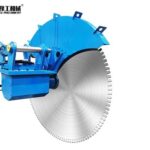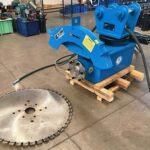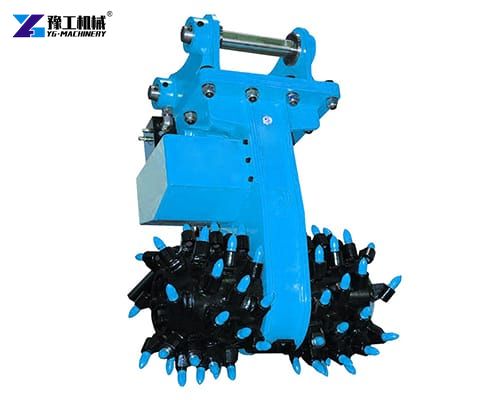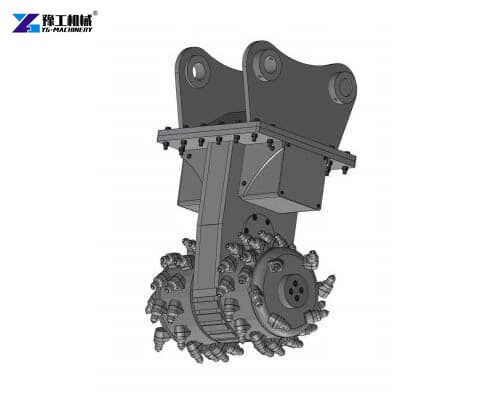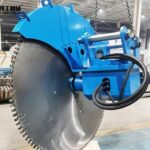
Excavator concrete saw attachment is a hydraulic-powered cutting tool mounted on the arm of an excavator. It uses a rotating blade, typically diamond-tipped, to cut through hard surfaces such as concrete, asphalt, stone, and reinforced structures. This attachment leverages the excavator’s stability, reach, and hydraulic power to perform precise cuts even in challenging environments. It is engineered to handle heavy-duty tasks while maintaining control and accuracy. It is widely used in urban construction where precision cutting is required without damaging surrounding structures.

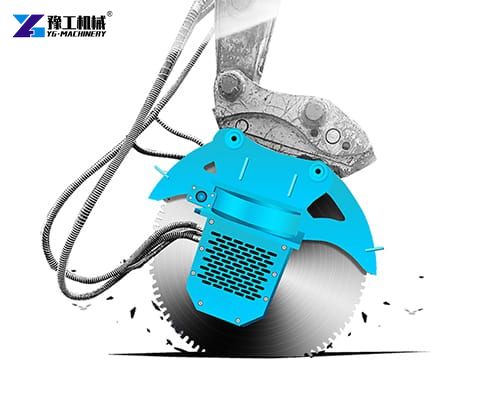
Technical Data of the Excavator Concrete Saw Attachment
| Model/Motor Model | YSJ04 | YGJ06 | YSJ08 | YSJ10 | ||||
| Rotation Mode | Fixed Type | 360°Rotation | Fixed Type | 360°Rotation | Fixed Type | 360°Rotation | Fixed Type | 360°Rotation |
| Applicable excavators (T) | 6-12 | 6-12 | 12-20 | 12-20 | 20-30 | 20-30 | 30-40 | 30-40 |
| Machine weight (KG) | 200 | 260 | 350 | 450 | 500 | 600 | 500 | 700 |
| Saw blade size (mm) | 800 | 1200 | 1600 | 1800 | ||||
| Theoretical Displacement (ml/r) | 154 | 154 | 493 | 792 | ||||
| Torque (N.m) | 600 | 600 | 1923 | 3100 | ||||
| Peak Pressure (MPa) | 40 | 40 | 40 | 40 | ||||
| Unit Torque (N.m/MPa) | 24 | 24 | 76.9 | 124 | ||||
| Continuous Speed (r/min) | 1-650 | 1-650 | 1-550 | 1-500 | ||||
| Maximum Speed (r/min) | 1100 | 1100 | 800 | 600 | ||||
Features of Excavator Rock Saw Attachment
- First, the excavator concrete saw attachment offers hydraulic power integration, allowing seamless operation using the excavator’s existing hydraulic system. This ensures consistent torque and cutting force.
- Second, it features high-strength cutting blades designed to withstand extreme stress. Diamond blades are commonly used due to their durability and ability to cut reinforced concrete efficiently.
- Third, precision control is a major feature. Operators can control depth, angle, and cutting speed directly from the excavator cabin, improving accuracy and safety.
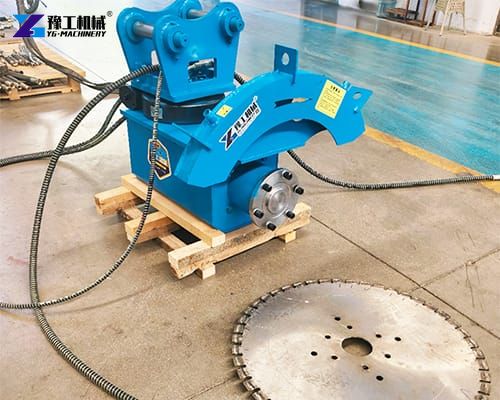
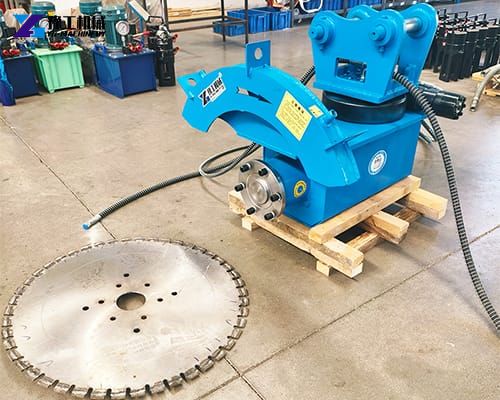
Excavator Concrete Saw Applications
The excavator concrete saw attachment is highly versatile and used across multiple industries.
- In road construction, it is commonly used for cutting asphalt and concrete pavements during repair or expansion projects. Precise cuts help create clean edges for resurfacing and patching.
- In demolition work, the attachment enables controlled cutting of concrete slabs, walls, and foundations. This minimizes unwanted cracking and structural damage, making demolition safer and more efficient.
- In utility installation projects, it is used to cut trenches for pipelines, cables, and drainage systems. The accuracy of the cuts reduces the need for additional finishing work.
- In industrial construction, the attachment plays a vital role in modifying existing concrete structures.
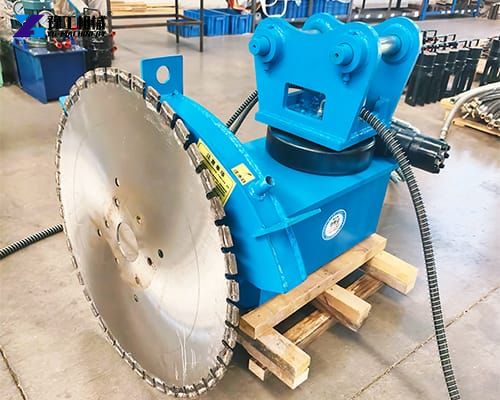
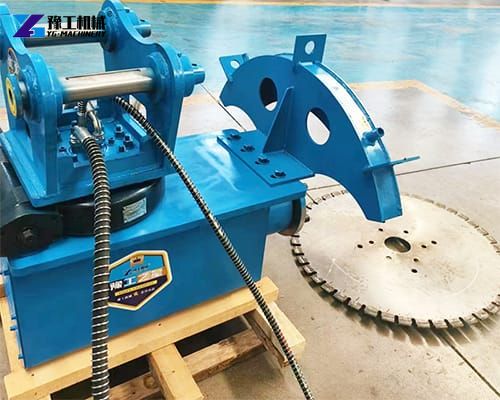
Working Principle of the Rock Saw for the Excavator
The working principle of an excavator concrete saw attachment is straightforward yet highly effective.
- Once connected to the excavator’s hydraulic system, hydraulic fluid flows into the motor when the operator activates the control.
- The hydraulic motor rotates the cutting blade at a controlled speed. The operator positions the blade against the surface to be cut and applies steady pressure using the excavator arm.
- As the blade rotates, its diamond segments grind through concrete or asphalt. The water cooling system, if present, sprays water onto the blade to reduce friction and suppress dust.
- The operator can adjust cutting depth and angle by manipulating the excavator controls, ensuring precise and consistent results.
How to Choose a Suitable Rock Saw Attachment?
Selecting the right excavator concrete saw attachment requires careful consideration of several factors.
- First, compatibility with your excavator is crucial. Ensure the attachment matches the excavator’s hydraulic flow and pressure specifications.
- Second, consider blade size and cutting depth requirements. Larger blades are suitable for deeper cuts, while smaller blades offer greater precision in confined spaces.
- Third, evaluate build quality and materials. High quality steel and reliable hydraulic components ensure long term performance.
- Fourth, consider additional features such as water cooling systems and adjustable cutting angles. These features can significantly enhance efficiency and safety.