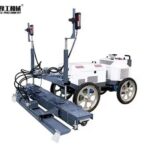
If you are involved in commercial concrete construction, industrial floor pouring, warehouse slab work or large-area pavement projects, you may have realized that traditional manual screeding cannot meet modern requirements for flatness, construction speed and consistent quality. The laser-guided concrete screed has become standard equipment aiming to deliver high-standard concrete surfaces, cut rework, and reduce labor costs. However, with multiple configurations and technical specifications available, picking a suitable laser-guided concrete screed is difficult for those who need it. This buying guide breaks down every critical factor we need to evaluate, helping us match machine performance to our project demands.
What is a laser guided concrete screed and why does it matter?
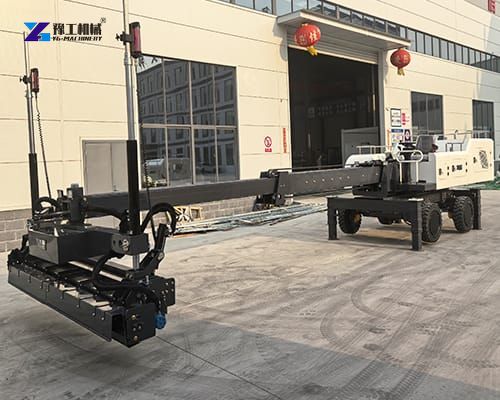
Laser guided concrete screed relies on laser transmitters, laser receivers, and microcomputer control systems to automatically adjust the height of the screed head. Unlike traditional vibratory screeds operated by manual reference lines, this equipment follows a fixed laser datum to maintain precise elevation across the entire pour area. The machine integrates paving, spreading, vibration and leveling in one workflow, greatly simplifying concrete floor construction. For factories, logistics warehouses, shopping malls and parking lots that require strict floor flatness indicators, using a laser-guided concrete screed directly improves project acceptance rates. Contractors also benefit from fewer workers on site, shorter construction cycles and lower material waste caused by uneven pouring. There are different laser concrete screed machines to choose from, we can choose the suitable one as follows.
Factor 1: Select the correct power system, gasoline or diesel engine
One of the first decisions you will face is choosing between gasoline, diesel, or opting for specific brands. Based on industry-leading models, we can break them down one by one to help you decide.
Gasoline Engines (e.g., YG-CL300 and YG-CL300A)
Many mid-size screeds, such as the YG-CL300 models, utilize gasoline engines like the Briggs & Stratton, LONCIN, or Honda 690.
Advantages:
Lower Initial Cost: Generally cheaper to purchase.
Lighter Weight: Ideal for smaller projects or areas with weight restrictions.
Easier Maintenance: Widely available parts and simpler mechanics.
Diesel Engines (e.g., YG-ZP30)
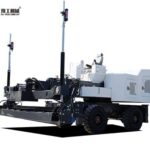
For heavy-duty, continuous use, diesel is the undisputed king. The YG-ZP30, for example, utilizes a Yanmar 4TNV94L diesel engine.
Advantages:
Superior Power: With 35.5KW (48hp), it handles thicker lifts and tougher concrete mixes easily.
Fuel Efficiency: Diesel engines burn fuel more efficiently, leading to lower operational costs.
Large Fuel Capacity: The 100L tank allows for days of operation without refueling, minimizing downtime.
Our Verdict on Power
Choose Gasoline if you are a mid-tier contractor handling slabs up to 300mm thick on construction sites that are not too remote. Choose Diesel if you are handling large-scale industrial projects, require maximum power for pushing heavy material, or if fuel logistics on your site are challenging.
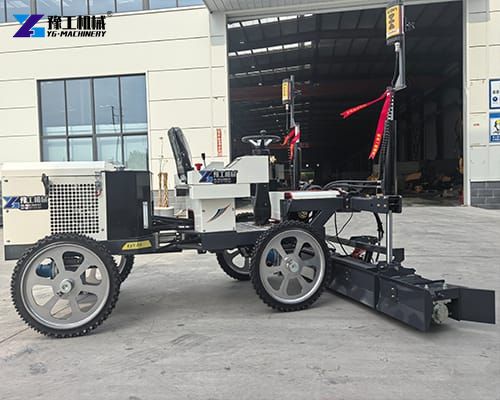
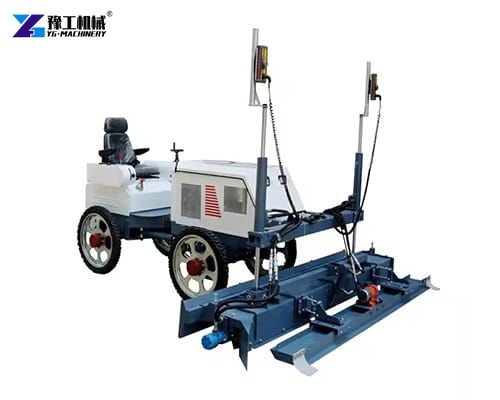
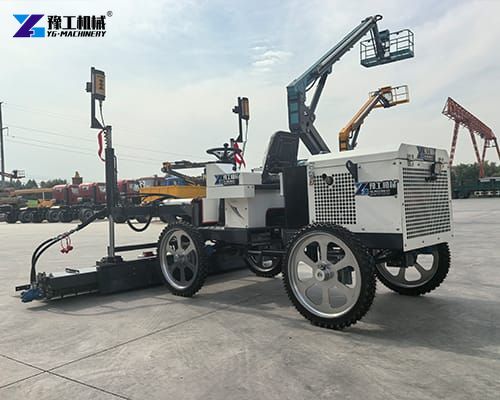
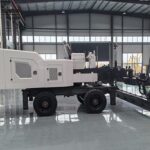
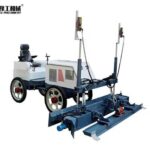
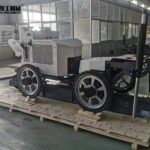
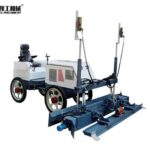
2.5m concrete laser leveling machine for sale in YG Machinery
Factor 2: Check laser control system configuration and brand quality
The laser system is the core component that defines the precision of any laser guided concrete screed. Never ignore the specifications of laser transmitters, receivers and control software.
Many mainstream gasoline laser guided concrete screed provide optional Swiss Leica laser transmitters and receivers, alongside tower laser system solutions. Premium diesel models adopt well-known international brands including Danfoss transmitters, American Tempo receivers and German Mopar control modules. The difference between standard and upgraded laser sets directly affects leveling accuracy and anti-interference ability on busy construction sites.
We also need to confirm what control modes the machine supports. Reliable laser guided concrete screed should support plane leveling, single slope and double slope three-dimensional adjustment via microcomputer laser scanning. If your project only requires horizontal concrete slabs, basic plane control meets requirements. If you need drainage slopes for parking lots, factory ramps or outdoor pavement, you must confirm the machine can execute stable 3D inclined surface control. Low-cost machines often only support flat work and cannot complete complex slope paving, limiting your project scope in the future.
Signal stability is another point worthy of attention. Construction sites have dust, vibration and temporary obstacles that can block laser signals. High-grade laser receivers capture signals from multiple angles and transmit real-time data to the microcomputer to adjust screed height instantly. Inferior laser modules experience frequent signal loss, resulting in uneven concrete surfaces and extra finishing work.
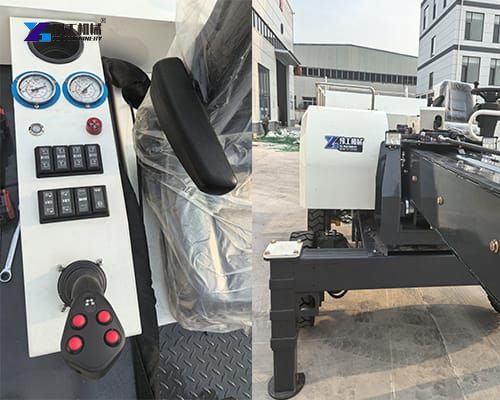
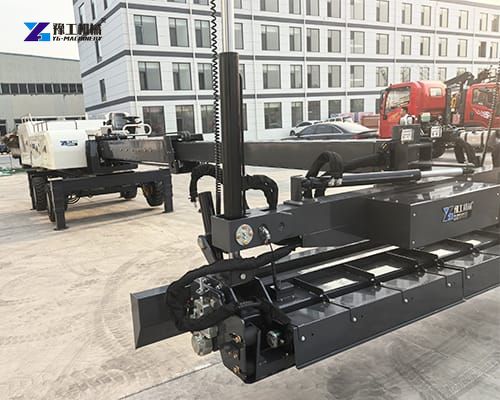
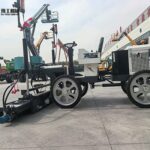
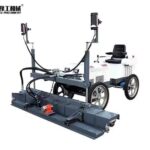
control part of telescopic boom laser concrete screed
Factor 3: Confirm paving width, leveling thickness and vibration performance
Working dimensions determine how fast your laser guided concrete screed can cover area and what concrete layers it can handle.
Vibration plate width directly influences daily construction output. The YG-CL300 gasoline laser guided concrete screed uses a 2500mm vibration plate, while the upgraded YG-CL300A expands to 3000mm. The diesel YG-ZP30 features a maximum working width of 6000mm. Wider plates cover more concrete in each pass and reduce overlapping areas, accelerating overall progress. For small-area renovation and narrow indoor corridors, a 2.5-meter plate offers better flexibility. Large continuous outdoor pours gain significant efficiency from 3-meter or wider screed heads.
Leveling thickness range defines the applicable concrete slab depth. The YG-CL300 supports 50mm to 300mm concrete thickness, and YG-CL300A adjusts from 60mm up to 300mm. The heavy-duty diesel model extends the range to 100mm to 450mm. If you mainly construct thin residential or commercial floor slabs within 200mm, standard gasoline models are fully capable. If you pour thick industrial bearing slabs or road base concrete over 300mm, you need higher power equipment supporting greater leveling depth.
Vibration parameters cannot be overlooked either. Most laser guided concrete screed adopt hydraulic vibration systems. Common excitation force reaches 2000N, which effectively removes air bubbles inside fresh concrete and improves slab compactness. Some advanced models use hydraulic cage paving structures with flipable screed blades. Wear-resistant blade material extends service life and simplifies daily cleaning. Poor vibration strength leads to honeycombing and insufficient concrete compaction, creating hidden quality risks for finished floors.
Factor 4: Analyze travel system, speed and site adaptability
Mobility determines whether your laser guided concrete screed can smoothly travel across fresh concrete and adapt to complex site ground.
Travel drive structures generally adopt integrated reducer motors for gasoline models. Their adjustable travel speed covers 0 to 4km per hour, allowing operators to match moving speed with concrete setting speed. The heavy-duty diesel laser guided concrete screed upgrades to hydraulic motor drive with travel speed ranging from 4km/h to 8km/h, suitable for large-area rapid continuous construction. Speed adjustability is vital. Moving too fast prevents adequate vibration and leveling; traveling too slowly allows concrete to start setting before finishing.
Tire configuration affects performance on soft subgrade and wet concrete. Most standard laser guided concrete screed are equipped with solid anti-skid anti-puncture tires. There are optional wide tires for users working frequently on muddy or soft ground. Wide tires distribute machine weight and avoid sinking into fresh concrete, preventing indentations on unfinished slabs. If you regularly operate on weak subgrade, confirm wide tire options before purchasing.
Body overall size also impacts site access. Compact gasoline laser guided concrete screed such as YG-CL300 measures 3250×2850×1320mm, able to pass through standard building doorways for indoor floor construction. Larger diesel models have bigger outer dimensions and may not enter narrow building openings. Always measure access passages of your typical job sites to avoid buying equipment that cannot reach the pouring area.
Factor 5: Compare hydraulic capacity, continuous operation and maintenance costs
Hydraulic oil capacity reflects the size of the hydraulic circulation system and influences long-term stability. The YG-CL300 carries 37 liters of hydraulic oil, YG-CL300A holds 35 liters, and the heavy-duty diesel laser guided concrete screed uses a 150-liter hydraulic tank. Larger hydraulic capacity helps maintain stable oil temperature during long hours of continuous work, reducing hydraulic system failures caused by overheating.
Fuel and hydraulic oil consumption directly affect daily operating expenses. Gasoline models operate around 8 hours per 20-liter fuel tank, fitting intermittent indoor construction. Diesel units with large fuel tanks support all-day outdoor pouring without frequent refueling. When calculating total cost of ownership, do not only compare purchase prices. Take fuel prices, filter replacement intervals, wearing parts such as vibration blades, and tire service cycles into account.
Factor 6: Match machine grade to your typical project types
We can sort out clear selection suggestions based on common construction scenarios:
Small and medium indoor commercial projects, high-rise building floors, narrow working spaces: Choose compact gasoline laser guided concrete screed like YG-CL300. The 2500mm screed plate and flexible body adapt to limited access conditions.
Medium to large indoor warehouses, shopping mall continuous slabs, projects requiring higher daily output: Select upgraded gasoline models such as YG-CL300A with a 3000mm vibration plate and optimized power parameters.
Large outdoor industrial zones, logistics park floors, parking lots, thick concrete slabs and long-duration continuous construction: Invest in heavy-duty diesel laser guided concrete screed like YG-ZP30. Higher engine power, wider paving width and large fuel capacity maximize construction efficiency on open sites.
We use cookies to ensure that we give you the best experience on our website. If you continue to use this site we will assume that you are happy with it.