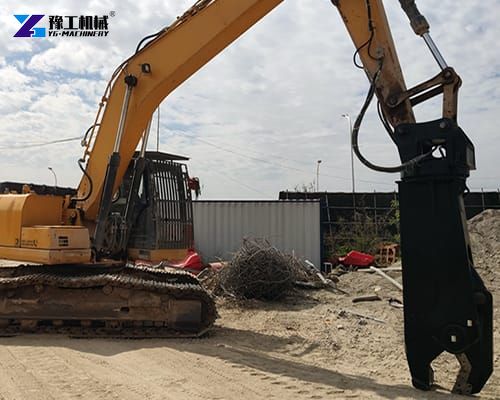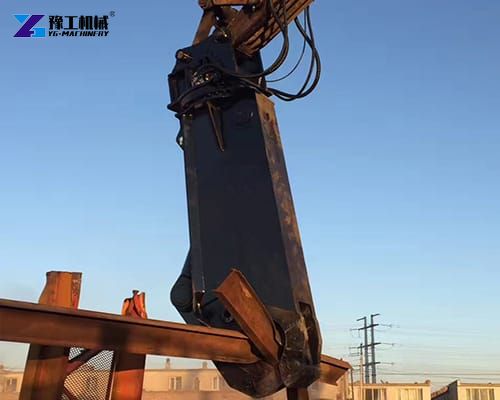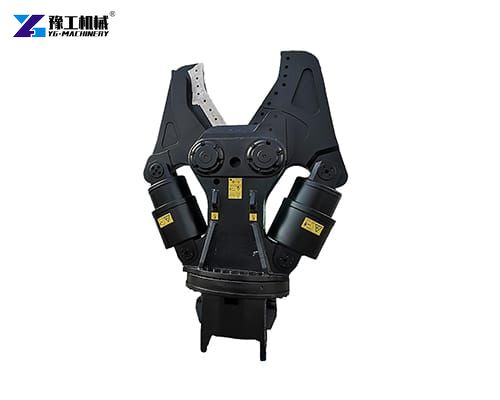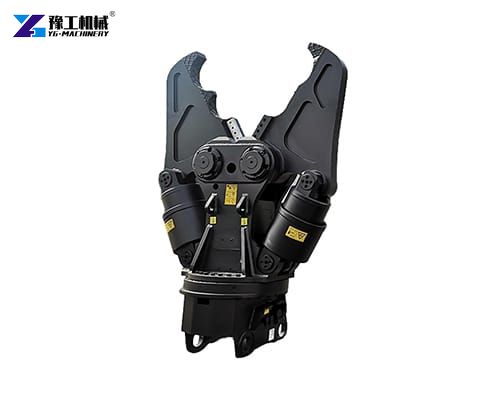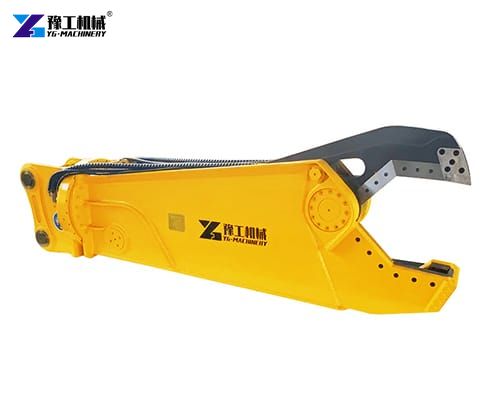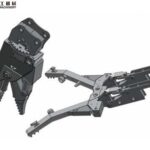
Excavator shear attachment is a hydraulic-powered tool mounted on an excavator to perform cutting and demolition tasks. Different from traditional mechanical shears, these attachments use hydraulic pressure to generate immense force, enabling them to slice through reinforced steel beams, concrete structures, pipelines, and other dense materials. The device typically consists of two sharp, opposing blades that close together when hydraulic pressure is applied, creating a shearing action. These attachments are designed to integrate seamlessly with various excavator models, ranging from compact units to large-scale, heavy-duty machinery.
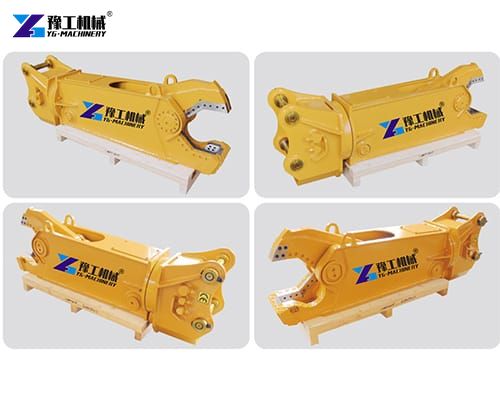
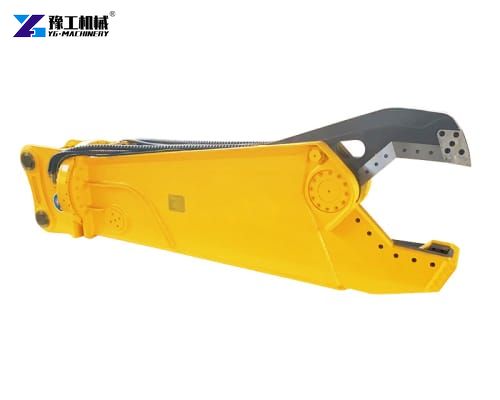
Parameters of the Excavator Shear Attachment
| Model | YG50R | YG100R | YG130R | YG180R | YG310R | YG410R |
| Forearm mounted model | 6-9T | 10-12T | 13-17T | 18-27T | 28-39T | 39-50T |
| Large arm installation model | 4-6T | 7-10T | 8-12T | 14-18T | 20-28T | 28-39T |
| Work pressure | 35Mpa | 35Mpa | 35Mpa | 35Mpa | 35Mpa | 35Mpa |
| Overall length | 2000mm | 2200mm | 2300mm | 2900mm | 3500mm | 3900mm |
| Overall weight | 650KG | 1100KG | 1220KG | 2100KG | 3300KG | 4700KG |
| Maximum opening | 290mm | 375mm | 375mm | 445mm | 565mm | 670mm |
| Throat depth | 290mm | 395mm | 395mm | 525mm | 630mm | 720mm |
| Front-end crushing force | 46T | 60T | 60T | 85T | 135T | 172T |
| Central crushing force | 115KN | 150KN | 150KN | 221KN | 351KN | 464KN |
Features of Excavator Shear Attachments
- Hydraulic Power System
The heart of the shear attachment lies in its hydraulic system. By utilizing the excavator’s existing hydraulic flow, the tool generates up to several hundred tons of cutting force. Advanced models feature adjustable pressure settings, allowing operators to tailor the power output based on material hardness and thickness. - Robust Blade Design
High-quality shear attachments employ blades made from heat-treated, abrasion-resistant steel. These blades retain their sharpness even under extreme stress, ensuring consistent performance over prolonged use. Some models incorporate replaceable blade tips to reduce maintenance costs. - Rotational Capability
Many modern shears offer 360-degree rotation, enabling operators to position the blades at optimal angles for cutting efficiency. This feature is particularly useful in confined spaces or when working on irregularly shaped structures.
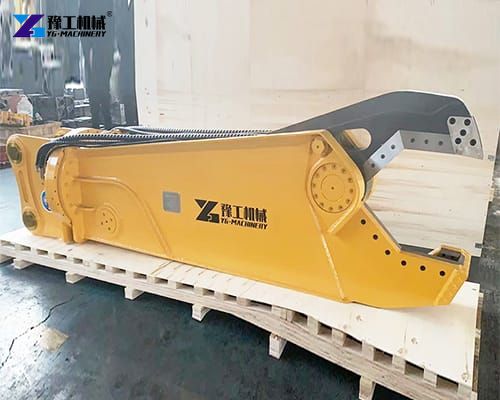
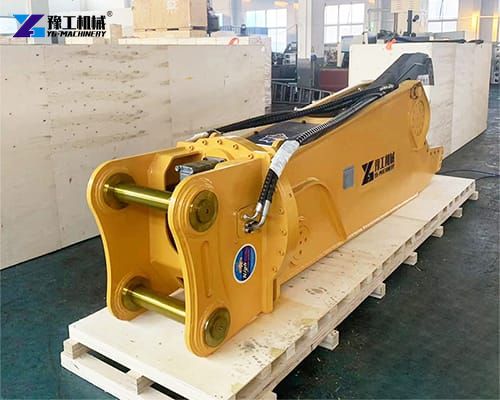
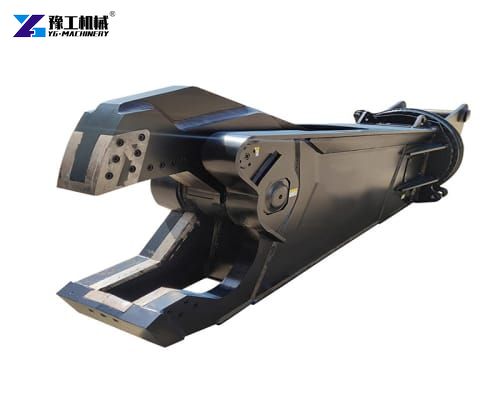
Structural Components of the Excavator Demolition Shear
- Main Body (Frame): The robust, high-strength steel housing that forms the core structure, protecting the hydraulic components and absorbing cutting forces.
- Jaws: The two primary components that hold the blades. The fixed jaw is stationary, while the moving jaw (or cutting arm) swings open and closed.
- Cutting Blades (Knives): These are the replaceable, hardened steel plates bolted into the jaws. They are the key wear parts and are designed with specific geometry (often a four-sided or multi-sided profile) to maximize cutting efficiency.
- Hydraulic Cylinder: The power source. A large, heavy-duty cylinder translates high-pressure hydraulic fluid from the excavator into the massive mechanical force required to close the jaws.
- Rotation Unit (Optional): For rotating models, this integrated hydraulic motor allows the operator to rotate the entire shear 360 degrees for optimal positioning.
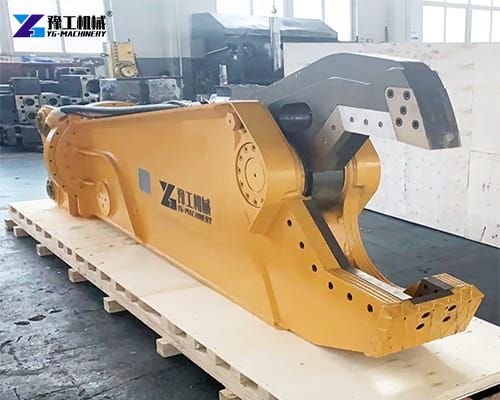
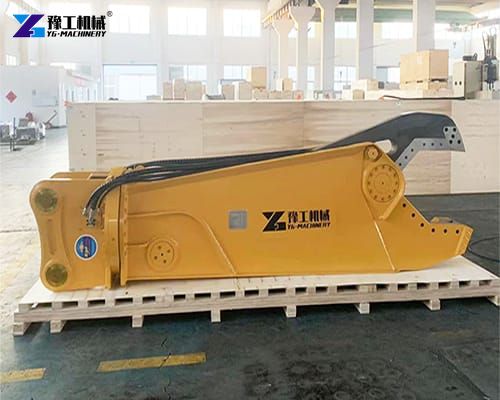
Working Principle of the Scrap Shear Attachment for Excavator
The shear attachment operates on the principle of hydraulic mechanical advantage, turning fluid pressure into concentrated cutting force:
- Hydraulic Power Delivery: The excavator’s hydraulic pump delivers pressurized fluid through hoses and a control valve to the shear’s hydraulic cylinder.
- Force Generation: The high-pressure fluid pushes the piston rod inside the cylinder, forcing the moving jaw to swing inward toward the fixed jaw.
- Shearing Action: As the blades on the moving jaw cross the blades on the fixed jaw, they concentrate the immense hydraulic force onto a very small area of the material. This rapid, focused pressure exceeds the material’s shear strength, causing it to cleave cleanly.
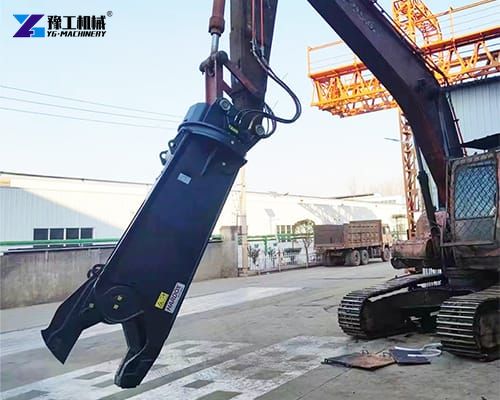
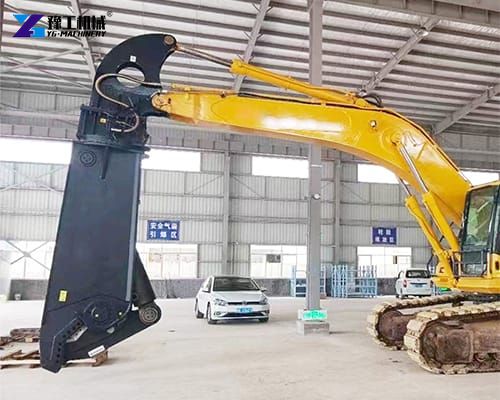
Excavator Scrap Shear Applicable Fields
- Demolition: This is perhaps the most prominent application. Demolition shears are used to systematically dismantle buildings, industrial structures, and bridges. They efficiently cut through steel beams, concrete columns with rebar, and other structural components, preparing debris for removal or further processing. Their precision allows for selective demolition, minimizing impact on adjacent structures. The ability of an excavator shear attachment to work at height and with considerable reach makes it ideal for large-scale structural dismantling.
- Scrap Metal Processing: In scrapyards and recycling facilities, excavator shears are crucial for reducing large pieces of scrap metal, such as vehicle bodies, industrial machinery, pipes, and structural steel, into manageable sizes. This reduction facilitates easier transportation, more efficient shredding or baling, and ultimately, more effective recycling. An efficient scrap processing excavator shear attachment can significantly enhance throughput and profitability in recycling operations.
- Recycling: Beyond just metal, shears are used in broader recycling efforts to cut down oversized items or separate different material types. For instance, they can be used to break down large appliances, industrial waste, or even certain types of timber with metal fasteners, aiding in material segregation and preparation for recycling.