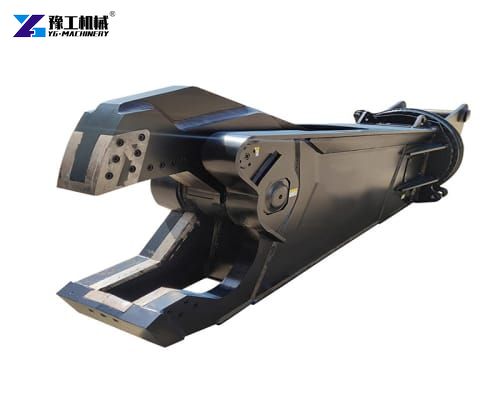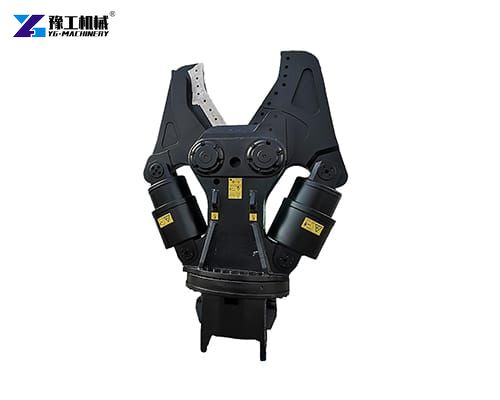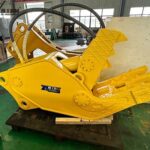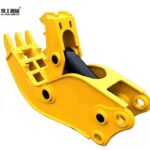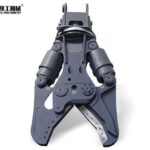
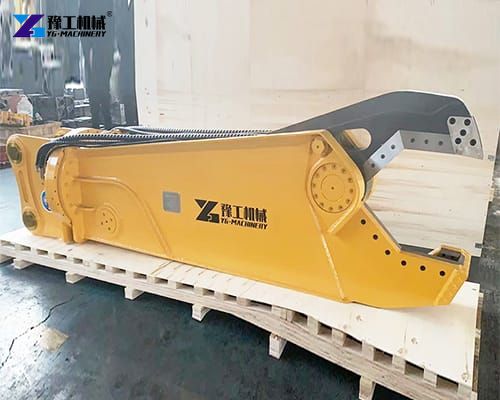
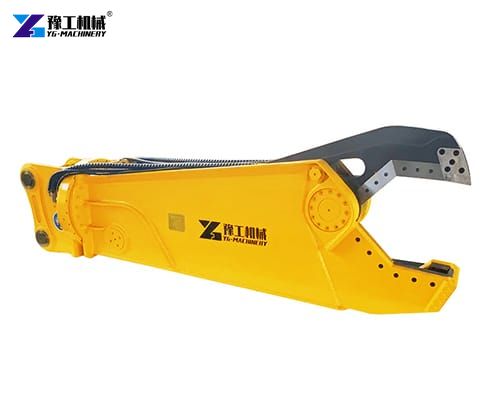
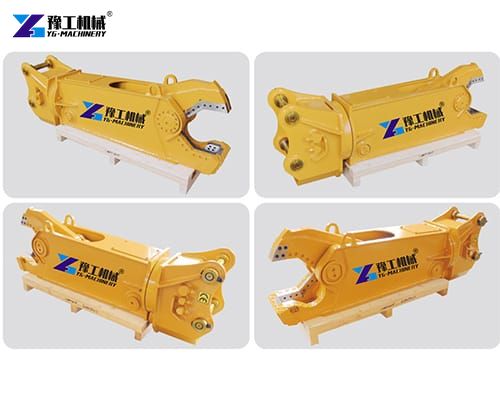
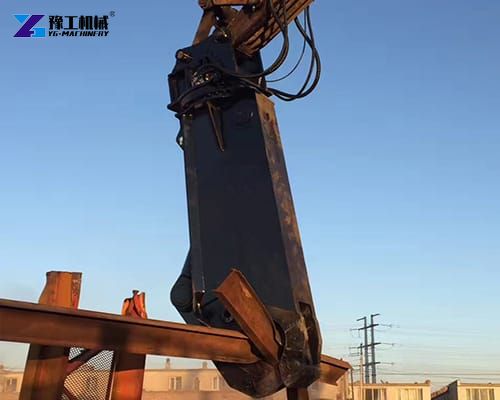
Excavator eagle shear is a hydraulic demolition and material-processing attachment designed to turn an excavator into a powerful cutting and crushing machine. Mounted directly to a compatible excavator arm, it uses the carrier’s hydraulic power to operate a heavy-duty jaw for dismantling concrete structures, cutting steel, processing demolition waste, and reducing oversized materials. It is purpose-built for applications where concentrated cutting and crushing force is required. Its reinforced working structure, large jaw opening, deep throat, and high hydraulic force allow operators to engage structural materials more effectively while maintaining precise control from the excavator cab. The product range covers different excavator classes from compact machines to large demolition carriers. Depending on the installation configuration, the recommended carrier range extends from approximately 4–6 tons to 39–50 tons and more. In addition, we support customization services. For more details, please contact us and we will reply to you as soon as possible.
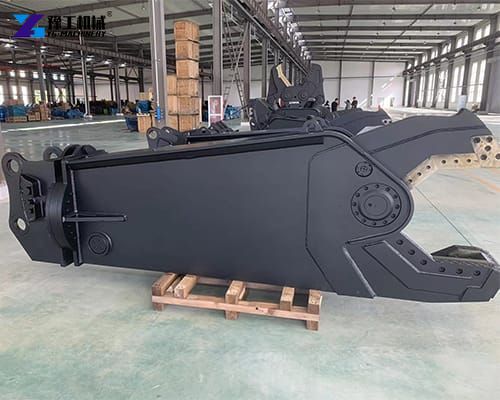
Excavator Eagle Shear Specifications
| Model | YG50R | YG100R | YG130R | YG180R | YG310R | YG410R |
| Forearm mounted model | 6-9T | 10-12T | 13-17T | 18-27T | 28-39T | 39-50T |
| Large arm installation model | 4-6T | 7-10T | 8-12T | 14-18T | 20-28T | 28-39T |
| Work pressure | 35Mpa | 35Mpa | 35Mpa | 35Mpa | 35Mpa | 35Mpa |
| Overall length | 2000mm | 2200mm | 2300mm | 2900mm | 3500mm | 3900mm |
| Overall weight | 650KG | 1100KG | 1220KG | 2100KG | 3300KG | 4700KG |
| Maximum opening | 290mm | 375mm | 375mm | 445mm | 565mm | 670mm |
| Throat depth | 290mm | 395mm | 395mm | 525mm | 630mm | 720mm |
| Front-end crushing force | 46T | 60T | 60T | 85T | 135T | 172T |
| Central crushing force | 115KN | 150KN | 150KN | 221KN | 351KN | 464KN |
Main Components of the Excavator Demolition Shear
The excavator eagle shear is a hydraulic-powered attachment consisting of several functional sections working together:
- Hydraulic cylinder and hydraulic system – Converts hydraulic pressure from the excavator into mechanical jaw movement.
- Main frame – Provides the structural foundation of the attachment and transfers working loads during demolition.
- Shear jaw – Engages steel, concrete, and other target materials during cutting or crushing.
- Jaw opening – Determines the size of material that can be positioned inside the working area.
- Throat section – Provides the working depth needed to engage larger structural sections.
- Mounting connection – Connects the attachment to the excavator arm and must be matched to the carrier and installation configuration.
The machine is operated from the excavator cab. The operator uses the excavator’s hydraulic controls to open and close the jaw while positioning the attachment with the boom and arm. This combination of hydraulic force and excavator mobility allows the attachment to reach structural components from different angles and process materials directly at the demolition site.

What Materials Can the Excavator Shear Attachment Process?
The excavator eagle shear is intended for demanding demolition and material-processing tasks. Depending on the selected model, carrier, and working conditions, typical target materials can include:
- Reinforced concrete components and concrete structures
- Steel beams, plates, and structural sections
- Metal frames and industrial components
- Demolition scrap requiring size reduction
- Building sections that need controlled dismantling
- Recyclable ferrous material after demolition
Material condition, thickness, reinforcement, and attachment setup should always be considered before selecting a model. The published force figures provide useful reference points, but actual performance also depends on excavator hydraulic output, operator technique, material geometry, and site conditions.
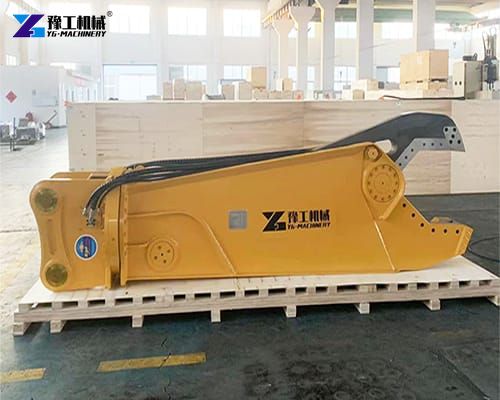
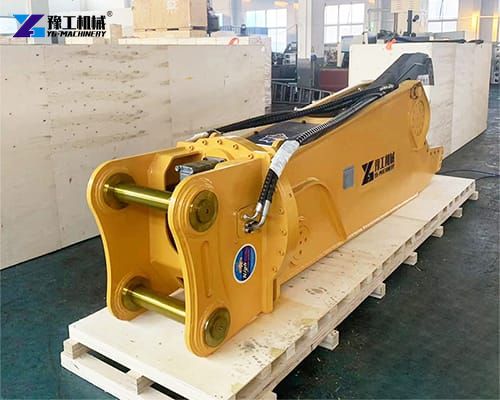
10 Core Advantages Backed by Technical Data of the Excavator Eagle Beak Shear
1. Six Models for Different Carrier Classes
The excavator eagle shear range includes YG50R, YG100R, YG130R, YG180R, YG310R, and YG410R. Forearm-mounted carrier recommendations span approximately 6–9 tons through 39–50 tons, giving contractors a practical starting point for attachment matching.
2. Consistent 35 MPa Working Pressure
Every listed model is rated at 35 MPa working pressure. This consistent specification simplifies hydraulic-system planning and gives buyers a clear reference when checking compatibility with their excavator.
3. Strong Central Crushing Force
Central crushing force increases from 115 kN on the YG50R to 464 kN on the YG410R. This progression allows the attachment range to scale with larger carrier classes and heavier demolition requirements.
4. High Front-End Crushing Force
Front-end crushing force ranges from 46T on the YG50R to 172T on the YG410R. This provides a clear indication of the range’s focus on concentrated force for demanding cutting and crushing operations.
5. Large Jaw Opening
Maximum opening increases from 290 mm on the YG50R to 670 mm on the YG410R. A larger opening can help operators engage larger sections of material and reduce the need for repeated positioning.
6. Useful Throat Depth
Throat depth ranges from 290 mm to 720 mm across the six models. This dimension matters when working with deeper sections because it affects how far material can enter the working area before the jaw closes.
7. Scalable Attachment Dimensions
Overall length ranges from 2,000 mm to 3,900 mm, while overall weight ranges from 650 kg to 4,700 kg. These differences reinforce the importance of selecting the attachment according to carrier size rather than choosing solely by nominal crushing force.
8. Designed for Controlled Demolition
The excavator eagle shear uses hydraulic jaw action rather than relying on repeated impact. For controlled dismantling, this can support more deliberate material separation and processing at the workface.
9. Suitable for Primary and Secondary Processing
A properly matched model can support structural dismantling and subsequent material reduction. This can reduce the need to move certain large pieces away from the work area before they are processed.
10. Attachment Range Supports Project Scaling
The six-model lineup gives contractors a way to select equipment for smaller demolition machines as well as larger excavators. This is useful for rental fleets, demolition contractors, recycling operations, and businesses operating multiple carrier sizes.
How to Choose the Suitable Excavator Eagle Shear Attachment?
Model selection should begin with the excavator, not the attachment alone. The carrier’s operating weight, hydraulic pressure, hydraulic flow, mounting configuration, and available space should be checked against the attachment requirements.
For smaller machines, the YG50R is specified for approximately 6–9 ton forearm-mounted excavators, with a 650 kg attachment weight, 290 mm maximum opening, and 115 kN central crushing force.
The YG100R and YG130R cover the next range. Their forearm-mounted recommendations are approximately 10–12 tons and 13–17 tons, respectively. Both are listed at 35 MPa working pressure, while their maximum openings are 375 mm.
For mid-size demolition equipment, the YG180R is specified for approximately 18–27 ton forearm-mounted excavators. It provides a 445 mm maximum opening, 525 mm throat depth, and 221 kN central crushing force.
For larger carriers, the YG310R and YG410R are designed for approximately 28–39 tons and 39–50 tons, respectively, in forearm-mounted applications. The YG410R reaches a 670 mm maximum opening and 464 KN central crushing force, while the YG310R offers a 565 mm opening and 351 KN central crushing force.
Large-arm installation recommendations are different from forearm-mounted recommendations, so buyers should confirm the mounting configuration before ordering. When comparing an excavator demolition shear, it is also important to evaluate attachment weight against the carrier’s lifting and stability capabilities.
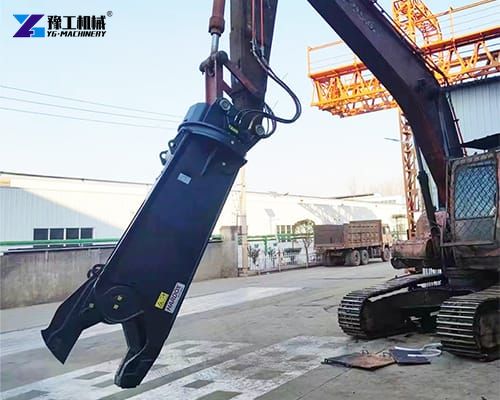
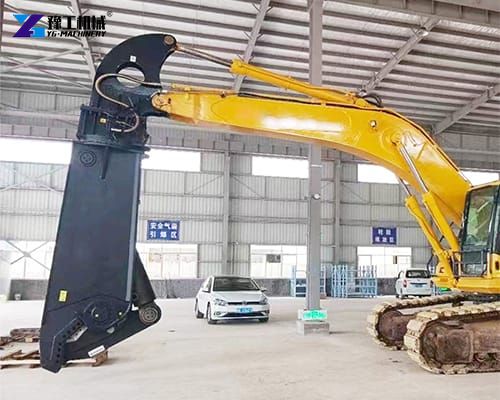
Excavator Demolition Shear Common Applications
1. Building Demolition
On building demolition projects, the excavator eagle shear can be used to separate structural sections and reduce material at the point of dismantling. This approach is useful when contractors want more control over how sections are taken apart.
2. Steel Structure Processing
Steel beams, frames, plates, and other metal components can require concentrated cutting force. A properly sized hydraulic shear can help process structural steel into more manageable sections for sorting and transport.
3. Recycling and Scrap Processing
After demolition, recyclable material often needs to be reduced before loading, sorting, or downstream processing. Using an excavator demolition shear can bring part of this processing directly into the material-handling workflow.
4. Industrial Dismantling
Factories, warehouses, and industrial facilities may contain heavy structural components that cannot be handled efficiently with general-purpose buckets. A dedicated shear provides a more specialized working method for dismantling selected components.
5. Site Clearance
For contractors clearing damaged or obsolete structures, attachment-based processing can help reduce bulky material and improve handling around constrained jobsites.
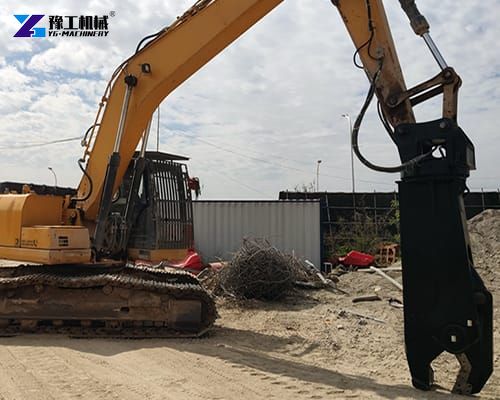
Why Choose Our Excavator Eagle Beak Shear?
Choosing our attachment means investing in proven engineering and reliability. We understand that downtime is costly. Therefore, our shears are manufactured with high-grade wear-resistant steel and precision hydraulics, adhering to strict quality control standards. We provide comprehensive technical support and guidance to ensure you not only purchase the right excavator eagle shear but also maximize its productivity throughout its lifespan. Our commitment to quality and customer success sets us apart in the heavy equipment industry. If you are looking for the excavator eagle break shear attachment or other excavator attachments for your projects. Please contact us for more detailed information and custom solution.