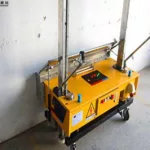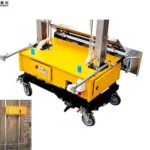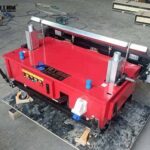
Cement plaster spray machine, also known as mortar spraying machine, is a mechanical device designed to automate the process of applying cement-based plaster, renders, and other similar mixtures onto walls, ceilings, and other surfaces. It replaces the traditional, labor-intensive method of hand-applying plaster with a trowel. The machine pumps a pre-mixed material from a hopper through a hose to a spraying nozzle, where it is propelled onto the surface at high velocity. The machine mixes, pumps, and sprays the material onto a surface at high pressure. This automation not only drastically reduces labor time but also ensures a uniform and dense application, leading to a stronger and more durable finish.
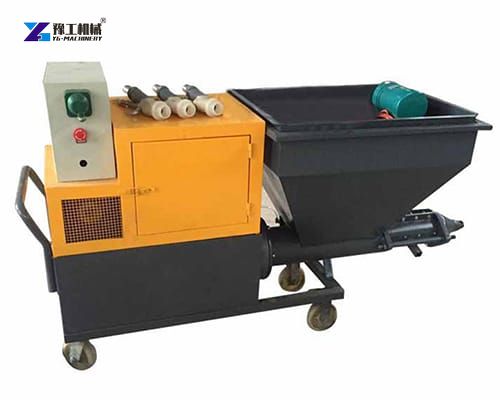
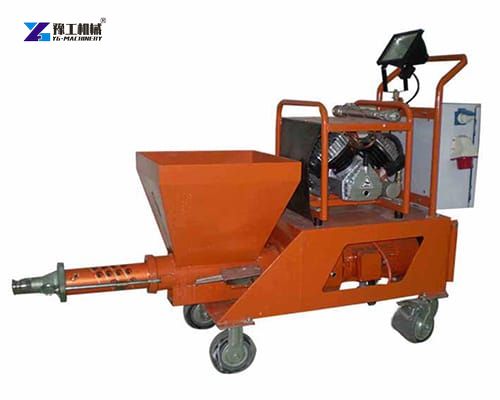
Parameters of the Cement Plaster Spray Machine
| Model | YG311 | YG318 | YG500 | YG711 |
| Greatest Pressure | 3Mpa | 3Mpa | 3Mpa | 3Mpa |
| Capacity | 3㎡/h | 3㎡/h | 3㎡-4㎡/h | 4㎡/h |
| Applicable material ratio(water, ash, sand) | 0.7-1:1:3 | 0.7-1:1:3 | 0.7-1:1:3 | 0.7-1:1:3 |
| Main motor power | 4KW | 7.5KW | 8hp/12hp | 7.5KWstrength |
| Particle Size | ≤4mm | ≤8mm | ≤8mm | ≤8mm |
| Conveying Distance | H:30m/V:20m | H:50m/V:30m | H:50m/V:30m | H:50m/V:30m |
| Hopper Volume | 60L | 80L | 80L | 100L |
| The diameter of the feed delivers pipe | 32mm | 32mm | 32mm | 32mm |
| Weight | 200KG | 320KG | 320KG | 320KG |


Features of Cement Plaster Spray Machine
- High-performance motor: Ensures strong pumping capacity for continuous spraying of cement mixtures.
- Durable pumping system: Built to handle abrasive cement materials without clogging.
- Adjustable spray nozzles: Allow flexibility for different plaster thicknesses and wall finishes.
- Large hopper capacity: Minimizes interruptions by holding sufficient quantities of cement mix.
- Portable design: Equipped with wheels and handles for easy movement on-site.
- Automatic mixing system (optional): Some models include built-in mixers to reduce manual preparation.


Applications Of the Mortar Cement Spraying Machine
The cement plaster spray machine is widely used across different sectors:
- Residential construction: For interior wall and ceiling finishing in houses and apartments.
- Commercial buildings: Office complexes, shopping malls, and hotels benefit from its efficiency.
- Industrial projects: Factories, warehouses, and large infrastructure projects require rapid plastering.
- Renovation works: Speeds up refurbishment projects where time constraints are critical.
- Exterior plastering: Provides durable finishes for building facades.

Cement Mortar Spray Machine Advantages
The adoption of cement plaster spray machines is driven by a host of powerful features that translate into tangible advantages.
- Unmatched Speed and Efficiency: This is the most significant benefit. Projects that once took weeks can be completed in days, leading to dramatically reduced labor costs and faster project turnarounds.
- Superior Consistency and Quality: The machine applies a uniform layer of plaster with consistent thickness and density, resulting in a smoother, more professional finish with fewer defects.
- Reduced Material Waste: Manual plastering often leads to significant material waste from dropped mortar and over-application. Spray machines precisely control the output, and because the material is propelled onto the wall, spillage is minimized. This can lead to material savings of up to 25 percent.
- Enhanced Adhesion and Durability: The high-impact force with which the plaster is sprayed onto the surface compacts the material, forcing it into pores and crevices. This creates a strong mechanical bond, potentially reducing cracks and improving the longevity of the finish.
How Does a Cement Plaster Spray Machine Work?
- Mixing and Loading: The process often begins with loading a pre-mixed, pumpable consistency of cement plaster or mortar into the machine’s hopper. The mixture must be prepared with the right water-to-cement ratio to ensure smooth flow without clogging the system.
- Material Transport: The pumped plaster is forced through a reinforced high-pressure hose that can extend dozens of meters, allowing the operator to reach high elevations and distant areas without moving the main unit.
- Spraying and Application: At the end of the hose is the spray gun. Here, compressed air is introduced. This air, supplied by a separate compressor, atomizes the stream of material as it exits the nozzle, creating a fine spray. The operator controls the flow of material with a trigger on the gun and uses wide, sweeping motions to apply an even coat to the surface.