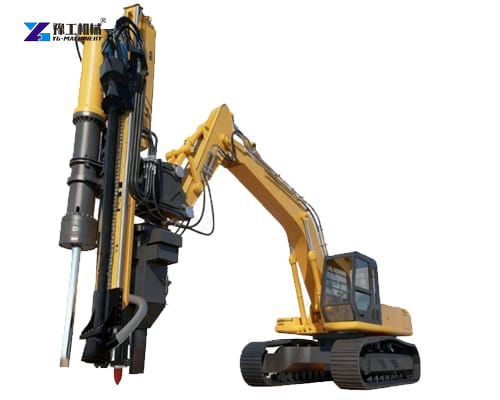
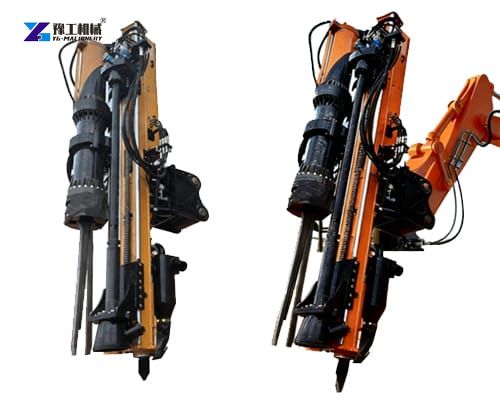
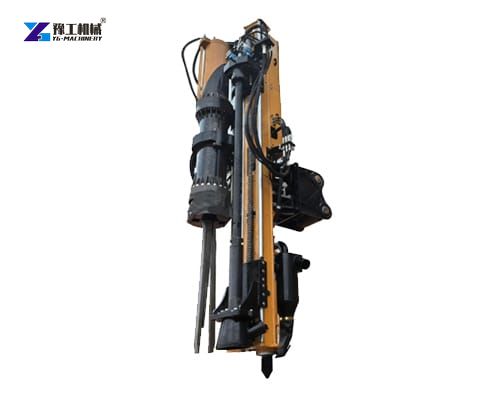
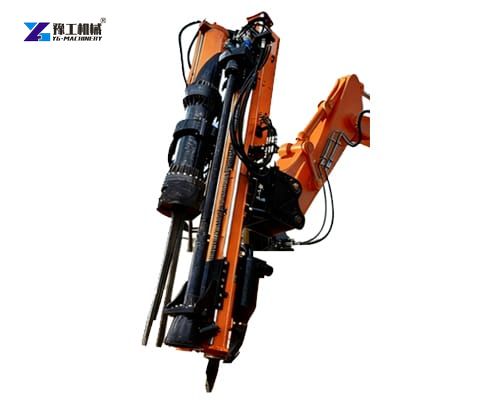
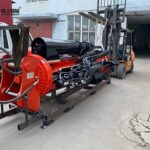
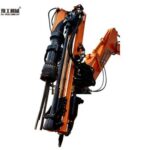
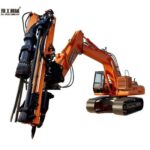
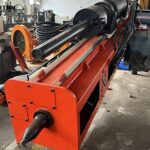
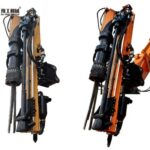
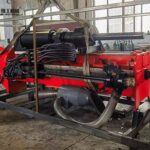
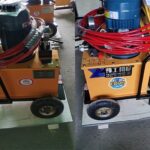
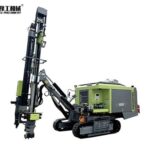
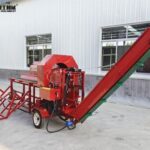
Hydraulic rock drill and splitter combines two core functions: drilling and splitting. First, a hydraulic rock drill creates precise boreholes in the target material. Then, a hydraulic splitter is inserted into the hole. By applying high hydraulic pressure, the splitter generates an enormous expansion force that fractures the rock from within. This method transforms the way rock excavation and demolition are performed. Instead of relying on impact or explosive force, the system uses static pressure to create cracks along natural fault lines in the rock. This results in clean, predictable breaks with minimal environmental impact. The technology is widely used in quarrying, mining, tunneling, road construction, foundation excavation, and concrete demolition.
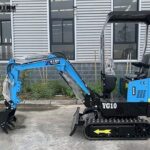
Integrated Mobility Most modern units are mounted on excavators or specialized crawler chassis, allowing the operator to maneuver the tool into tight spaces or steep slopes.
High Force Output The hydraulic rock drill and splitter can generate thousands of tons of splitting force, enough to crack even the hardest granite or reinforced concrete.
Low Noise and Vibration Since the system relies on hydraulic pressure rather than impact or blasting, noise levels and vibration are significantly reduced. This makes it ideal for use in residential or urban areas.
Precision Control Operators can control the direction and intensity of the split by positioning the drilling holes accurately. This ensures targeted fracturing and reduces material waste.
Versatile Application The system can handle granite, marble, limestone, reinforced concrete, and other high-strength materials.
Main Applications of Hydraulic Rock Drill and Splitter
Construction and Foundation Work During building foundation excavation, especially in dense urban areas, blasting may not be permitted. Hydraulic splitting allows controlled rock removal without damaging nearby structures.
Tunnel Excavation In tunnel construction, controlled splitting ensures the stability of the surrounding rock and reduces the risk of structural collapse.
Road and Bridge Construction The system is often used for rock trenching, slope cutting, and the removal of large boulders during infrastructure projects.
Concrete Demolition For reinforced concrete structures, bridges, and foundations, hydraulic splitters offer a safe and efficient demolition.
The Power Pack: This is the heart of the system, usually driven by the hydraulic pump of an excavator. It converts engine power into high-pressure fluid flow.
The Hydraulic Drifter: This component performs the drilling. It uses a combination of rotation and percussion to penetrate the rock. The drifter must be robust enough to handle the heat and friction generated during deep hole drilling.
The Splitter Cylinder and Wedges: This is the business end of the tool. It consists of a center wedge and two counter-wedges (feathers). When hydraulic pressure is applied, the center wedge is pushed between the counter-wedges, forcing them against the walls of the drill hole.
The operation of a hydraulic rock drill and splitter follows a logical two-stage process.
Stage One: Precision Drilling The process begins with the hydraulic drifter. Using a carbide-tipped drill bit, the machine bores a hole of a specific diameter and depth into the rock mass. The diameter must be precisely matched to the size of the splitter wedges to ensure maximum energy transfer.
Stage Two: The Splitting Force Once the hole is ready, the operator positions the splitter head into the cavity. The hydraulic system then drives the center wedge forward. This creates a massive lateral tensile force.
How to Choose the Right Hydraulic Rock Drill and Splitter?
When selecting a system, consider the following factors:
Project Type Determine whether the primary use is mining, demolition, or foundation excavation.
Splitting Force Choose a model with sufficient force capacity for the rock type.
Drilling Capacity Evaluate drill power, rotation speed, and compatibility with various drill bit sizes.
Excavator Model Choose the suitable model based on your excavator model. Compatibility with excavators is fundamental to ensuring the smooth operation of the work.
We use cookies to ensure that we give you the best experience on our website. If you continue to use this site we will assume that you are happy with it.