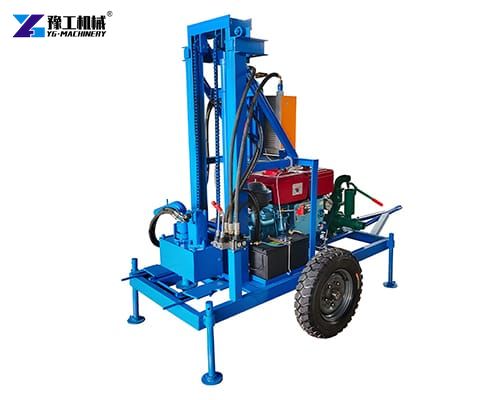
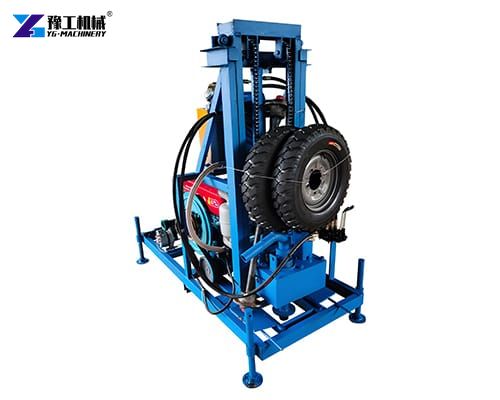
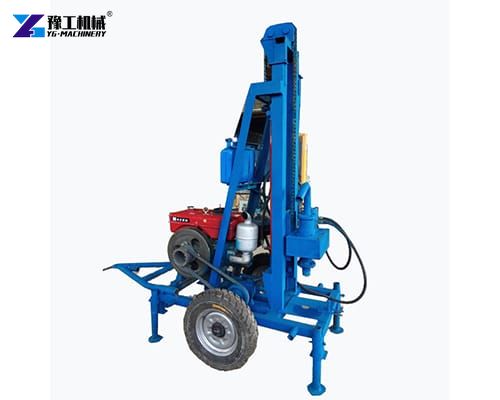
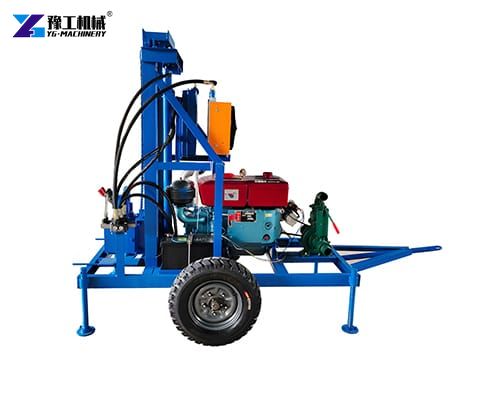
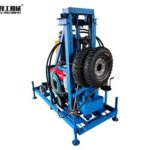
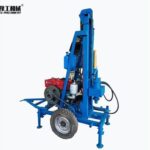
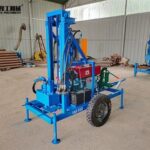
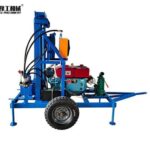
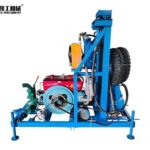
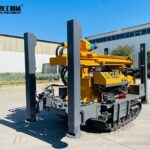
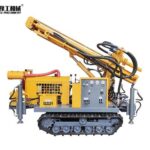
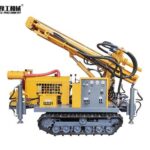
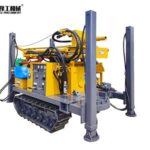
Portable water well drilling rig is a mechanical device designed to penetrate the earth’s surface to reach underground water sources, engineered specifically for ease of transport and operation in confined or remote spaces. Different from truck-mounted industrial cousins that require heavy-duty infrastructure and wide access roads, portable rigs can often be moved by a small trailer or a pickup truck. They are not merely scaled-down versions of big rigs; they are specialized tools optimized for efficiency, fuel economy, and user-friendly operation.
Main Components of Portable Water Well Drilling Machine
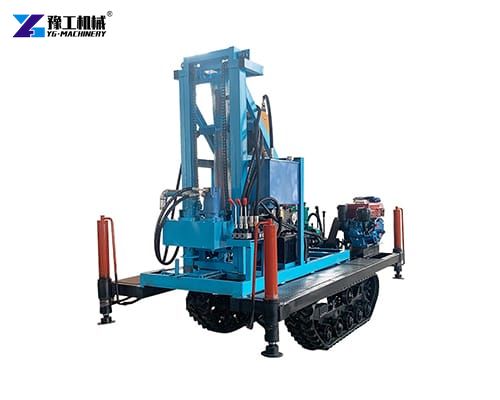
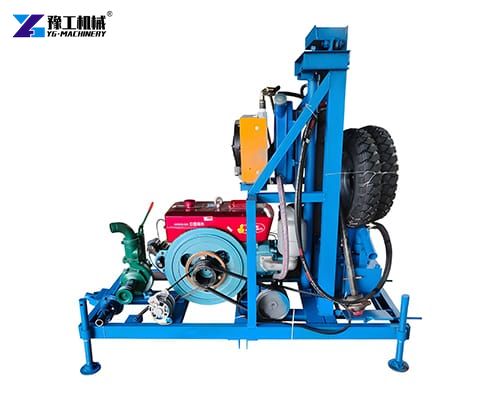
The frame of the portable water well drilling rig provides the foundation of the rig. It supports all other components and must be strong enough to withstand drilling forces while remaining lightweight.
The mast or derrick is the vertical structure that guides the drill rods. It can often be folded or telescoped for transport.
The power unit includes the engine or motor and associated systems. This unit supplies energy to the drilling mechanism, hydraulic pumps, and auxiliary systems.
The drilling system consists of the drill head, rotary table or top drive, drill rods, and drill bits. These components work together to penetrate the ground.
Diverse Applications of Portable Drilling Technology
The utility of a portable water well drilling rig extends far beyond just poking a hole in the ground. Its applications are as diverse as the landscapes it operates in.
Agricultural Irrigation: It allows farmers to install localized wells for drip irrigation systems, reducing reliance on erratic rainfall and ensuring crop survival during drought cycles. Because the rigs are small, they can be moved between different plots of land.
Residential Water Supply: It reduces the cost of water well drilling. People can use portable rigs to establish wells for drinking water, landscaping, and swimming pools.
Humanitarian Aid and Disaster Relief: In the wake of natural disasters, centralized water systems are often the first to fail. Portable rigs can be flown into disaster zones or carried into remote villages to provide immediate access to clean groundwater, preventing the spread of waterborne diseases.
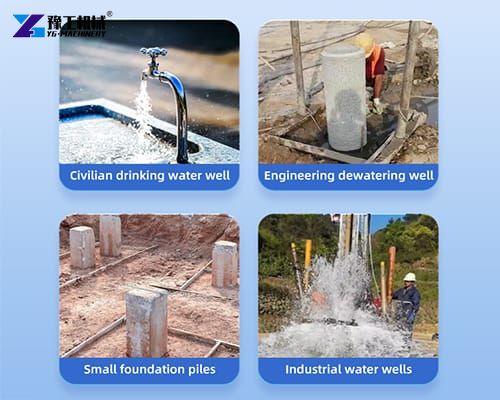
small water well drilling machine application
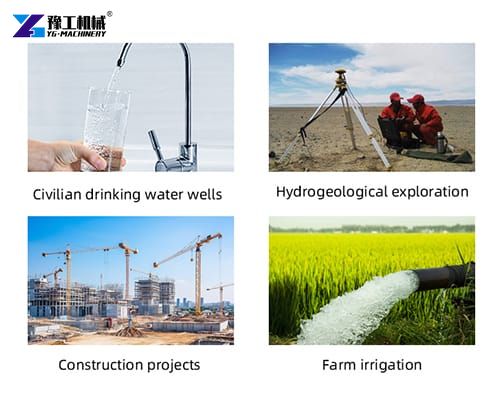
small water well drilling rig application display
Working Principle and Drilling Process
The working principle of a portable water well drilling rig is based on converting mechanical or hydraulic energy into rotational and downward force.
Once the rig is positioned and leveled, the mast is raised and the drill bit is aligned with the drilling point. The power unit drives the drill head, causing the drill bit to rotate.
As rotation continues, downward force is applied to allow the bit to cut into the soil or rock. Drill rods are added progressively as depth increases.
Drilling fluid or air is circulated through the drill rods. This fluid carries cuttings to the surface and prevents the borehole from collapsing.
When the desired depth is reached, drilling stops and the well is prepared for casing installation and development. The portable rig can then be moved to the next site.
We use cookies to ensure that we give you the best experience on our website. If you continue to use this site we will assume that you are happy with it.