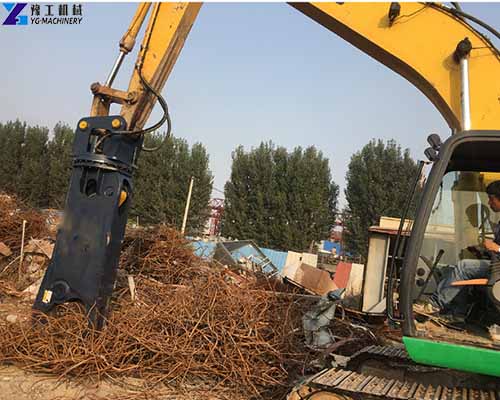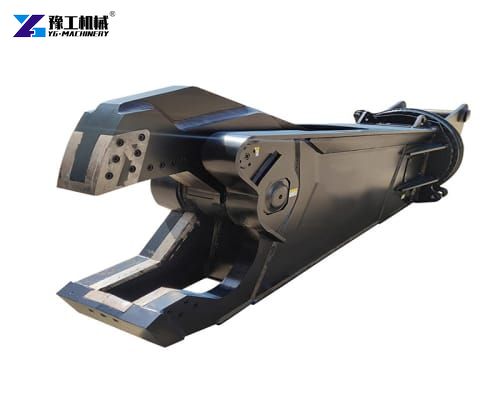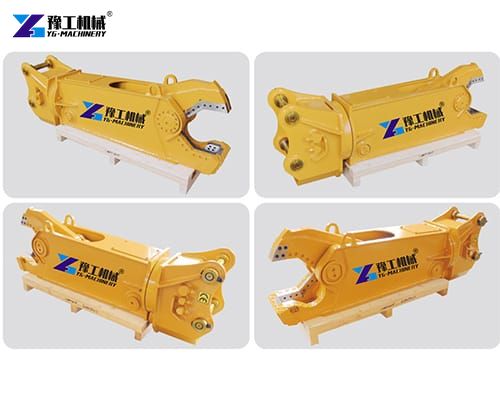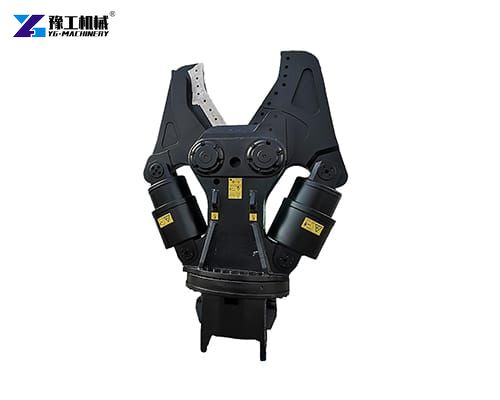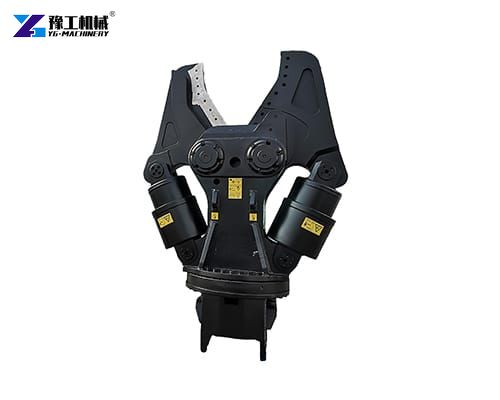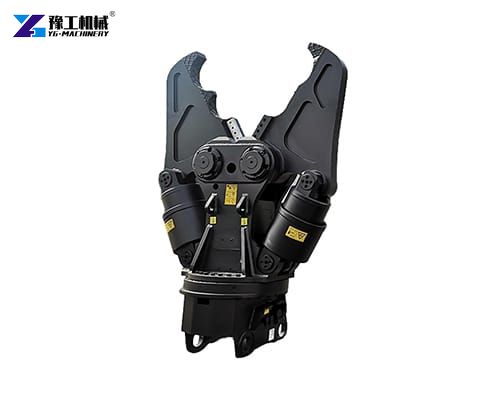
Excavator scrap shear is a heavy-duty attachment mounted on excavators, designed to cut through metal, concrete, and other robust materials with precision and power. Scrap shears are engineered for cutting, shearing, and processing materials during demolition, recycling, and scrap handling tasks. The primary function of an excavator shear is to reduce large metal structures, such as beams, pipes, and vehicles, into manageable pieces that can be easily transported and recycled. This process not only improves operational efficiency but also contributes to environmental sustainability by promoting the reuse of materials.
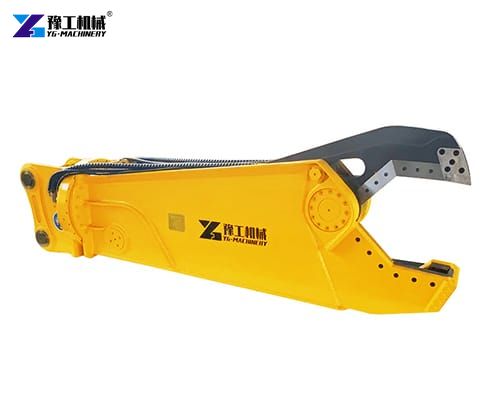
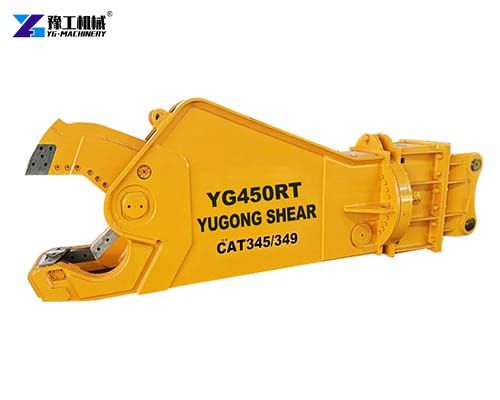
Excavator Scrap Shear Parameters
| Model | YG50R | YG100R | YG130R | YG180R | YG310R | YG410R |
| Forearm mounted model | 6-9T | 10-12T | 13-17T | 18-27T | 28-39T | 39-50T |
| Large arm installation model | 4-6T | 7-10T | 8-12T | 14-18T | 20-28T | 28-39T |
| Work pressure | 35Mpa | 35Mpa | 35Mpa | 35Mpa | 35Mpa | 35Mpa |
| Overall length | 2000mm | 2200mm | 2300mm | 2900mm | 3500mm | 3900mm |
| Overall weight | 650KG | 1100KG | 1220KG | 2100KG | 3300KG | 4700KG |
| Maximum opening | 290mm | 375mm | 375mm | 445mm | 565mm | 670mm |
| Throat depth | 290mm | 395mm | 395mm | 525mm | 630mm | 720mm |
| Front-end crushing force | 46T | 60T | 60T | 85T | 135T | 172T |
| Central crushing force | 115KN | 150KN | 150KN | 221KN | 351KN | 464KN |
Advantages of Using Excavator Shears
Investing in an excavator scrap shear offers numerous advantages that improve productivity, efficiency, and safety. Here are the key benefits:
- Exceptional Cutting Power
The hydraulic design of the excavator hydraulic shear provides unparalleled cutting strength, allowing it to handle the toughest materials, from heavy steel beams to thick rebar. - Improved Efficiency and Time Savings
By using a scrap shear, operators can significantly reduce processing time. The ability to cut and handle large pieces of metal directly on-site. This leads to faster project completion and reduced operational costs. - Versatility in Applications
An excavator scrap shear can be used in a wide range of industries, including construction, demolition, automotive recycling, shipbreaking, and waste management. Its ability to handle various types of metal makes it an all-around solution for material processing and recycling operations.

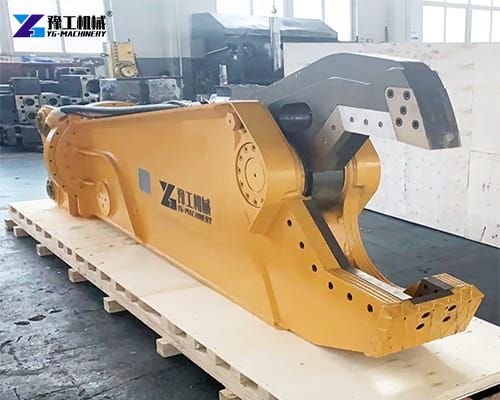
Applications of Hydraulic Shears for Excavators
The versatility of excavator shears makes them suitable for a wide array of industrial applications. Below are some of the most common uses:
- Building and Structural Demolition
In large-scale demolition projects, hydraulic shear attachment are used to cut through steel frameworks, beams, and reinforcement bars. Their precision and power allow for controlled dismantling without causing unnecessary damage to surrounding structures. - Scrap Metal Recycling
Scrap yards rely heavily on excavator scrap shears to process incoming metal materials. The shear cuts oversized metal pieces into smaller, manageable sections that can be easily sorted, melted, and reused. This improves operational efficiency and ensures high recycling throughput. - Automotive Recycling
Vehicle dismantling operations benefit greatly from the use of scrap shears. The attachment can cut through car frames, axles, and engine blocks, enabling quick and safe processing of end-of-life vehicles for recycling. - Shipbreaking and Marine Dismantling
In shipbreaking yards, excavator scrap shears are indispensable for cutting large metal plates, hull sections, and structural components of ships. Their durability and strength make them ideal for the heavy-duty demands of marine dismantling.
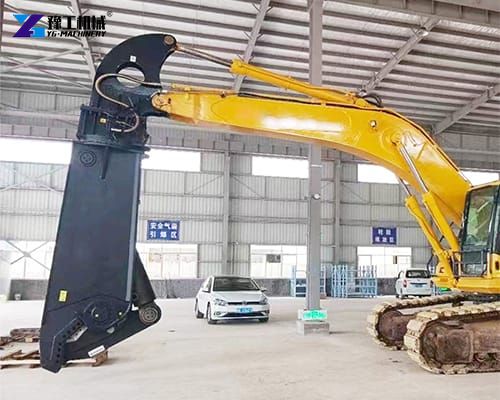
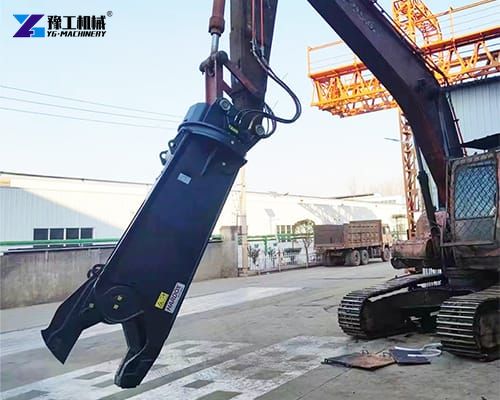
Maintenance and Care for Excavator Shear Attachments
- Regular Inspection: Before and after each use, check for cracks, loose bolts, and wear on blades and pivot pins. Address any issues immediately to prevent further damage.
- Lubrication: Keep all moving parts properly lubricated to reduce friction and prevent premature wear.
- Blade Maintenance: Rotate or replace blades regularly to maintain cutting performance. Dull blades require more force, which can strain the hydraulic system.
- Hydraulic System Check: Monitor hydraulic hoses and fittings for leaks or damage. Clean filters and ensure the hydraulic fluid is at the correct level.
- Tighten Bolts and Pins: Vibrations during operation can loosen components. Regularly inspect and tighten them to ensure stability and safety.
- Storage: When not in use, store the shear in a dry, sheltered area to prevent rust and corrosion.