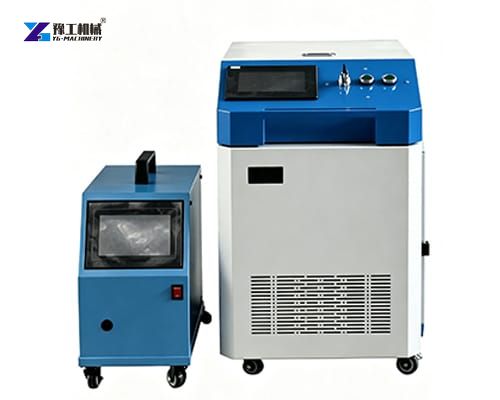
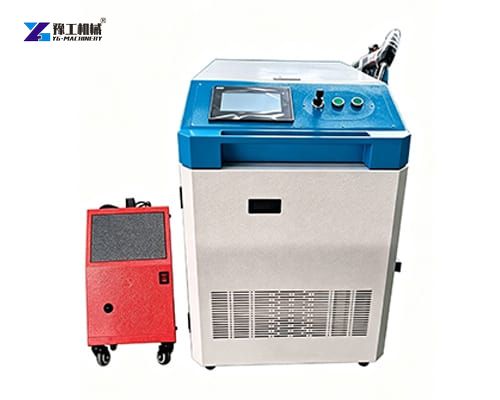
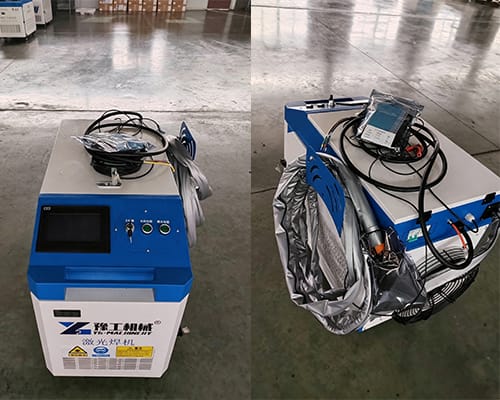
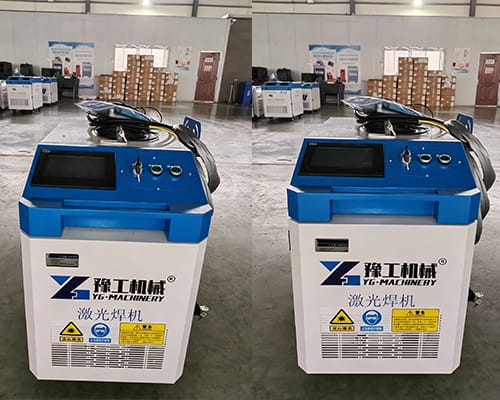
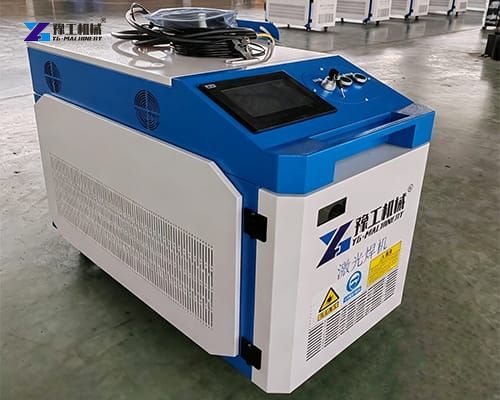
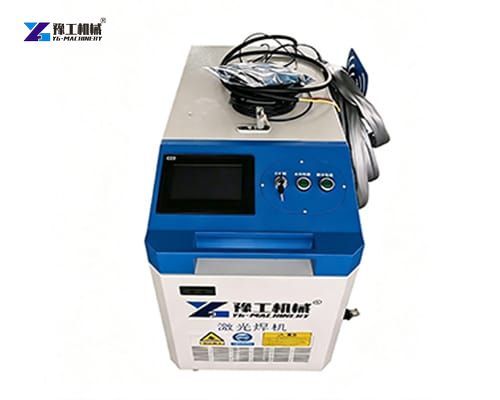
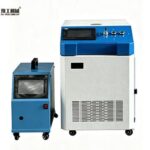
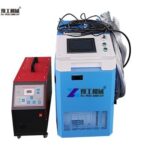
2000w laser welding machine is designed as a versatile integrated system that breaks down the barriers between multiple metalworking tasks. It is not merely a welding device, but a comprehensive processing platform that can seamlessly switch between high-quality welding, precision cutting, and thorough surface cleaning operations. The core value of this machine lies in its ability to deliver consistent, high-energy laser output that is finely tuned for real-world industrial use. It eliminates most of the common pain points associated with traditional arc welding processes, such as severe workpiece deformation. Its integrated 3-in-1 functional architecture eliminates the redundant optical path loss that plagues discrete single-function laser processing equipment. The system’s modular optical path layout ensures consistent beam quality across all three processing modes, avoiding the frequent optical component recalibration that is required for traditional multi-purpose laser tools. For more detailed information, please get in touch with us.
Main Features and Highlights of the Laser Welding Machine
High Power Density and Processing Speed The primary technical advantage of a 2000w laser welding machine lies in its high kinetic energy density. By concentrating thermal energy into a tight focal point, the system achieves welding speeds up to 150mm per second depending on seam configuration and material thickness. This substantially reduces processing cycle times compared to arc welding alternatives.
Ergonomic Torch Design The portable systems employ lightweight hand-held wobble torches. Featuring a gun tip weight of approximately 0.7kg, these assemblies minimize operator fatigue during continuous operation and facilitate precise maneuvering along complex joint geometries.
Dynamic Beam Modulation and Spot Diameter Control Integrated dual-axis galvanometer systems dynamically oscillate the focused laser beam, allowing adjustable spot diameter control from 0.2mm up to 5mm. This adjustable beam profile enables effective bridging of seam fit-up gaps up to 1.5mm while maintaining mechanical joint integrity and aesthetic seam quality.
Multi-Process Capability Equipped with dynamic optical lenses offering focus focal length options of 150mm or 200mm, the system handles diverse task parameters. In surface preparation mode, the scanning head delivers a rust, oil, and paint scan width ranging from 0 to 60mm. For sheet metal processing, it supports welding thickness capacities between 0.3mm and 5mm, alongside cutting thickness capabilities from 0.2mm to 4mm.
The versatility of the 2000W laser welding machine makes it a valuable asset in nearly every sector that works with metal materials, opening up new processing possibilities that were previously too costly or too slow to implement at scale. In the automotive manufacturing and repair industry, it is widely used for welding thin body panels, assembling new energy vehicle battery components, and repairing worn engine parts. Its low heat input characteristic means that delicate automotive parts do not suffer from the warping or dimensional distortion that often renders traditionally welded components unusable, eliminating the need for tedious subsequent correction work.
In the kitchenware and home appliance manufacturing sector, the machine excels at producing smooth, seamless welds on stainless steel sinks, oven shells, and metal furniture frames. The finished welds are so clean and uniform that most of them do not require any secondary polishing or grinding before the surface finishing process, cutting down total production time for each part by more than half compared to traditional welding methods. This not only boosts overall factory throughput, but also reduces the amount of grinding dust generated in the workshop, creating a much healthier working environment for production staff.
For the construction and metal decoration industry, the 2000W laser welding machine is a game changer for installing custom metal stair railings, architectural curtain wall components, and decorative metal art pieces. Its handheld design allows operators to move freely around large workpieces and work directly on site, eliminating the need to transport huge, heavy components back to a fixed workshop for welding. The machine also performs exceptionally well for rust removal, old paint stripping, and oil stain cleaning on large metal surfaces, making it an essential tool for equipment maintenance teams working on bridges, heavy machinery, and ship hulls.
Other key application areas include precision electronics manufacturing, where it is used to weld delicate sensor components without damaging internal circuits; the aerospace component repair sector, where high-strength, low-deformation welds are mandatory; and the small workshop custom fabrication market, where businesses need to handle a constant stream of varied, one-off job orders with different material types and processing requirements.
The 2000w laser welding machine demonstrates robust processing performance across various engineering alloys:
Stainless Steel: High optical absorption within the 1064 to 1080nm spectrum ensures deep joint penetration and oxidation-free weld profiles when using Argon or Nitrogen shield gas.
Carbon Steel: Delivers high tensile strength joints for structural assemblies without generating surface spatter.
Aluminum Alloys: Although aluminum exhibits high surface reflectivity and thermal conductivity, the high power density of the 2000w beam overcomes initial optical reflection, achieving clean fusion across various alloy grades.
Copper and Brass: Reflective non-ferrous metals can be processed effectively by optimizing wobble scanning parameters and fine-tuning output settings across the 1 percent to 100 percent power range.
Selecting the appropriate 2000w laser welding machine involves evaluating key technical parameters to align equipment capabilities with operational requirements.
Workpiece Thickness and Material Scope Confirm that target manufacturing materials fall within the standard operating envelope of the equipment. For a 2000w power rating, effective welding thickness ranges from 0.3mm to 5mm, while cutting capabilities handle 0.2mm to 4mm stock.
Optical Laser Source Reliability The performance of the equipment depends heavily on the quality of the laser source. Utilizing proven industrial-grade fiber engines like BWT ensures stable light efficiency and extended service life.
Thermal Management Capabilities Verify the reliability of the integrated water cooling subsystem. In facilities subject to sub-zero winter temperatures, ensure proper antifreeze mixture ratios are maintained in the cooling loop to prevent mechanical damage to internal fluid channels and optical heads.
Cable Reach and Spatial Flexibility Evaluate production floor layout requirements. An armored fiber length of 10m allows operators to move freely around large workpieces and structural frames without moving the main equipment chassis.
Utility and Electrical Specifications Ensure facility infrastructure matches equipment power input standards. A unit operating on AC220V at 50Hz integrates into standard commercial power distribution systems without requiring dedicated high-voltage transformer installations.
Why Choose a 3-in-1 System Over Specialized Machines?
The primary advantage is operational flexibility. A dedicated laser welder might offer slightly higher duty cycles or faster processing speeds for welding alone, but it cannot cut or clean. In a job shop, the ability to take on a contract that requires welding, then immediately switch to cutting out patches, and finally clean the weld area for inspection—all with one machine—reduces handling, setup time, and the need for multiple workstations. This consolidation also simplifies training; operators learn one interface and one safety protocol.
Another hidden benefit is the shared cooling and power infrastructure. Instead of maintaining separate chillers and power supplies, you have a single integrated system that allocates its thermal budget across modes. The water cooling circuit is sized for the maximum heat load, so even during extended cleaning or cutting sessions, the system remains stable. The protective lens (D18×2mm) is a consumable that shields the internal optics from spatter and fumes; because it is a standard size, replacements are readily available and inexpensive.
Is This the Right Machine for You?
If your operations involve diverse metal thicknesses (0.3mm to 5mm), frequent changeovers between joining, cutting, and surface preparation, and a need for high-quality welds with low thermal distortion, then the 2000W 3-in-1 laser welding machine is an exceptional choice. Its power-to-cost ratio, combined with the flexibility of three processes in one, delivers a return on investment that single-purpose machines cannot match. The maintenance requirements are manageable, and the safety infrastructure is well within the capabilities of a professional workshop. If you have other requirements, please contact us. We also provide other types, like 1500w laser welding equipment, 3 in one type and so on. We will help you find the proper machine.
We use cookies to ensure that we give you the best experience on our website. If you continue to use this site we will assume that you are happy with it.