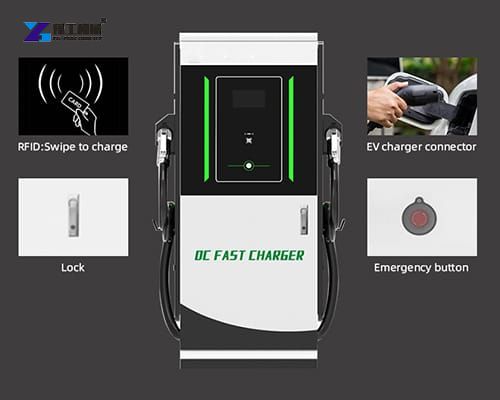
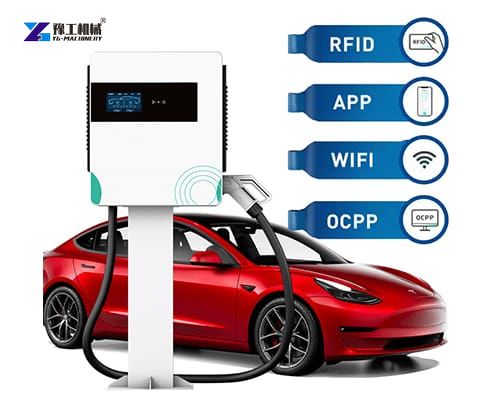
Electric vehicle charging pile, also known as an EV charger or charging station, is a device that supplies electrical energy to recharge the batteries of electric vehicles. It acts as the critical interface between the power grid or a local energy source and the EV. These charging piles come in various configurations depending on voltage, charging speed, installation location, and communication capabilities. Typically, a car charging pile connects to the power grid and supplies electricity to the EV through a charging cable. It can be equipped with intelligent functions such as user authentication, payment systems, remote monitoring, load balancing, and real-time data analytics.
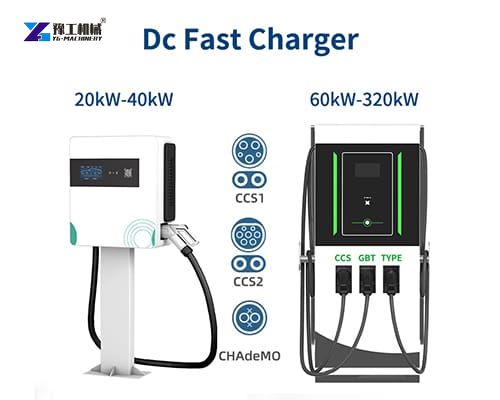
Specifications of the DC Charging Pile
| Model | YG-60 | YG-80 | YG-120 | YG-160 |
| Rated Power | 60kw | 80kw | 120kw | 160kw |
| Maximum Output Current | 160A | 180A | 240A | 240A |
| Constant Power Output Voltage Range | DC300~1000V | |||
| Host Computer Communication | Ethernet/4G (optional) | |||
| Input Voltage | AC380V±15% | |||
| Input Frequency | 50Hz±10% | |||
| Output Voltage Range | DC200-1000V | |||
| Protection Class | IP54 | |||
| Installation Method | Floor-standing installation (ground fixed) | |||
Core Components of an Electric Vehicle Charging Pile
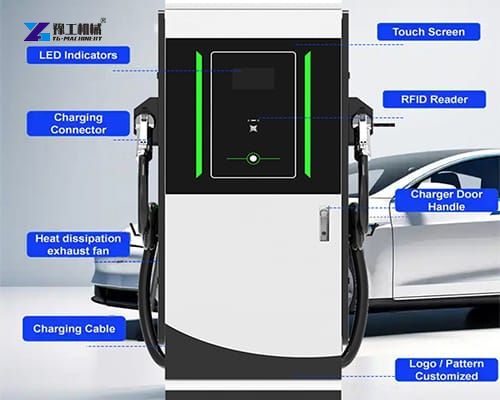
A well-designed EV charging pile generally consists of the following core components:
- Power Control Module:
Converts AC or DC from the grid to the appropriate voltage and current required for the vehicle. - User Interface Panel:
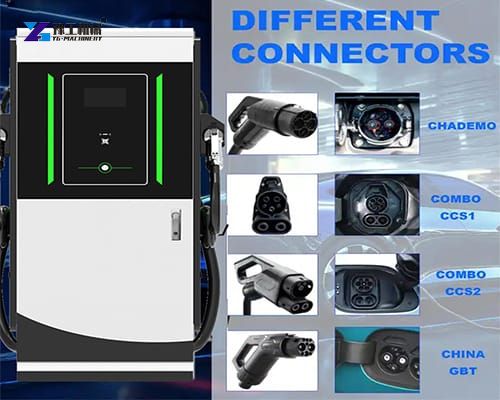
Allows users to initiate, stop, and monitor charging through displays or mobile apps. - Cable and Connector:
Delivers electricity from the pile to the EV battery securely and efficiently. - Protection Systems:
Includes overvoltage, overcurrent, ground fault, and thermal protections to ensure user and equipment safety.
What Are the Benefits of Installing Car Charging Piles?
- Environmental Sustainability
Widespread use of electric vehicle charging piles encourages the adoption of electric vehicles, significantly reducing greenhouse gas emissions and dependence on fossil fuels. - Convenience for EV Users
Access to reliable charging infrastructure makes EV ownership practical and stress-free, reducing range anxiety and enabling longer travel distances. - Energy Efficiency
Many charging piles support off-peak charging and energy optimization, lowering electricity costs and easing grid load.
Applicable Places of EV Charging Piles
- Residential Buildings:
Single-family homes and apartment complexes can offer dedicated charging solutions to residents. - Commercial Complexes:
Offices, retail outlets, and hospitality businesses can attract customers and enhance employee satisfaction. - Municipal Infrastructure:
City governments are increasingly integrating public electric vehicle charging pile in transportation plans and sustainability initiatives.